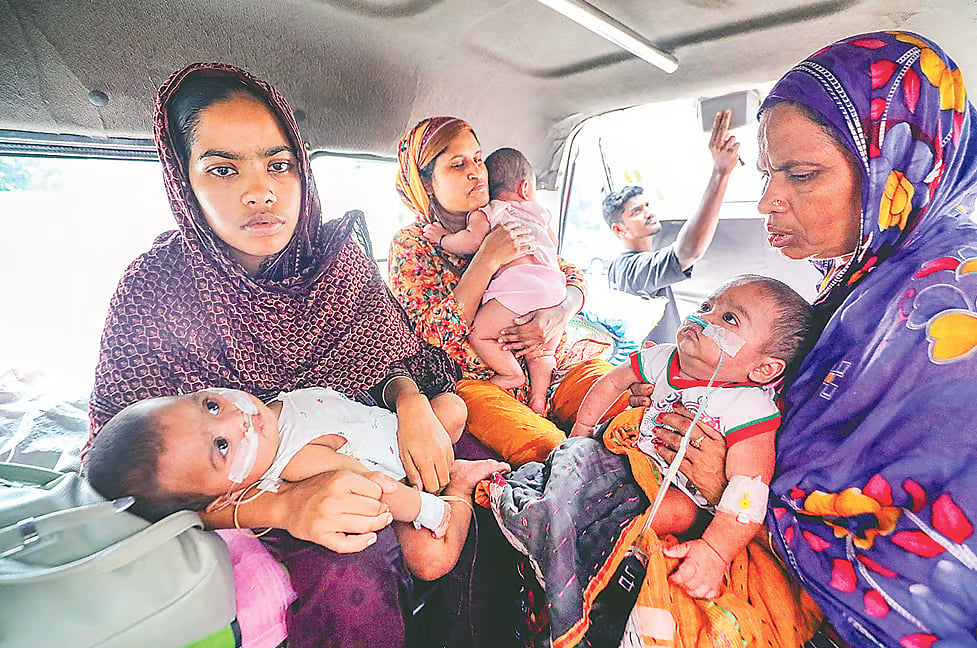
Measles: Not all children receiving vaccines, death toll surpasses 400
Another 11 children have died from measles. Seven of them died with symptoms of measles, while four had confirmed measles infections.
With these latest deaths, the Directorate General of Health Services (DGHS) reported that 409 people have now died either from measles or with measles-like symptoms.
The government has launched a nationwide vaccination campaign to contain measles infections and deaths. However, not all children have come under the vaccination programme.
After receiving information from UNICEF, investigations in Dhaka and outside the capital revealed such a situation.
According to UNICEF’s Rapid Convenience Monitoring (RCM), 30 to 40 per cent of children in urban areas and 15 per cent in rural areas have still not received the vaccine.
In the Kathalbagan area of the capital, 14 families live in small rooms within a single building. The low-income families rent accommodation there.
The families include five children aged between six months and five years. Speaking to Prothom Alo on Sunday morning, one mother said that all the children had received the vaccine.
The children were vaccinated at Khan Hasan Adorsho Government Primary School in the area.
It takes around 10 to 12 minutes to walk from Kathalbagan road to Karwan Bazar. At around 10:30 am yesterday, Sunday, Prothom Alo spoke with Lamia beneath the staircase of the Karwan Bazar metro rail station.
Authorities had taken initiatives to identify children who had been left out and vaccinate them.Professor Pravath Chandra Biswas, director general of the Directorate General of Health Services
Lamia had moved from a village in Mymensingh and was living with her family on the pavement under the station staircase in the capital.
Lamia has two children. One is seven months old and the other is two and a half years old. Lamia said neither child had received any vaccination.
She was unaware that measles vaccines were being administered. She also did not know where to go to have her children vaccinated.
Professor Be-Nazir Ahmed, public health expert and former director of the Disease Control Centre (CDC) under the DGHS, told Prothom Alo, "There is a lack of publicity and awareness regarding the vaccine. People have doubts."
"Previously, children aged nine months received the vaccine, but now the age has been reduced to six months. Mothers may question whether this could harm their children. Health workers needed to communicate face to face with mothers to address these concerns. That did not happen," he added.
The vaccination campaign began on 5 April in 30 high-risk upazilas across 18 districts.
On 12 April, vaccination started in Dhaka South, Dhaka North, Mymensingh and Barishal City Corporation areas. From 20 April, vaccination expanded to urban centres and cities across the country. The campaign will continue until 20 May.
The campaign aims to vaccinate 18,016,914 children. On Sunday night, the DGHS stated that it had achieved 99 per cent of its target.
Authorities attempted to identify the number of children left out of the campaign through the Rapid Convenience Monitoring (RCM) method.
The findings showed that some children in both urban and rural areas had not received the measles vaccine.
At a roundtable discussion on measles held at Bangladesh Medical University on Saturday, Riad Mahmud, health systems manager of UNICEF’s immunisation division said, “Among the areas where RCM was conducted, 30 to 40 per cent of children in urban areas and 15 per cent in rural areas had not received the measles vaccine.”
According to UNICEF’s Rapid Convenience Monitoring (RCM), 30 to 40 per cent of children in urban areas and 15 per cent in rural areas have still not received the vaccine.
Situation inside and outside Dhaka
Yesterday, Sunday, three Prothom Alo correspondents visited several areas in the capital to determine whether children aged between six months and five years had received the measles vaccine.
On Sunday morning, visits to 12 families in the Bhashantek slum area of Mirpur revealed that all children in those families had received the vaccine.
Residents also said that health workers from BRAC had assisted them in vaccinating their children.
Later in the afternoon, Prothom Alo’s representative spoke with the parents of several children who had come to Bangladesh Medical University in Shahbagh for treatment.
One father from Brahmanbaria was carrying his two-and-a-half-year-old daughter.
He said that his daughter had not received any vaccination at either nine months or 15 months of age. She still had not received any vaccination. He declined to explain why she had not been vaccinated.
A couple from Narsingdi said that their three-year-old son was currently taking antibiotics. For that reason, they had not given him the measles vaccine. They believed that vaccination at this time could harm the child.
Another couple from Feni said they were uncertain whether they should vaccinate their daughter. The girl is 11 months old and had already received a vaccine at nine months of age.
A Prothom Alo reporter found children in the Gazi slum area of Shahjahanpur in the capital, who had not received the measles vaccine.
There is a lack of publicity and awareness regarding the vaccine. People have doubts. Previously, children aged nine months received the vaccine, but now the age has been reduced to six months. Mothers may question whether this could harm their children. Health workers needed to communicate face to face with mothers to address these concerns. That did not happen.Professor Be-Nazir Ahmed, public health expert and former director of the Disease Control Centre (CDC)
Sitting beside seven-month-old Ayesha Moni, her father, Sanowar Hossain, said that he had become discouraged about vaccination after watching several videos on his mobile phone. As a result, he had not vaccinated his daughter.
Sumaiya Begum believes that vaccines have side effects. For that reason, she did not vaccinate her two children, aged one and a half years and four years respectively.
A Prothom Alo reporter spoke with parents from 10 families in the slum. Every family had children aged between six months and five years. Among them, three children had received the vaccine, while seven had not.
Yesterday, Sunday afternoon, Laili Begum was begging on the Mirpur 10 roundabout foot-over bridge with her grandson Nayan.
During the conversation, it emerged that Nayan was two years and four months old. He had never received a measles vaccine.
After crossing the roundabout, a Prothom Alo reporter saw Rupali Akter selling fruit from a van in front of Mirpur Girls’ Ideal School. Her three-year-old son Tanvir was with her. The child had still not received the measles vaccine.
Rupali Akter said, “I spend the whole day outside. I do not know when they administer the vaccine. I have heard that children are being infected with measles, but I have not heard anything about the vaccination campaign.”
An upazila health and family planning officer from an upazila adjacent to the Sundarbans in Khulna district told Prothom Alo that more than 200 children in the area had still not received the vaccine.
Authorities would begin identifying and vaccinating those children from Tuesday.
Vaccination activities in Barguna district began on 5 April. According to the office of the civil surgeon, 5 per cent of children in the district still remain outside vaccination coverage.
What is needed now
During the roundtable discussion at Bangladesh Medical University, UNICEF official Riad Mahmud said that all stakeholders must work together to bring every child under vaccination coverage.
Yesterday, Sunday, Professor Pravath Chandra Biswas, director general of the Directorate General of Health Services, told Prothom Alo that authorities had taken initiatives to identify children who had been left out and vaccinate them.
He said health officials in every district and upazila had instructed health workers to work with teachers and members of civil society to ensure vaccination for those children. Authorities would also strengthen publicity efforts regarding the campaign.
One father from Brahmanbaria was carrying his two-and-a-half-year-old daughter. He said that his daughter had not received any vaccination at either nine months or 15 months of age. She still had not received any vaccination. He declined to explain why she had not been vaccinated.
Many people believe that extensive awareness campaigns are necessary to bring excluded children under vaccination coverage.
Public health expert Professor Be-Nazir Ahmed said that authorities should conduct campaigns through the mass media.
He also said that announcements should be made in local communities through loudspeakers and that rallies were necessary.
“People need to understand why children aged six months should receive the vaccine. Unless enthusiasm is created among everyone, all children will not come under vaccination coverage,” he said.
Death toll surpasses 400
According to the latest 24-hour update from the Directorate General of Health Services — covering the period from 8:00 am Saturday to 8:00 am Sunday — seven children died with measles symptoms and four died from confirmed measles infections. As a result, the measles death toll has now exceeded 400.
A total of 344 children have died with measles symptoms, while 65 have died from confirmed measles infections.
The previous day, the DGHS had reported 352 deaths from confirmed measles and measles-like symptoms combined.
For several days, the DGHS had not properly published data from multiple districts. After releasing the updated information yesterday, Sunday, the total number of deaths increased by 46 to reach 409.
**Prothom Alo reporters Md Noman Siddik and Suraiya Sarowar contributed to this report.