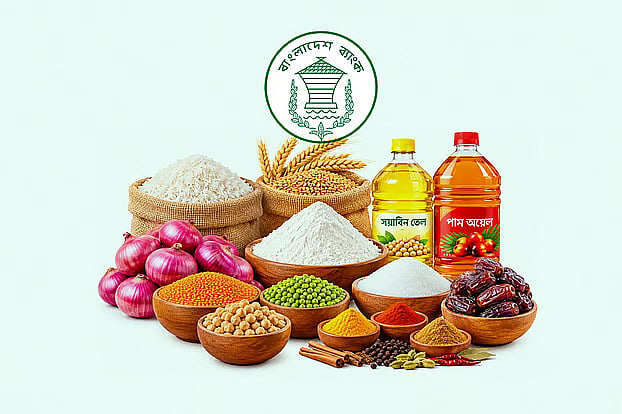
Ahead of Ramadan, Bangladesh Bank has allowed the import of 11 essential food commodities under deferred payment facilities to keep market prices affordable and ensure steady supplies.
The central bank issued a circular to this effect today, Wednesday.
According to the directive, importers will be entitled to a deferred payment facility of up to 90 days for importing rice, wheat, onions, pulses, soybean oil, palm oil, sugar, chickpeas, spices, dates and peas.
Bangladesh Bank said this special facility was extended to keep supplies smooth and prices manageable during the Ramadan.
Importers will be able to avail of this credit facility for up to 90 days under suppliers' credit or buyers' credit.
Under this facility, importers will not be required to settle the full import bill immediately upon the arrival of the consignment in the country. Instead, they will have the opportunity to pay the import value at the end of the stipulated period on a deferred basis.
This will allow importers to clear their bank liabilities after selling the goods in the domestic market. Central bank officials believe the move will ease working capital pressures on importers.
Demand for commodities such as rice, pulses, onions, edible oil, sugar, chickpeas and dates typically surges in the country during Ramadan.
Ensuring uninterrupted supplies and reducing price pressure in the retail market become crucial during this period. Banking sector insiders believe this fresh central bank decision will encourage traders to import these essential goods.
Bangladesh Bank stated that this new facility will remain in effect until March 15 next year.
Earlier on 8 November, Bangladesh Bank instructed commercial banks to keep cash margins at a minimum level based on banker-customer relationships when opening letters of credit (LCs) for importing these commodities ahead of Ramadan.
The items were rice, wheat, onions, pulses, soybean oil, palm oil, sugar, chickpeas, peas, spices, and dates.
An LC margin is the specific percentage of cash or security an importer must deposit with a bank when opening an import letter of credit. For example, if a 100 percent margin is imposed, the entire value of the imported goods must be deposited in cash to open an LC.
When the margin requirement is kept at a minimum or relaxed, opening an LC becomes feasible with significantly lower upfront cash deposits based on mutual trust and relations with the bank.