Prothom Alo Roundtable
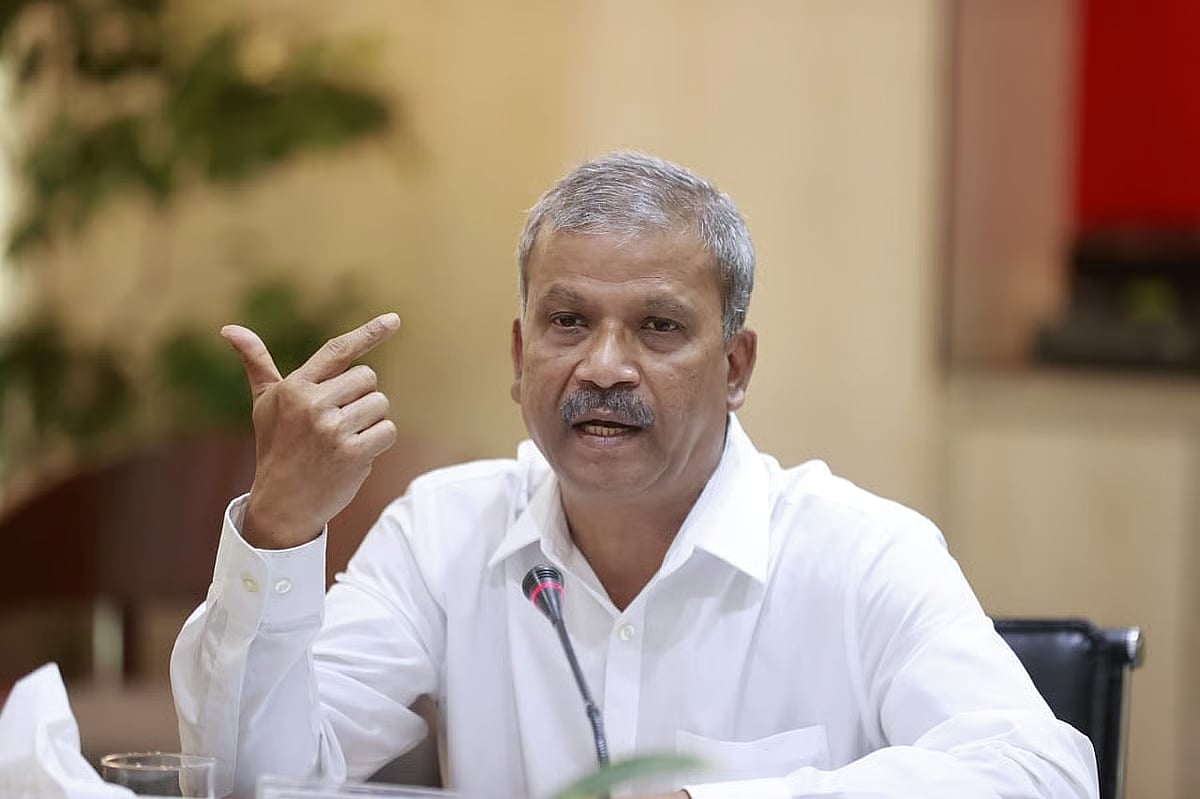
Political parties must move away from ‘my people, your people’ culture: Asif Nazrul
Claiming to have received phone calls from two major parties regarding the transfer of two police officials recently, law adviser Asif Nazrul has urged political parties to get out of such practices within the administration.
He said, “BNP and Jamaat must move away from the ‘my people, your people’ culture. The NCP and smaller parties must also break free from it. The smaller or emerging parties are not immune to this disease either.”
Asif Nazrul made these remarks at a roundtable titled 'Reforming Bangladesh Police: Challenges and the Way Forward', held at 11:00 am today, Saturday, at the Prothom Alo office in Karwan Bazar of the capital.
The roundtable was jointly organised by Prothom Alo and the Bangladesh Retired Police Officers Welfare Association. The event began with welcome remarks from the Prothom Alo editor Matiur Rahman.
At the beginning of the discussion, Yasmin Gofur, retired additional inspector general of police and vice president of the Welfare Association of Retired Police Officers, presented a paper on “Reforming Bangladesh Police: Challenges and the Way Forward.”
Asif Nazrul said, “The ‘my people, your people’ culture definitely reached a disastrous level during the Awami League’s rule. All the terrible, evil things in Bangladesh began during the first Awami League government in 1973, enforced disappearances, extrajudicial killings, torture and deaths in custody, fake elections, politicisation, everything started with the Awami League, and others have simply continued it.”
Highlighting that the ‘my people, your people’ mentality also exists within civil society, he cited the example of the lack of protest after the then Daily Sangram editor Abul Asad was attacked during the Awami League regime. He remarked that then Prime Minister Sheikh Hasina had turned the state security force, the police, into a “cruel, oppressive, barbaric and demonic force.”
Discussing various aspects of police brutality, he said, “At the orders of the ruling party, to fulfil their wishes, that is why some do it. Meanwhile, some do it out of their own nature, for they want to become powerful, they want to make money. The government might instruct a certain level of repression, but they take it ten times further.”
As an example of such personal tendencies, he mentioned former Inspector General of Police Benazir Ahmed.
Besides institutional limitations, Asif Nazrul also pointed to the lack of forensic facilities as one of the main reasons behind torture, saying, “In some cases, torture is used to force confessions, it has become part of our culture.”
Explaining the interim government’s initiatives for police reform without any political influence, he mentioned the establishment of a Police Reform Commission and the proposal to create a dedicated investigative body within the police.
Regarding the government’s steps to stop police brutality against public, he said the Code of Criminal Procedure has been amended, requiring that family members of detainees be informed within 12 hours. The law on enforced disappearances has also been amended to require notification within 24 hours otherwise it will be considered enforced disappearance.
Addressing criticism that the Police Reform Commission lacks authority, the law adviser argued, “Having power does not necessarily mean one will protect human rights.” Emphasising the need for a cultural shift within the police, he said, “There are people whose only job is to give guards of honour. If you tell them not to, they feel bad. There needs to be efforts to stop this culture.”
Other speakers at the roundtable included TIB Executive Director Iftekharuzzaman, Inspector General of Police (IGP) Baharul Alam, former IGP Nurul Huda, Police Reform Commission member Professor Shahnaz Huda, Retired Police Officers’ Welfare Association President M Akbar Ali, and human rights activist Nur Khan.
Also present were BNP Acting Chairman’s Adviser Mahdi Amin, Jamaat-e-Islami Central Executive Council member Saiful Alam Khan Milon, National Citizen Party (NCP) Senior Joint Convenor Ariful Islam Adeeb, Khelafat Majlish Secretary General Ahmad Abdul Kader, and Additional IGP Kazi Md Fazlul Karim.