Jamaat trains MPs for active role in parliament
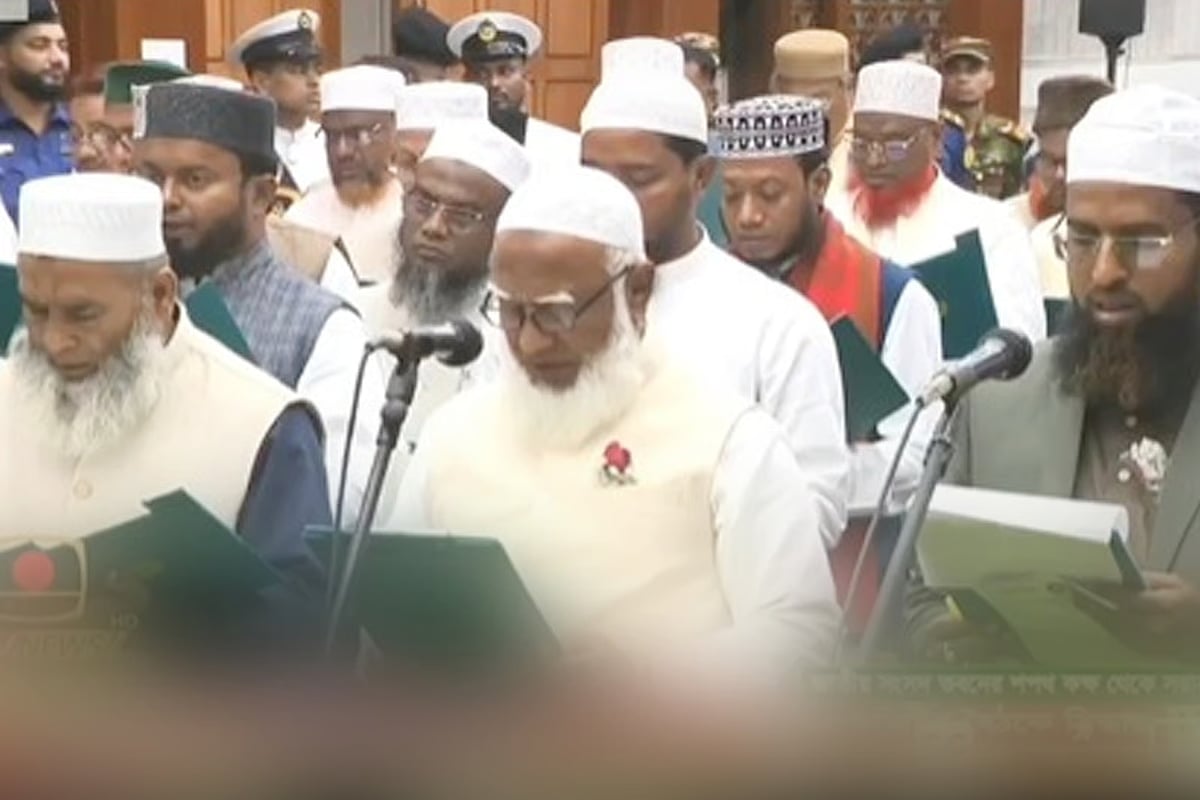
Immediately after the oath-taking and the election of opposition leadership, Bangladesh Jamaat-e-Islami has begun preparations to play an active role in parliament.
The party has organised a two-day workshop to give its MPs, especially first-time elected members, an understanding of parliamentary procedures, bills and budgets, and the workings of standing committees.
Jamaat has named this workshop the “orientation programme.” Experienced former officials, academicians, and former MPs guided participants on MPs’ responsibilities and the strategic role of the opposition in parliament.
According to Jamaat sources, after the national parliamentary elections, opposition MPs have taken their oaths. The opposition leader, deputy leader, and chief whip have been elected.
Since most MPs are newly elected and lack of prior parliamentary experience, Jamaat organised the workshop for them.
The two-day workshop started Wednesday morning at the Al-Falah auditorium adjacent to Jamaat’s central office in the capital’s Mogbazar, and concluded yesterday, Thursday, afternoon.
Ahsanul Mahboob Zubair, head of Jamaat’s publicity and media department, told Prothom Alo on Thursday afternoon, “Since we want to play a positive and constructive role, and perform a credible role in the national parliament, we felt it necessary to provide MPs at least an initial understanding of the issues they should know. That’s why we arranged this orientation.”
According to party sources, the workshop was divided into five sessions where experts gave presentations and MPs took notes and participated in discussions. The goal was to provide a clear understanding of issues they will face once parliamentary sessions begin.
Around 80 per cent of Jamaat’s MPs were elected for the first time. That is why this workshop was necessary. It explained the roles MPs can play in parliament.Mir Ahmad Bin Kasem (Arman), MP for Dhaka-14
Academic discussions covered MPs’ responsibilities, roles, and duties, as well as how an opposition party could approach various bills and laws.
Guidance was also given on the business of standing committees and parliamentary protocol. Additionally, MPs were briefed on the relationship between the upper house or senate and the lower house in a bicameral parliament.
The sessions were conducted by experts in various fields. These included experienced parliamentary and secretariat officials, former civil servants, and individuals who have served in the election commission.
Several university professors and former MPs of the party were also present. Session facilitators gave presentations on various topics in each session, and there was a question-and-answer segment where MPs’ questions were addressed.
Prothom Alo spoke with three Jamaat MPs who attended the workshop to learn more about it.
One of them, Saiful Alam Khan (Milon), MP for Dhaka-12, said, “This was an internal programme. It provided an understanding of what MPs should do in parliament. I am also new, so such a workshop was necessary.”
Nazibur Rahman Momen, MP for Pabna-1, said, “It was an orientation programme. Experts presented on what MPs’ work in parliament would involve.”
Mir Ahmad Bin Kasem (Arman), MP for Dhaka-14, said, “Around 80 per cent of Jamaat’s MPs were elected for the first time. That is why this workshop was necessary. It explained the roles MPs can play in parliament.”
Jamaat plans to continue such workshops in the future, especially in light of budgets and special situations.
Speaking about this, Ahsanul Mahboob Zubair told Prothom Alo, “This is only the initial orientation. Many issues will come up in the future, on budgets and more, one after another. Our goal is to organise multiple orientation programmes and workshops each year to further enhance MPs’ skills and capabilities.”