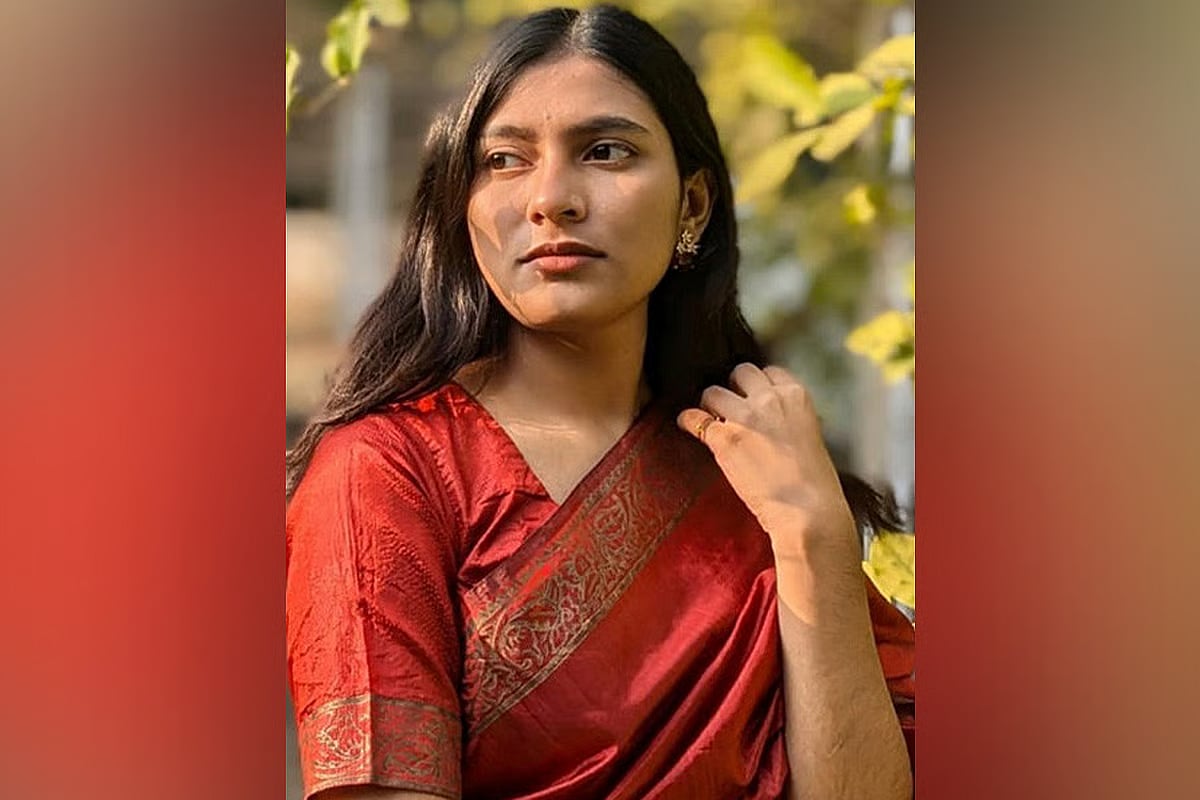
A female student is set to contest for the position of vice-president (VP) in the Rajshahi University Central Students’ Union (RUCSU) elections. Her name is Tasin Khan, a student of the 2020–21 academic session at the Institute of Education and Research, and former coordinator of the Anti-Discrimination Student Movement.
In RUCSU’s 63-year history, elections have been held 14 times so far. A review of the winners’ list shows that no woman has ever been elected to either the VP or the General Secretary (GS) post.
When contacted about whether any woman had ever contested for the post of VP, Ragib Ahsan, who served as RUCSU VP for the term 1988–89, told Prothom Alo that to his knowledge, no woman had ever run for the VP post.
Rajshahi University was established in 1953, and RUCSU was formed in 1962. The last RUCSU election was held in 1989. That year, Ruhul Kabir Rizvi Ahmed (now a BNP leader) was elected VP, while Ruhul Quddus (JASAD Chhatra League leader) became GS.
The upcoming RUCSU polls are scheduled for 25 September. Distribution of nomination forms began on 24 August and will end on 31 August.
According to the RUCSU Election Commission, around 200 nomination forms have been distributed so far for the RUCSU and the Senate elections. But, the commission could not confirm the exact number of form sold for RUCSU election alone.
If we vacate the field, then it really will turn political. That’s why I decided to contest, to represent the general students.Tasin Khan, RUCSU VP candidate
So far, no panel has been announced by the political student organisation or general students for the elections. However, many individuals have already declared their candidacy and begun campaigning. Female candidates, however, remain very few.
Former Anti-Discrimination Student Movement coordinator Tasin Khan collected her nomination form on 26 August.
Speaking to Prothom Alo on Friday evening at the university’s Transport Market, she said she would contest the VP post from a panel, though she did not provide further details.
When contacted about whether any woman had ever contested for the post of VP, Ragib Ahsan, who served as RUCSU VP for the term 1988–89, told Prothom Alo that to his knowledge, no woman had ever run for the VP post.
Tasin explained that after the July uprising, she had returned to normal life. Although she had opportunities to join political parties, she chose not to. Seeing the RUCSU election taking on a political shape prompted her decision to run, as she believes it is crucial to prevent student union elections from being dominated by politics.
She said, “If we vacate the field, then it really will turn political. That’s why I decided to contest, to represent the general students.”
Highlighting that despite putting in efforts female students are not being interested to contest in the election, Tasin added, “There are many female students who are good at debating and literature. I’ve tried for hours to convince them to run, but I couldn’t. They truly believe this is a political platform.”
When asked about the reasons, Tasin pointed to the major risk of cyber-bullying faced by female candidates. She criticised the administration for taking no visible steps in this regard.
She also expressed concern about the low number of women contesting and uncertainty over how much of the women’s vote would be cast.
The number of female candidates contesting in RUCSU will only be clear after the nomination submission deadline is over.
According to the revised schedule, nomination papers can be submitted from 1–4 September, with the final candidate list to be published on 11 September.
The final RUCSU voter list includes 25,092 voters. Of them 15,351 are male students and 9,741 are female students, meaning women account for 39 per cent of the electorate.
The final RUCSU voter list includes 25,092 voters. Of them 15,351 are male students and 9,741 are female students, meaning women account for 39 per cent of the electorate.
Professor Shahed Zaman of the Chemistry Department at Rajshahi University, who was a student during the 1989 RUSCU elections, told Prothom Alo that in the past, three to four panels typically contested, each with several female candidates. This time, however, very few candidates have come forward.
He said that over the past 15 and a half years of one-sided politics, female students have grown disinterested, and now their reluctance has deepened with the added fear of cyber-bullying.