Election pledge
Jamaat to offer interest-free loans to 500,000 unemployed graduates
Planned measures
Interest-free education loans of Tk 10,000 per month for 100,000 students
Gradual reduction of VAT to 10pc over the long term
Introduction of a Smart Social Security Card
No increase in gas, electricity and water tariffs for the industrial sector for 3 years
Jamaat-e-Islami has pledged to provide interest-free loans of Tk 10,000 per month to 500,000 unemployed graduates if it comes to power. Young people will be eligible for the support for up to two years between completing their studies and securing employment. The party has also promised interest-free education loans of Tk 10,000 per month for 100,000 students, to be awarded on the basis of merit and need.
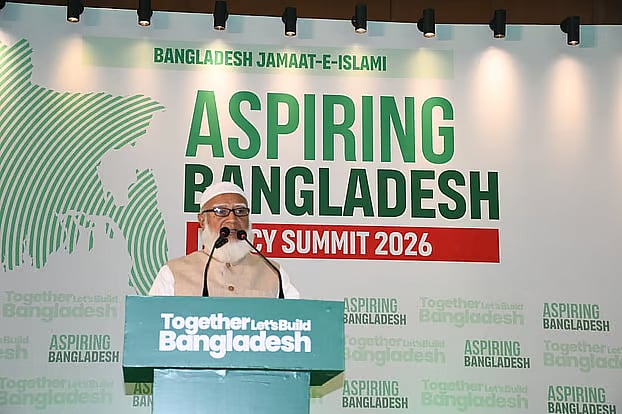
These commitments were announced at the party’s “Policy Summit 2026”, held at a hotel in the capital on Tuesday.
The day-long policy summit featured a series of panel discussions in which Jamaat outlined a range of policies aimed at building a “new Bangladesh”.
Diplomats from various countries, along with politicians, academics, researchers, newspaper editors and other prominent figures, were present at the event.
At the summit, Jamaat also pledged to provide interest-free education loans each year to 100 students seeking to study at the world’s top universities.
The party further announced that, if elected, it would merge Eden Mohila College, Begum Badrunnesa Government Women’s College and Bangladesh Home Economics College, Dhaka to establish what it described as the world’s largest women’s university. In addition, major colleges under the National University would be upgraded to full-fledged universities.
Jamaat-e-Islami at the summit said that, upon assuming power, it would adopt a “zero tolerance” policy towards corruption. Tax and VAT rates would be gradually reduced from their current levels, with long-term targets of 19 per cent for tax and 10 per cent for VAT (currently 15 per cent).
Asked why Jamaat had not nominated female candidates in the upcoming 13th parliamentary elections, the party’s nayeb-e-ameer, Syed Abdullah Mohammad Taher, said this would be implemented gradually.
The party also promised to introduce a Smart Social Security Card integrating NID, TIN, health and social services into a single card.
The party pledged that gas, electricity and water tariffs for industry would not be increased over the next three years. Other promises included reopening closed factories under public–private partnership (PPP) arrangements, allocating 10 per cent ownership of such factories to workers, adopting business-friendly policies, introducing a simplified licensing system, and providing interest-free loans to small and medium farmers.
Jamaat also said that all recruitment would be based strictly on merit. It pledged free healthcare for citizens aged over 60 and for children under five, and promised to establish 64 specialised hospitals—one in each district.
Under its “First 1,000 Days Programme”, Jamaat aims to bring maternal and child health and nutrition, from pregnancy to a child’s first two years, under the social safety net programme.
For young people, the party’s plans include creating a new ministry for skilled manpower development and job placement, providing market-oriented skills training to 10 million youths over five years, establishing “Youth Tech Labs” for graduates in every upazila, and setting up “District Youth Job Banks” in every district to ensure 5 million job placements over five years.
Jamaat also pledged to prioritise women, youth and marginalised groups in creating 500,000 entrepreneurs, to develop 1.5 million freelancers, and to launch skills development programmes tailored to less-educated young people.
During the first session, CPD (Centre for Policy Dialogue) distinguished fellow Debapriya Bhattacharya questioned how Jamaat would finance its economic promises and manage expenditure. While no direct answer was given at the time, it was stated that the issue would be addressed in later sessions.
In the information and technology sector, Jamaat announced “Vision 2040”, which includes targets of creating two million ICT-related jobs and placements by 2030, establishing a national payment gateway for freelancers and digital exports, earning USD 5 billion (500 crores) in ICT export revenue, saving USD 1.5 billion (150 crores) in government expenditure in the ICT sector, and transitioning from a labour-dependent to a knowledge-based economy.
The party also pledged to increase remittance inflows two- to threefold within five to seven years through skilled manpower, and to bring back expatriate Bangladeshi professionals, researchers and academics under what it termed “intellectual remittance”.
Discussion
In his opening address, Jamaat ameer Shafiqur Rahman said that economic growth alone cannot be the sole measure of success. Economic progress, he said, should enable people to plan their lives with confidence, support their families with dignity, and participate meaningfully in society.
At the summit, political scientist professor Dilara Chowdhury questioned how women’s participation would be ensured in the highest policymaking forums.
In response, development policy expert Dewan AH Alamgir said that women’s participation in the economy and politics could be increased through education, access to opportunities and respect for individual choice.
Asked why Jamaat had not nominated female candidates in the upcoming 13th parliamentary elections, the party’s nayeb-e-ameer, Syed Abdullah Mohammad Taher, said this would be implemented gradually.
During the first session, CPD (Centre for Policy Dialogue) distinguished fellow Debapriya Bhattacharya questioned how Jamaat would finance its economic promises and manage expenditure.
While no direct answer was given at the time, it was stated that the issue would be addressed in later sessions.
According to a press release Jamaat-e-Islami issued, ambassadors, high commissioners and diplomats from more than 30 countries—including the United States, the United Kingdom, China, India and Pakistan— and international organisations attended the summit.
Also present were senior Supreme Court lawyer Shahdeen Malik, The Daily Star editor Mahfuz Anam, Sangram editor Abul Asad, Naya Diganta editor Salauddin Babar, The New Nation editor Mokarram Hossain, Prothom Alo executive editor Sajjad Sharif, human rights activist Nur Khan Liton, DBC news editor Loton Akram, DUJ president Mohammad Shahidul Islam, and general secretary Khurshid Alam, among others.
Among political figures, National Citizen Party (NCP) member secretary Akhter Hossen and chief coordinator (northern region) Sarjis Alam, AB Party general secretary Asaduzzaman Fuad, and Bangladesh Khelafat Andolon nayeb-e-ameer Mujibur Rahman Hamidi were also present, alongside other intellectuals, academics and researchers.