Politics
Jamaat unveils visions for ‘New Bangladesh’
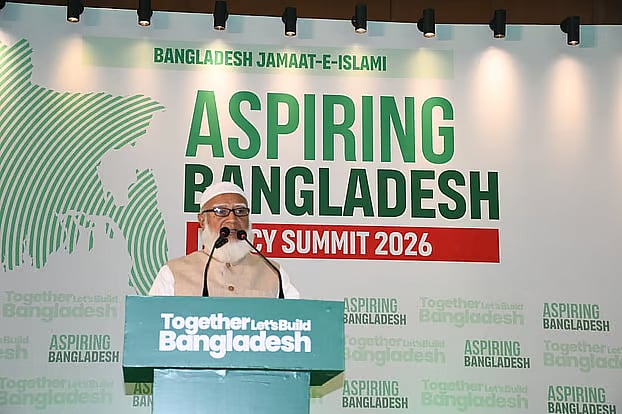
Bangladesh Jamaat-e-Islami has unveiled a policy framework and future vision for a “new and prosperous Bangladesh” ahead of the national parliamentary election scheduled to be held on 12 February.
The framework was presented on Tuesday morning by Jamaat ameer Shafiqur Rahman at the party’s Policy Summit 2026, held at a hotel in the capital. The outline places democratic transition, economic stability, and human dignity at the centre of national political discourse.
Addressing the summit, Shafiqur Rahman said that after years of authoritarian rule, Bangladesh is now passing through a sensitive phase of democratic transition. In this context, he said, the upcoming election is not merely a political event but a crucial moment to determine a new direction of governance for a country of more than 180 million people.
The Jamaat ameer said that the country’s biggest challenge at present is not survival, but stability. He noted that educated young people are struggling to find jobs that match their qualifications, women continue to face structural barriers, and millions of people remain vulnerable to falling into poverty despite working hard every day.
Calling for an honest response to these realities, Shafiqur Rahman said economic growth alone cannot be the sole measure of success. Economic progress, he added, should enable people to plan their lives with confidence, support their families with dignity, and participate meaningfully in society.
He also highlighted the contribution of migrant workers, saying millions of expatriate Bangladeshis demonstrate their love for the country through their labour and sacrifice.
Their remittances, he said, not only support families but also help stabilise the economy and connect Bangladesh to the global labour market. However, their contribution should not be viewed only in monetary terms, as many are eager to play a greater role by bringing skills, experience, and global exposure back home.
Women’s Participation and Structural Reform
At the summit, Shafiqur Rahman said women will play a crucial role in Bangladesh’s future. Increasing women’s participation, he noted, is not only a matter of justice but also an economic necessity.
No country, he said, can achieve sustainable prosperity without fully including half of its population.
Organisers said representatives from 30 countries, including the United States, the United Kingdom, India, and Pakistan, took part in the Jamaat-organised summit.