Bangladesh has formally protested to India over the construction of barbed-wire fencing and other infrastructure projects along the Bangladesh-India border, alleging violations of existing bilateral procedures.
Dhaka has informed New Delhi that various irregularities or deviations have been identified in fencing projects at 68 locations along the border. It has stated that work on barbed-wire fencing at another 86 locations cannot commence until those irregularities are rectified.
In a communication sent this week to the Indian High Commission in Dhaka, Bangladesh’s Ministry of Foreign Affairs said that Indian authorities had carried out various activities within 150 yards of the border without obtaining Bangladesh’s consent.
These activities include attempts to construct barbed-wire fencing, construction or repair of roads, establishment of border posts or other structures, and construction of bridges, culverts, embankments, or similar defensive infrastructure.
Bangladesh maintains that these activities are inconsistent with the 1975 Joint Guidelines of the Bangladesh-India Border Authorities and existing bilateral understandings and procedures governing activities in border areas. Dhaka therefore expects India to take the necessary steps to address these irregularities.
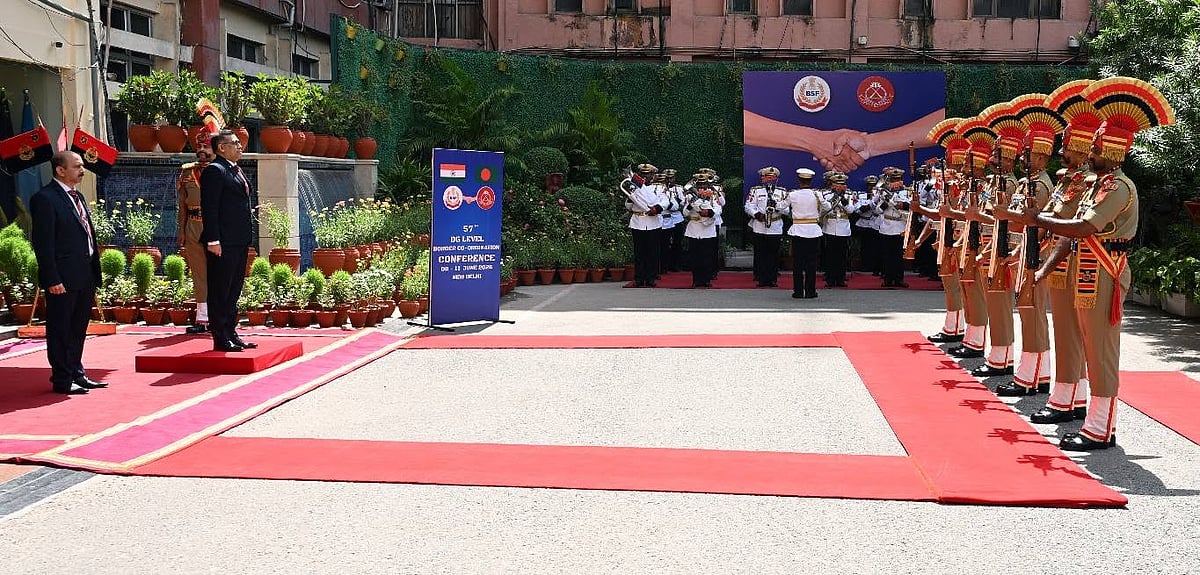
The message was conveyed by Bangladesh around the time the Director General-level meeting between the Border Guard Bangladesh (BGB) and India’s Border Security Force (BSF) began in New Delhi.
Wednesday marked the third day of the talks, during which both sides discussed finalising the draft of the agreed minutes of the meeting. The four-day meeting concludes today, Thursday.
However, diplomatic sources said that, unlike previous occasions, the two sides will not hold a joint press conference after the meeting and will instead issue a press release.
The BGB-BSF meeting is taking place amid continued attempts by India to push people into Bangladesh. Bangladesh has described such “push-ins” as illegal, contrary to human rights, and in violation of international law.
India, on the other hand, has maintained that it is repatriating undocumented foreign nationals in accordance with its domestic laws and established procedures.
On Tuesday night, the BSF again attempted a push-in through the Rahimpur border area of Dewanganj Upazila in Jamalpur district. However, the attempt was thwarted due to the vigilance of BGB personnel and local residents. The BSF had previously made a similar attempt through the same location.
Dhaka’s protest
Diplomatic sources said that Bangladesh had also protested to India in February last year over similar border activities, including attempts to construct fencing. In its latest communication, Dhaka highlighted irregularities identified along the border between February 2025 and May 2026.
According to Bangladesh, India carried out various activities within 150 yards of the border without obtaining Bangladesh’s consent. Such incidents were identified at a total of 68 locations.
In some cases, multiple violations occurred at the same site. These included 39 instances of attempts to construct barbed-wire fencing, 33 cases involving road construction or repair, 27 instances of constructing border posts or other structures, 20 cases involving bridges, culverts, embankments, or similar defensive installations, and 18 other infrastructure-related activities.
In its objection sent to India, Bangladesh stated that although there is a rule prohibiting the deployment of border guards or other armed personnel within 150 yards of the zero line, armed BSF personnel have been observed performing duties in those areas after the fencing was installed.
The protest further noted that at several locations, welded wire mesh and bulletproof barbed-wire fencing had been constructed in deviation from the approved designs.
In most cases, fencing could have been erected farther from the border, but was instead built close to the zero line without any acceptable justification. Bangladesh also alleged that patrol posts, entry gates, CCTV cameras, and searchlights had been installed alongside the fencing without its approval.
Dhaka’s position is that work should not resume at the 68 completed sites and five under-construction sites where deviations have been identified until the irregularities are corrected.
Likewise, at the 86 locations where barbed-wire fencing has not yet begun, Bangladesh has said that joint inspections must first be completed and the minutes of bilateral discussions finalized before construction can proceed.
Bangladesh has also called for an end to the presence of BSF personnel or other armed members within 150 yards of the zero line.
Former ambassador M Humayun Kabir believes that both countries should take initiatives to restore normalcy and avoid the continuing tensions surrounding push-in incidents along the Bangladesh-India border.
Speaking to Prothom Alo, he said that it was desirable for both sides to make efforts through existing institutional mechanisms to overcome the current tensions and move toward a more stable situation.