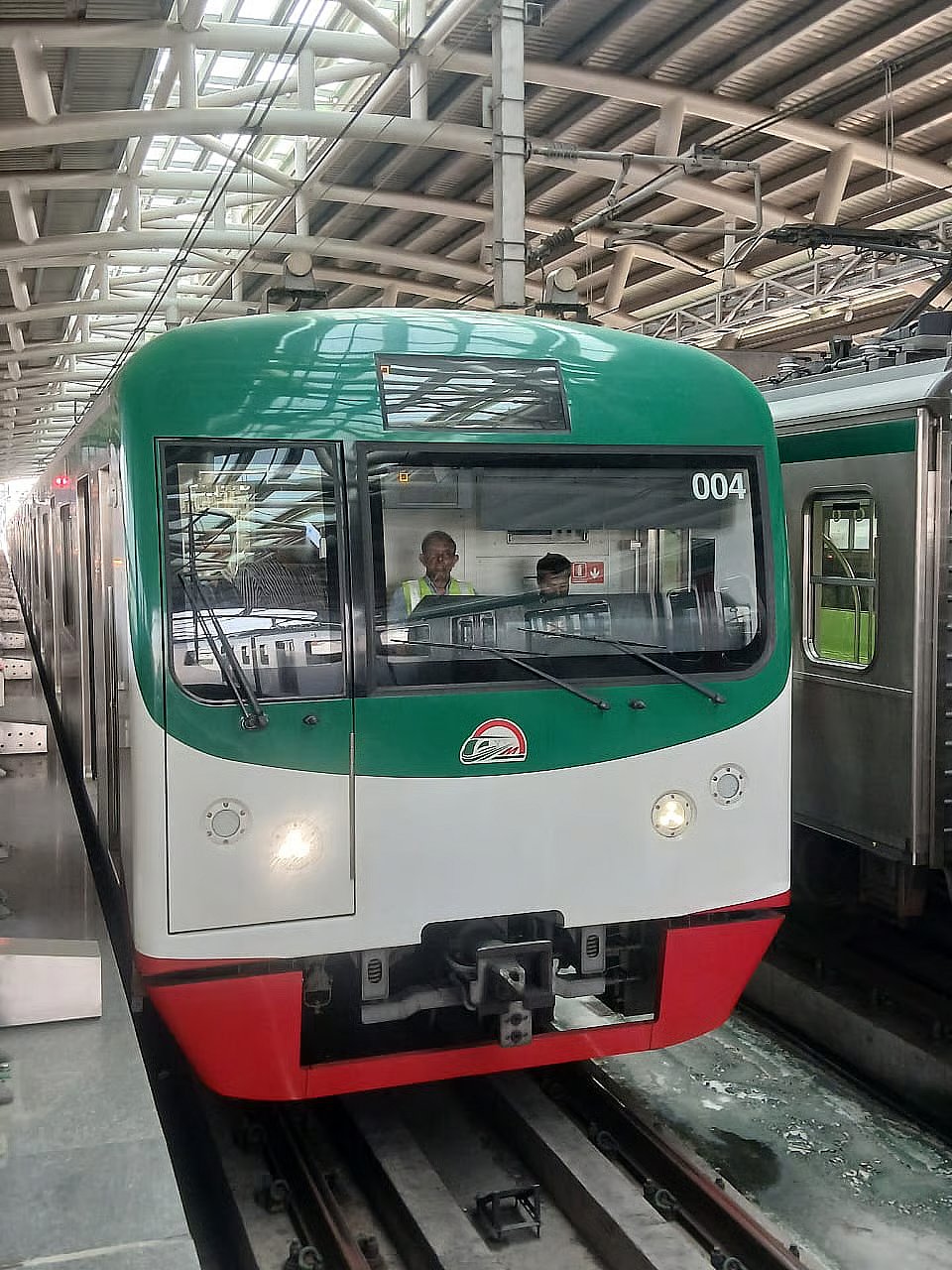
Metro Rail cards can be recharged from home from 25 Nov
Metro rail users will no longer need to visit stations to recharge their permanent cards. From 25 November, passengers will be able to top up their cards from home using bank credit cards, bKash, Nagad, Rocket and other online banking methods.
Sheikh Moinuddin, Special Assistant to the Chief Adviser (Road, Bridges and Railways), will inaugurate the service. Initially, recharges can be done by following a link available on the Dhaka Transport Coordination Authority (DTCA) website. Next month, a mobile app will be launched, enabling users to recharge directly through the app. These details were confirmed by DTCA sources.
Once the system is introduced, passengers will no longer have to stand in queues at stations or bank booths to recharge their permanent cards. However, single-journey cards cannot be purchased online; those will still need to be bought at stations.
Speaking to Prothom Alo, DTCA Executive Director Nilima Akhter said the new system will eliminate the need to queue at stations for permanent card recharges. It will save passengers time and reduce hassle.
Using mobile apps like bKash, Nagad and Rocket, people already pay electricity, internet and various other bills from home. Metro rail passengers had been demanding a similar system from the beginning, and the authorities are now moving to introduce it.
Currently, two types of permanent cards are used on the metro rail—RapID and MRT Pass. Under the new system, both types can be recharged through online banking at any time.
However, after recharging online, commuters will need to tap their permanent card at least once on a special device at the station, known as an Add Value Machine (AVM), to update the balance.
After recharging money online, users will only need to tap their card on the machine once; it will remain valid until the balance is exhausted. When the balance runs out and is recharged again, the card will need to be tapped once more.
The Dhaka Mass Transit Company Limited (DMTCL), responsible for constructing and operating the Dhaka Metro Rail, issues its own permanent smart card known as the MRT Pass.
Meanwhile, the permanent card supplied by the Dhaka Transport Coordination Authority (DTCA) is called the Rapid Pass. This card is for use not only on the metro rail but also on buses, trains and other modes of public transport.
The clearing house responsible for processing transactions made with permanent cards falls under the DTCA. The DTCA has outsourced the system for topping up Rapid and MRT cards from home to a private company named DataSoft.
How money can be recharged
There are several steps to recharge a metro rail permanent card from home. According to the DTCA’s system, users must first register and log in to the DTCA website or mobile app.
After clicking on the recharge option, they must select whether they wish to top up a Rapid Pass or an MRT Pass. They must then choose a payment method, either a bank card or mobile banking, and deposit the amount.
Once payment is successful, the card must be tapped at a station machine for the recharge to take effect.
The policy states that customers will have to pay an additional fee for using the payment gateway. The recharge amount will remain in pending status until the card is tapped at an AVM (Add Value Machine). Pending recharges will remain valid for three months.
If the card is not tapped within this period, the recharge amount will be returned to the user’s original payment account, but a 10 per cent service charge will be deducted.
Passengers may request a refund of the recharge within seven days, though this will also incur a 10 per cent fee.
DTCA sources said preparations to install AVM machines at metro stations began last Monday. Two machines will be installed in spacious areas of each station. A total of 32 AVM machines will be installed across the 16 stations from Uttara to Motijheel on 21 and 22 November.
How it currently works
At present, all recharge values and customer information are stored on the MRT and Rapid Pass cards themselves. The machines at each metro station gate can read this information directly.
However, if users recharge online, the balance will reside in the software system rather than on the card. As a result, tapping on the regular entry gate will not display the updated balance. This is why separate AVM machines are being installed: tapping the card on an AVM will update the card with the online recharge information.
After this, users may continue to enter and exit stations simply by tapping at the usual gates until the balance runs out.
Passengers using an MRT or Rapid Pass receive a 10 per cent fare discount. Currently, 55 per cent of metro users travel with these cards, while the remaining 45 per cent use single-journey cards.
When the metro rail project was originally approved, it was stated that this electric train service would operate from morning until midnight.
At full capacity, trains are expected to run every three and a half minutes. Under this system, the network would be able to transport 60,000 passengers per hour and 500,000 passengers per day.
Meanwhile, construction work is underway to extend the metro line to Kamalapur. Once that extension is complete, daily passenger capacity will reach approximately 677,000.
At present, the metro rail carries an average of nearly 450,000 passengers per day.
Last month, operating hours were extended. With services now starting half an hour earlier, the first train leaves Uttara North station at 6:30 am, while the last train departs at 9:30 pm.
From Motijheel, the first train departs at 7:15 am, and the final service leaves at 10:10 pm.
The authorities plan to reduce the headway between trains by two minutes next month. They expect that, once this adjustment is made, daily ridership will exceed half a million.