Los Angeles Consulate: Expatriates urged to invest in IT, energy and other sectors
The Bangladesh Consulate in Los Angeles has invited open investment proposals from Bangladeshi businesspersons and entrepreneurs living in the United States, with a view to expanding expatriate investment in a range of promising sectors in Bangladesh.
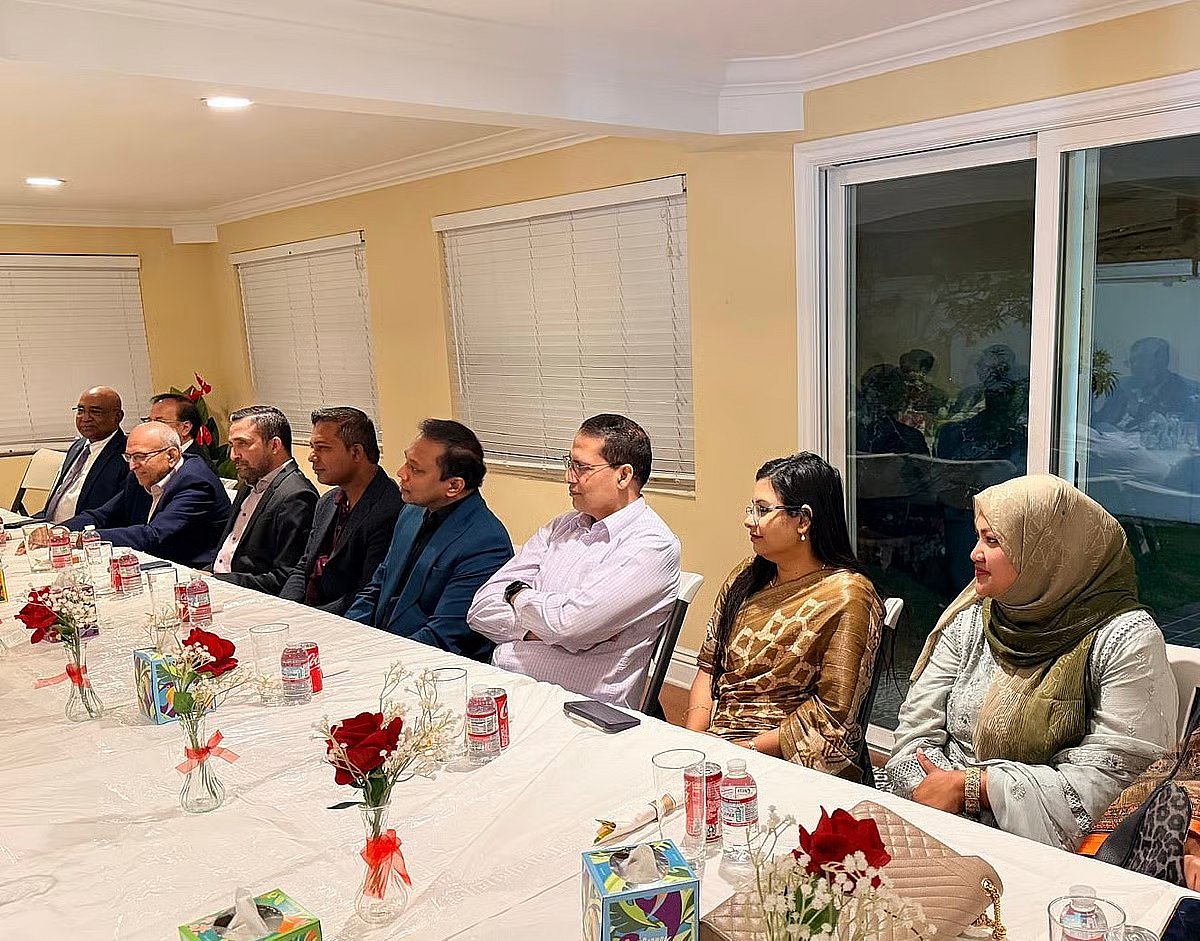
Detailed discussions on investment prospects in Bangladesh, existing challenges and future plans took place recently at an informal meeting to exchange views at the residence of Bangladesh Consul General Kazi Mohammad Javed Iqbal in Los Angeles.
At the meeting, expatriates were urged to take an active role in tapping the significant investment potential in information technology (IT), energy, data services, hospitality, healthcare and other emerging sectors.
Consul General Javed Iqbal said the consulate was fully prepared to support expatriate Bangladeshi entrepreneurs interested in investing in Bangladesh.
He said the mission would play an important role in providing investment-related information and guidance, coordinating with relevant public and private institutions, and helping identify promising sectors for investment.
The Consul General further said expatriates were being encouraged to come forward with investment proposals grounded in practical realities, while assuring that all necessary support from the consulate would continue.
He also expressed optimism that the Ministry of Foreign Affairs, relevant agencies and the Bangladesh Investment Development Authority (BIDA) would stand beside expatriate investors.
Mohammad Basit said he was interested in investing in Bangladesh’s energy and hospitality sectors. Noting the considerable potential in both sectors, he said investment could increase if registration and licensing processes were simplified and completed within a short timeframe or through fixed-fee arrangements.
The consulate’s doors remained open at all times for those wishing to discuss investment plans directly, he added.
Participating expatriate entrepreneurs said they were interested in investing in Bangladesh out of a sense of attachment to the country. However, they identified post-investment approvals, land allocation, electricity and gas connections, tax incentives and the repatriation of profits as major challenges due to procedural complexity and delays. They stressed the need to make BIDA’s services faster, more transparent and more investment-friendly.
Proposal for a data centre
Entrepreneur Hasibul Sharif said one of the most encouraging developments was that the government was now listening to expatriates.
He said he had recently submitted a proposal to establish a data centre and received a response within just one week. The consulate later informed him about how such an investment initiative could be implemented in Bangladesh and what opportunities existed. He said he wanted to contribute to Bangladesh’s development.
Speaking later to Prothom Alo, Hasibul Sharif said establishing an AI-based data centre in Bangladesh could help improve the quality of internet, electricity and water supply infrastructure.
He described it as a major project requiring both public and private investment and cooperation. In his view, implementing such AI data centres would have positive effects on Bangladesh’s GDP growth, the attraction of foreign investment and overall improvements in living standards.
He added that artificial intelligence was no longer the future, but a present reality. Just as the internet in the 1990s and social media in the 2000s transformed everyday life, AI technology, he said, would have a profound impact on all aspects of daily life in the years ahead.
Hasibul Sharif expressed hope that Bangladesh would be able to keep pace with this technological transformation in time.
Investment process needs simplification
Speaking at the meeting, Nasir Khan said he wanted clearer guidance on what the government expects from expatriates and what benefits they might receive as non-resident Bangladeshis (NRBs).
A simplified investment process would encourage more expatriate entrepreneurs to invest in Bangladesh, he stated.
Mohammad Basit said he was interested in investing in Bangladesh’s energy and hospitality sectors.
Noting the considerable potential in both sectors, he said investment could increase if registration and licensing processes were simplified and completed within a short timeframe or through fixed-fee arrangements.
Mohammad Basit also suggested that, when investors face difficulties, the consulate could play a role by quickly liaising with relevant ministries to help resolve problems.
At the meeting, Wahidur Rahman said local businesspeople were interested in participating in a trade fair to be held in Las Vegas. He also discussed export potential from Bangladesh, including plastic bags and other products.
Syed Nasir Uddin Jebul, taking into account current gas and electricity shortages in Bangladesh, urged businesspeople in Los Angeles to consider investing in the energy and power sectors. He called on expatriate entrepreneurs to explore these opportunities further and come forward.
Asked about the matter, BIDA Executive Chairman Chowdhury Ashik Mahmud Bin Harun told Prothom Alo that, following BIDA’s restructuring, a dedicated desk had been established for non-resident Bangladeshi investors.
According to him, as the needs, challenges and procedural requirements of NRB investors differ from those of domestic investors, this special arrangement had been introduced. A designated officer at the desk is providing end-to-end support for NRB investors.
He said BIDA had already provided support in various cases, with several successful investment initiatives to show for it.
The BIDA chief further said the authority’s goal was to make expatriate investment easier, faster and more productive.
He noted that expatriates bring not only financial capacity but also advanced technical knowledge and skills acquired through working abroad—expertise that remains underdeveloped in many sectors in Bangladesh and could play an important role in national development.
As an example, Ashik Chowdhury referred to a London-based Bangladeshi expatriate investor who, as a neuropsychologist, had established an institution in Bangladesh in collaboration with BRAC and with financing from an NRB fund. He described it as a highly positive and inspiring example.
He added that if NRB investors channelled investment into Bangladesh according to their areas of expertise and specialisation, it would create new employment opportunities and increase technology-driven, knowledge-based investment in the country. Such investors, he said, could submit proposals directly to BIDA or through the consulate.
Others present at the meeting included California BNP President Badrul Alam Chowdhury (Shiplu), Mikhail Khan, Asif Iqbal, Monirul Islam, Khalid Khuda, Syed Hasan Ferdous, Firoz Fakhri and Moazzem Chowdhury, among others.