Prothom Alo explainer
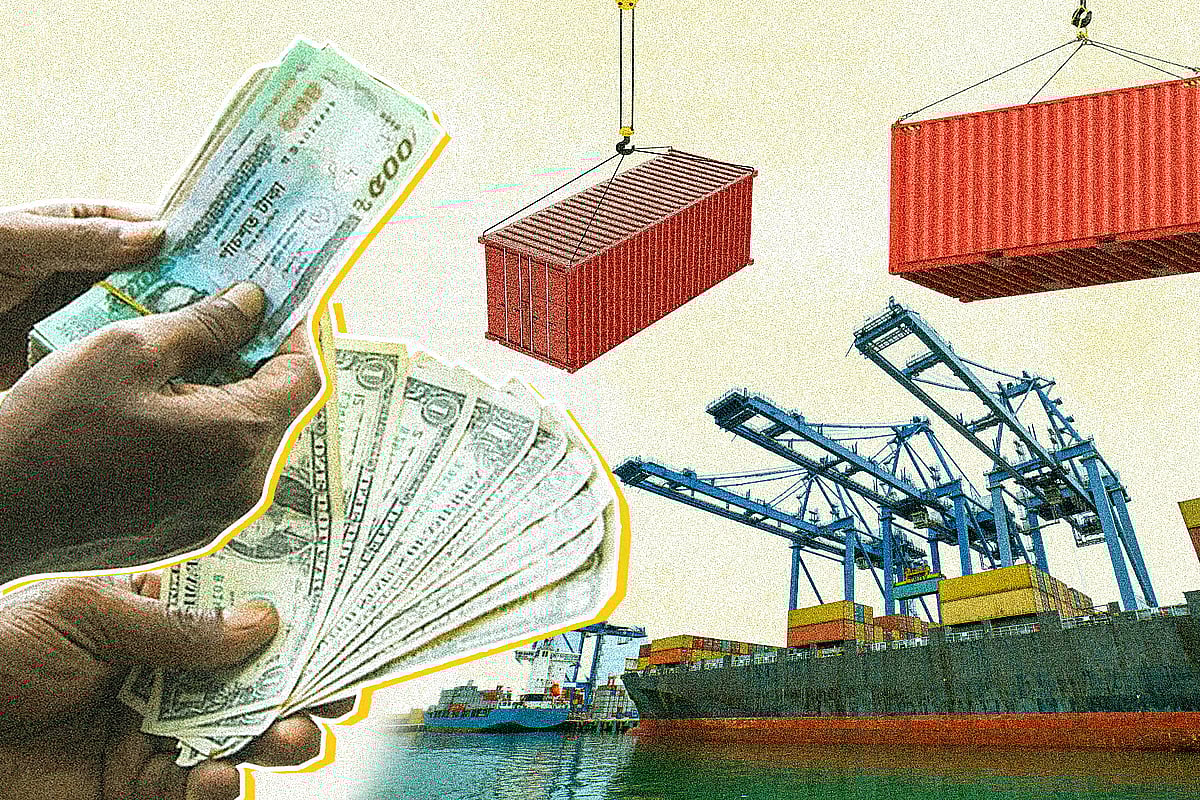
Chittagong port: who gains and who loses from the increased port charges
Question: When and why did the controversy begin?
Answer: The process of appointing foreign operators at Chittagong Port began during the tenure of the Awami League government. Initially, it did not generate significant controversy. The situation changed after the interim government assumed power. Many port users had believed that the interim administration would withdraw from the process initiated under the Awami League, particularly by refraining from handing over the well-functioning New Mooring Container Terminal (NCT) to foreign operators.
However, contrary to expectations, the interim government initiated the process to transfer the terminal to DP World, a UAE-based company, under a long-term agreement.
The controversy intensified further when it was announced that the process would proceed through a G2G (government-to-government) arrangement without a competitive tender.
In March this year, the port unit of the Jatiyatabadi Sramik Dal launched protest programmes against the decision. The Left Democratic Alliance soon joined in, sparking further political debate.
Amidst the growing controversy, the government finalised a new tariff structure for Chattogram Port. Despite objections from the business community, service charges were increased by 41 per cent on 14 September, taking effect on 15 October. Business groups subsequently began protests against the rise.
Question: Who are objecting to the tariff hike and why?
Answer: Business leaders were the first to raise objections. Under the banner Chattogramer Sarbasthorer Bebshabrindo’, they held a meeting at the Radisson Blu Hotel on 12 October, alleging that the tariff increase was designed to benefit foreign operators.
Subsequently, on 21 October, businesspeople staged a protest under the banner ‘Chittagong Port Users’ Forum’. They stated that if the tariff hike was solely to favour foreign operators, the forum would also oppose their appointment.
Following this, a group named Labourers, Students, Professionals and Citizens to Protect Chittagong Port organised further demonstrations. At a rally on 25 October at Badamtoli in Agrabad, they claimed that the Chittagong Port earns profits exceeding Tk 25 billion annually. Despite this, the government increased tariffs by 41 per cent to ensure profit margins for foreign companies even before handing over operations. They argued that the interim government has no legitimate authority to make such a decision.
Question: Is there a connection between the appointment of foreign operators and the tariff hike? What are the arguments for and against?
Answer: Documents related to the appointment of foreign operators indirectly recommended updating the existing tariff structure. The transaction adviser for the projects to be handed over to foreign operators, the International Finance Corporation (IFC), a member of the World Bank Group, stated in an April report that the current tariff structure was not sufficient to attract private investment, particularly in the development of new ports or terminals.
Following this recommendation, the decision to increase port tariffs gained momentum and was implemented on 15 October. Business leaders view the IFC’s recommendation as evidence that the tariff increase was made to facilitate the interests of foreign operators.
In response to the criticism, the port authority defended the tariff revision in a statement sent to the media. While it did not address the allegation of favouring foreign operators, it argued that only five out of 52 service categories had seen tariff adjustments since 2007, nearly 40 years.
Meanwhile, the costs of equipment, fuel, manpower and maintenance have multiplied significantly. The authority also noted that ongoing and planned development projects at the port would require Tk 333.21 billion in funding, which must be generated internally.
Question: Who benefits the most from the tariff increase, the foreign operators or the port authority?
Answer: Broadly, two types of charges are collected at the port. One is Sea-side charges – for services provided within port waters, such as port dues, pilotage, tug hire, river dues and berthing charges. Another is Land-side charges – for terminal-based services, including container loading and unloading, transport within the terminal, storage and delivery of goods from containers.
Under the concession agreements for the New Mooring Container Terminal (NCT) and Laldia Container Terminal, the foreign operators will collect fees for terminal-based (land-side) services, while the port authority will continue to collect charges for sea-side services.
As approximately 70 per cent of the total port revenue is generated from terminal-based services, the foreign operators will benefit the most from the tariff hike, as they will collect those charges directly.
The port authority will gain comparatively less, though it will still receive a share of the operators’ revenue as per contractual terms.
In 2024, Bangladesh signed an agreement with Saudi Arabia’s Red Sea Gateway Terminal (RSGT). Under this agreement, the Saudi company collects tariffs for terminal services as set by the government. The contract also specifies that any increase in port tariffs will automatically apply to the Red Sea Gateway Terminal.
Question: How much will the cost of using the port increase due to the tariff hike?
Answer: To determine how much costs will rise following the tariff increase, this correspondent reviewed the Chittagong Port’s audit report for the fiscal year 2023–24. The report was analysed to estimate, sector by sector, how much additional revenue the port would generate and therefore, how much more users would have to pay.
The review shows that with the new tariff in effect, the average additional charge per 20 foot container is approximately USD 39 (Tk 4,395). The port authority, however, claims that the increase amounts to Tk 3,800 per container on average, which would add a maximum of Tk 0.12 per kilogram to the price of goods.
Question: How will the tariff increase affect consumer costs?
Answer: The majority of port service charges are paid by shipping agents. Some charges, such as storage fees are paid directly by importers. While shipping agents initially pay the port, they recover these costs from importers or exporters through freight charges.
Following the tariff hike at Chittagong Port, shipping companies initially announced that they would impose a surcharge of USD 45–100 per container to offset their immediate losses without increasing freight rates. However, after the port authority’s intervention, these notices were withdrawn.
Shipping companies have since indicated that they will recover the additional costs through freight adjustments charged to importers or exporters. Importers, in turn, will add these expenses to their total import costs, ultimately passing them on to consumers. Consequently, the tariff increase imposed by the port could result in consumers bearing nearly double the financial burden once the costs circulate through the supply chain.
Question: Will exporters be adversely affected by the tariff increase?
Answer: Exporters deliver goods from their factories to private depots using covered vans. There, the goods are handed over to representatives of foreign buyers. All subsequent port-related charges, up to the destination country, are paid by the foreign buyers or their agents.
Exporters argue that regardless of whether the additional costs are paid by importers or exporters, they will ultimately be reflected in the final product price.
When tariffs or freight charges increase, foreign buyers typically renegotiate purchase prices to offset these costs. As a result, Bangladeshi exporters fear they may lose competitiveness in international markets due to higher export-related costs.
Question: How do the charges at Chittagong Port compare with regional ports? How accurate are the traders’ complaints?
Answer: According to the Port Users Forum, the increased charges will make Chittagong Port one of the costliest ports in the world. Taking this allegation into account, let’s look at global port charges for comparison.
Before the fee hike, the International Finance Corporation (IFC), a World Bank affiliate, compared tariffs at 14 ports and terminals in seven countries — Bangladesh, India, Sri Lanka, Malaysia, Myanmar, Vietnam, and Cambodia — in a report published last March.
The IFC report shows that before the increase, the average cost for handling (loading/unloading) and storing a container at Chittagong Port was $126.66 per box (counting one box as any size container). This rate was higher than that of 10 other terminals, including Cambodia’s Phnom Penh Port, Thailand’s Laem Chabang International Terminal, Malaysia’s Tanjung Pelepas Port, and Vietnam’s Ho Chi Minh City’s Vietnam International Container Terminal.
It was lower only than Sri Lanka’s South Asia Gateway Terminal (SAGT), Myanmar’s International Terminals Thilawa (MITT), and India’s APM Terminals Pipavav.
After recalculating based on the new tariff, the cost of handling and storing each container at Chittagong Port is expected to rise by around $47.
Considering the IFC data, after the new tariff takes effect, Chittagong’s Port charges will be higher than those at 13 other ports — second only to Sri Lanka’s South Asia Gateway Terminal. In other words, Chattogram will become the second most expensive port in the region.
The IFC comparison also shows that cargo handling at Chittagong takes longer, resulting in higher storage costs. This, in turn, increases the overall average charge.
However, the Chittagong Port Authority claims that its charges remain lower than those at Sri Lanka’s South Asia Gateway Terminal and Myanmar’s Yangon Port.
Question: How are port charges determined abroad?
Answer: To understand how tariffs are determined internationally, we can refer to a policy report by the Germany-based think tank Global Solutions. Its 2022 report on encouraging private sector investment in ports analysed tariff-setting mechanisms in 21 countries.
The report found that in 13 developed countries, including those in Europe, tariffs are determined on a market-based competitive basis under competition law. In Indonesia, tariffs are approved by the government following negotiations with port users. In Saudi Arabia and South Africa, tariffs are set by government authorities, while in China, they are directly regulated by the government.
In neighboring India, tariffs for major ports have traditionally been set by the Tariff Authority for Major Ports (TAMP). However, tariffs are now also being determined through market-based competition.
Thus, even though developed ports set tariffs competitively, there is no scope for arbitrary increases, since competition law indirectly regulates them. Moreover, many of these ports operate under public–private partnerships (PPP).
Chittagong Port has long operated under a “tool port” model, where the government retains control but allows some operations to be run by private operators. Under this model, tariffs were determined based on operating costs. After the first tariff schedule in 1986, rates were officially raised in five categories through a gazette notification in 2007.
Now, after many years, the port is transitioning to a “landlord port” model — a public–private partnership system where the government retains ownership of the land, while private companies build and operate jetties, equipment, and other infrastructure for long-term use. The Patenga Terminal, launched in June last year, is operating under this model.
Just before this transition, the government raised port charges. A foreign consulting firm conducted a study before the new tariff was fixed. The Port Authority and the Ministry of Shipping also held discussions with port users. However, user associations have said that the new tariff did not meet their expectations. Additionally, due to a lack of strong leadership in major business organisations, suitable representatives from the business community could not participate effectively in the discussions.
Question: The charges have been increased — when will foreign operators be appointed?
Answer: Out of the four planned terminals, Chittagong Port has completed preparations to appoint foreign operators for two. The first agreement is expected to involve the Laldia Container Terminal, likely to be signed by mid-November with APM Terminals of the Netherlands for its construction, investment, and operation.
The most talked-about New Mooring Terminal is scheduled for an agreement in December, with the process underway to award its operation to DP World, the state-owned port operator of the United Arab Emirates.
In addition, under the Bay Terminal project, two more terminals are being developed — one to be operated by PSA International of Singapore and the other by DP World of the UAE. However, there is no possibility of a deal this year; agreements may be finalised next year.
Apart from the seagoing container terminals, the Pangaon Inland Container Terminal — located on the banks of the Buriganga River in Keraniganj, near Dhaka — is also being handed over to a foreign company. Less than 1 per cent of the total imports and exports handled through Chittagong Port pass through this terminal.
Question: What are the latest developments and reactions regarding the appointment of foreign operators and the tariff hike?
Answer: So far, the government remains firm on its decisions to both appoint foreign operators and increase tariffs. On the other hand, professionals and business groups continue to express anger and dissatisfaction, organising various protest programmes and movements.
Amid this tension, the Chattogram Metropolitan Police has banned all kinds of rallies, processions, human chains, and street meetings in the port area and its surroundings for one month from 11 October. Police stated that the move aims to ensure uninterrupted import and export operations at the port. However, opponents claim that the ban was intended to prevent protests against the appointment of foreign operators and the increase in port charges.
Under the banner of the Port Users Forum, traders staged several protest programmes against the tariff hike. On 19 October, shipping agents observed a four-hour work stoppage, and truck owners also suspended operations in protest. Later, they called off their programmes following an assurance from port authorities that the charges would be reviewed.
Meanwhile, on 22 October, the Sramik-Karmachari Oikya Parishad (SKOP) organised demonstrations near the Agrabad area protesting the appointment of foreign operators at terminals including New Mooring. The gathering announced a hunger strike at the Chattogram Press Club on 1 November. On the following Saturday, another protest was held under the banner of Workers, Students, Professionals, and Citizens to Save the Port, reaffirming continued resistance to the move.
Question: What are economists, researchers, business leaders, port experts, the government, and protest groups saying?
Answer: The reporter spoke with economists, researchers, former port officials, business representatives, government advisers, and protest organisers about the ongoing debate surrounding the appointment of foreign operators and the increase in port charges.
Mustafizur Rahman, Distinguished Fellow at the Centre for Policy Dialogue (CPD), said that instead of raising port charges all at once, they should have been increased gradually. A sudden 41 per cent hike will reduce Bangladesh’s export competitiveness, he warned. Importers will ultimately pass on the increased costs to consumers.
Md Zafar Alam, former Additional Secretary and former Board Member of the Chittagong Port Authority, said that since the port is entering into agreements to hand over operations to foreign companies, the tariff structure should have been designed keeping that in mind — ensuring that businesses are not overburdened while investors do not incur losses either. Based on the current experience with the tariff hike, he suggested forming a regulatory authority to periodically review and adjust tariffs. This would eliminate the need for sudden, steep increases.
Ameer Humayun Mahmud Chowdhury, Convenor of the Port Users Forum, said port tariffs are collected in US dollars. Over the past four years, the rise in the dollar’s exchange rate has already caused a 42 per cent increase in local currency terms. In such a situation, raising tariffs further to benefit foreign operators is unjustified. He added that the new tariffs will raise consumer costs and hurt exporters, stressing that the tariff structure should protect the interests of businesses.
Professor Anu Muhammad, member of the Committee for Democratic Rights, argued that the tariff increase was not intended to expand port capacity but rather to favour foreign companies, and that the decision was influenced by multinational corporations. He warned that the higher tariffs would harm the national economy in multiple ways — raising import costs, which consumers would have to bear, and fueling inflation.
Shipping adivser M Sakhawat Hussain rejected such claims.
He said the increase was not meant to benefit any particular party. The tariff schedule was first introduced in 1986, nearly 40 years ago, and discussions were held with port users before the revision. “If someone still objects,” he asked, “does that mean we cannot revise tariffs even after 40 years?”