HRSS Report
Human rights situation was alarming during 17 months of interim govt
The human rights situation in the country during the 17 months of the interim government (from September 2024 to January 2026) was alarming, according to the Human Rights Support Society (HRSS).
The rights organisation said that during this period there were various human rights violations, including political violence, mob violence, attacks on journalists, interference with freedom of expression, border killings, and a deterioration of law and order.
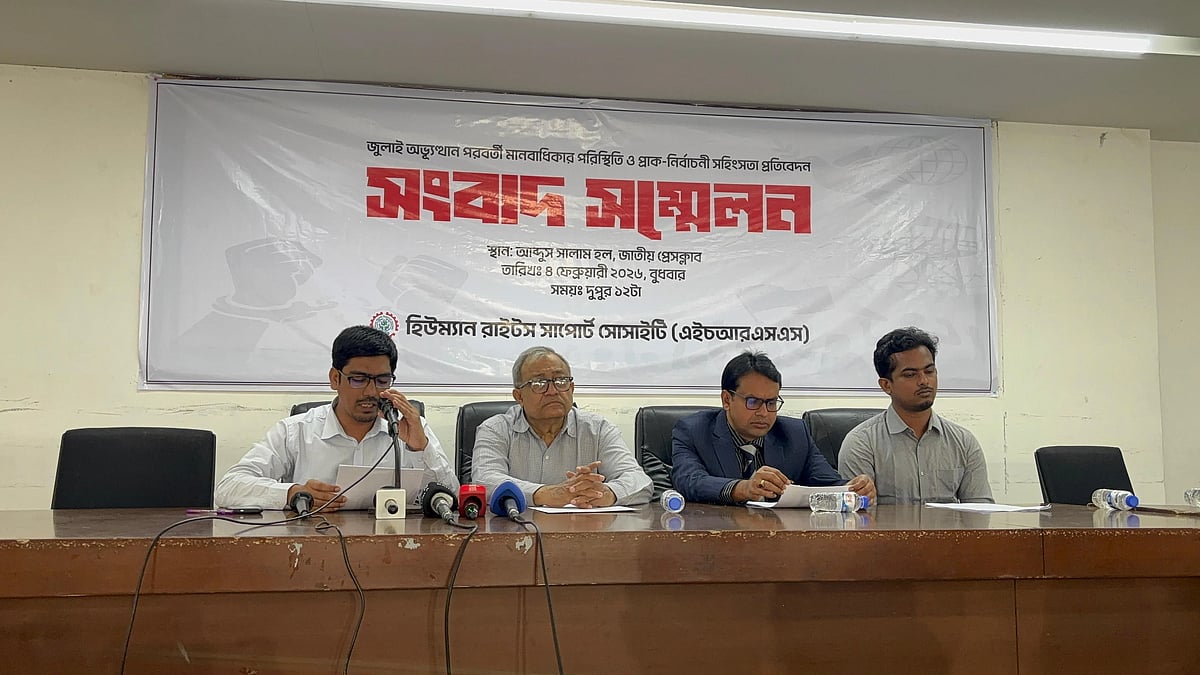
HRSS Executive Director Ejazul Islam presented the information while unveiling a report titled “Post–July Uprising Human Rights Situation and Pre-Election Violence” at a press conference at the Abdus Salam Hall of the National Press Club in Dhaka today, Wednesday.
At the press conference, human rights activist Noor Khan Liton said, “Mob violence reached such a level that state forces failed to take adequate action. Various offices were attacked by mobs.”
“During this time, the presence of some invisible forces was observed. As a result, the character, activism, and ideals of the mass uprising became blurred,” he added.
The report stated that although the interim government formed after the 2024 mass uprising took some initiatives to ensure judicial independence and improve human rights, these efforts were insufficient. Failure to control mob violence increased public frustration and concern over citizen security, human dignity, and social justice.
Political and election-related violence
According to HRSS data, over the past 17 months at least 195 people were killed and 11,219 injured in 1,411 incidents of political violence. The main causes included struggles for dominance, political revenge, clashes over rallies and elections, extortion, and illegal occupation of establishments. Among political parties, the BNP suffered the most. In 704 incidents involving the party, 121 people were killed and 7,131 injured.
During the same period, 156 people were killed and 249 injured in 236 terrorist attacks. More than 300 people were shot, and over a hundred political offices and more than 130 houses, business establishments, and vehicles were vandalized or set on fire.
Ahead of the 13th parliamentary election, between October and December, seven people were killed and 1,403 injured in 155 election-related violent incidents. Among notable cases, Inqilab Moncho spokesperson Shahid Sharif Osman bin Hadi died while receiving treatment in Singapore after being shot in Paltan. Fatal incidents over nomination disputes also occurred in Chattogram, Mymensingh, and other areas.
Mob violence and attacks on journalists
The report noted that in 17 months, 259 people were killed and 313 injured in 413 incidents of mob violence and lynching. In 427 attacks on journalists, six were killed and 834 were subjected to assault or harassment. During this time, 222 journalists were accused in 49 cases. Incidents of vandalism and arson also occurred at the offices of Prothom Alo and The Daily Star.
Under the Cyber Security Act and the Cyber Protection Ordinance, 69 people were accused in 41 cases and 33 were arrested. HRSS expressed concern over possible misuse of the law, as most cases were filed over social media content.
Extrajudicial killings and minority persecution
In 17 months, 60 people were killed in clashes with law enforcement agencies, in custody, or due to torture. A total of 127 detainees died in prisons, including 44 convicts and 83 undertrial prisoners. Families of several individuals, including former industries minister Nurul Majid Mahmud Humayun, alleged that the deaths were planned killings.
Members of minority communities were targeted in 56 attacks, leaving one person dead and 27 injured. During this period, 17 temples, 63 idols, and 65 houses were attacked or vandalised.
Attacks on shrines and border killings
More than a hundred shrines across the country were attacked or vandalized. At the border, 43 Bangladeshis were killed in 110 incidents. Additionally, three people were killed in attacks along the Bangladesh–Myanmar border.
During the same period, 2,617 women and children were victims of violence. Among them, 1,016 were victims of rape, and 478 children died due to abuse. Hundreds of workers were also killed or injured in incidents of labour abuse and workplace accidents.
HRSS said the report was prepared based on information collected from 15 national daily newspapers and its own sources, covering the period from September 2024 to January 2026. Maniruzzaman and other officials of the organization were present at the press conference.