More than 1,000 books have been written about the UK’s wartime Prime Minister, Winston Churchill. According to a 2021 annotated bibliography by Hillsdale College, the total number of works, including biographies and specialised studies, exceeds 1,200. How many books have been written about Bangladesh’s wartime Prime Minister, Tajuddin Ahmad, over the last 55 years? The answer is unknown, but it is highly unlikely that the total, including his own writings, has exceeded 50. This relative neglect of a political leader who led the wartime government is remarkable in a country where political discussion is pervasive.
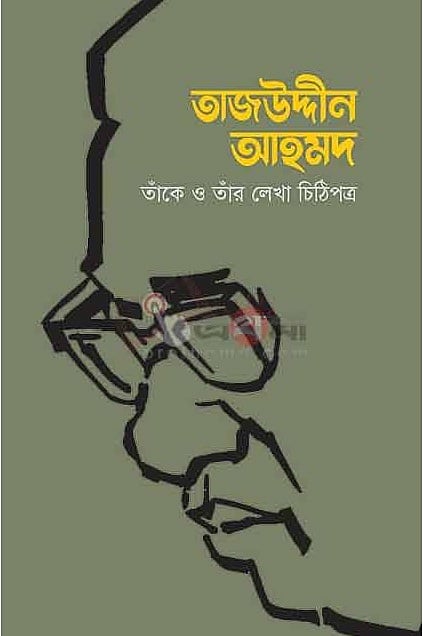
In that near-vacuum, a book on the letters written by Bangladesh’s wartime and first Prime Minister, as well as letters addressed to him, is a welcome addition. The book is compiled and edited by Simin Hossain Rimi, daughter of Tajuddin Ahmad.
Tajuddin Ahmad was among the rare Bangladeshi politicians who meticulously recorded daily activities, as evidenced by his diaries, published so far in five volumes. It is therefore unsurprising that he preserved letters sent to him. What is remarkable, however, is that while some letters were preserved by others, some were destroyed. These various letters reveal multiple facets of his character.
Beyond character insight, the letters hold immense historical value. As Sripur Circle Thana Health Officer Abdul Malek, a recipient of some of these letters, noted in shaky handwriting a few months before his passing, “The historical value of the letters of great persons like Tajuddin Ahmad should be evaluated. I cherish this belief—this nation will admire his greatness one day.”
Reading the letters published by Prothoma under the title Tajuddin Ahmad: Taake O Taar Lekha Chithipotro reveals the many dimensions of this politician, one of Bangladesh’s founders. Letters addressed to him also shed light on numerous issues, including evidence of tensions among Awami League leaders, from top to lower ranks, during the Liberation War—details corroborated by other historical works.
Tajuddin Ahmad exhibited a profound sense of dignity. In a letter to Dula Mia dated 21 May 1966, written while he was imprisoned at Mymensingh Jail, he advised the recipient to act in consideration of family and educational background. His awareness of dignity is further evident in a letter to a certain Mariam, discussing the teaching of decency and elegance to a boy, Hiron, who had just advanced to the sixth grade.
In another letter, dated 9 July 1966, he expressed delight at Anar’s admission to Eden College after passing matriculation exams, reflecting his keen interest in female education. Other letters show his empathy and encouragement: one offers solace to a man recently widowed, while another urges a person not to yield to adversity. Tajuddin emphasised that poverty, lack of resources, and dangers are obstacles to be overcome in pursuit of one’s goals.
A letter penned in his capacity as Prime Minister of Bangla Desh (as it was then written) to India’s Prime Minister Indira Gandhi on 4 December 1971 demonstrates his diplomatic aptitude. Meanwhile, letters dated 3 June and 19 August 1971 reveal that district-level Awami League leaders were engaged in infighting and “superiority complexes” even as the nation fought against occupying forces. Several such letters illuminate internal rifts among party leaders, while others highlight initiatives by ordinary Indian citizens to aid Bangladesh’s independence. One letter from an Awami League leader even justified the removal of a competent official from decision-making in favour of an Awami Leaguer.
From the very beginning of the Liberation War, conspiracies aimed at politically accommodating East Pakistan within Pakistan’s framework, based on the Awami League’s six-point programme, were underway. One 13 August 1971 letter to him by an unknown sender details such a plan:
“There is a general feeling in some circles that the following solution under international pressure may be attempted:
1. A coup in the Pak army: Yahya is replaced and Tikka Khan court-martialled;
2. New army leadership acknowledges mistakes and throws the blame on Yahya;
3. East Pakistan is granted autonomy on the basis of ‘six points’;
4. Sheikh Sahib is freed and goes to autonomous East Pakistan; one Pakistan remains, one flag flies, the Army can save its face, and East Pakistan gets ‘six points’, with considerable foreign assistance for the ‘pacification programme’.”
Tajuddin Ahmad also faced conspiracies within the Awami League, as many leaders resented his prime ministership. Mizanur Rahman Chowdhury, then Organising Secretary of the Awami League, recalled such grievances in his book Rajnitir Teen Kaal. However, Tajuddin did not mention these tensions in any letters to his close associates or family, at least none included in this collection.
Similarly, in Dhaka Agartala Mujibnagar (1989), MA Mohaiemen described an altercation between Prime Minister Tajuddin Ahmad and one of the “four khalifas” of Chhatra League in the presence of Indian citizens. Yet Tajuddin neither allowed these incidents to affect his work nor recorded them in letters. Should such letters surface in the future, they could be included.
Two significant additions in this book merit special mention. One is the letter from India’s Prime Minister Indira Gandhi confirming her government’s decision to recognise Bangladesh as an independent country, along with her statement in the Indian Parliament on 6 December 1971. Both are invaluable for readers.
The second is the “Community Development Programme” paper, prepared by the Planning Cell of the People’s Republic of Bangladesh on 18 November 1971, chaired by Muzaffer Ahmed Chowdhury. Reading this document prompts reflection on how far Bangladesh has fallen, when its founders envisioned the nation with such careful planning and dedication.