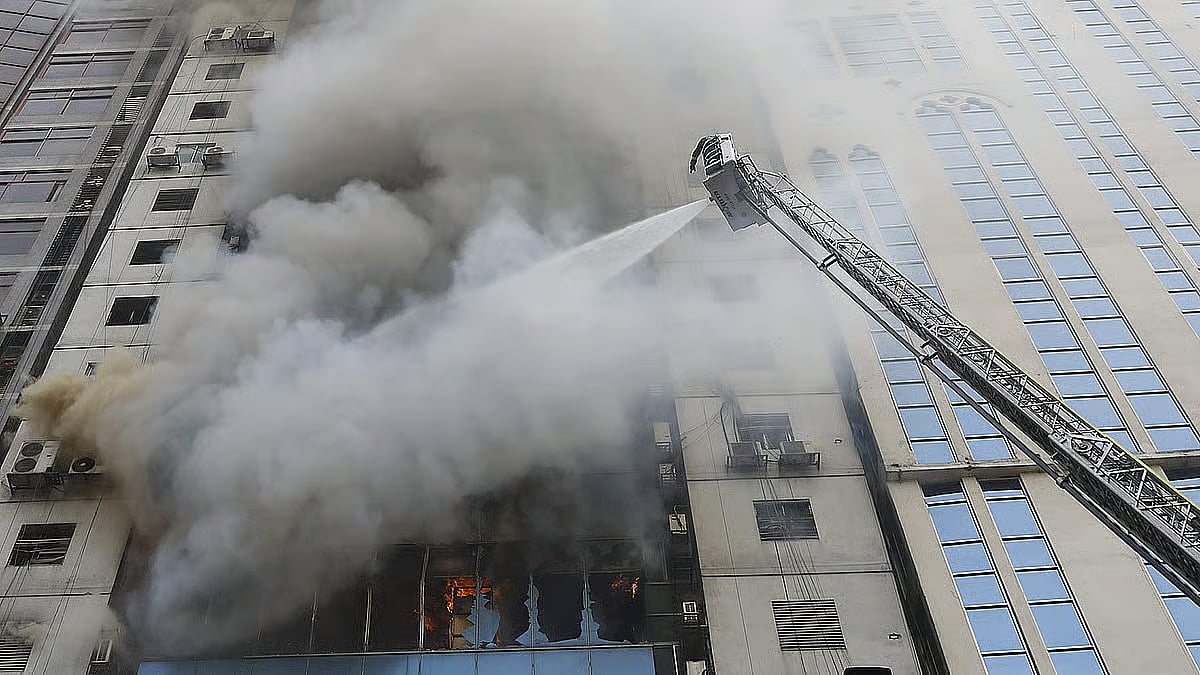
Deadly smoke: What you must know to stay safe in fires
The risk of fire incidents increases during the winter season. Fire itself is dangerous, but smoke can be just as deadly, if not more so. In the fire incident in Uttara on 16 January, in which six people lost their lives, none of the victims died from burns. The cause of death was smoke inhalation. Their room turned into a death trap. In such situations, is there anything individuals can do to protect themselves from toxic smoke? Physician Jennifer Sharmin, assistant registrar at the National Institute of Burn and Plastic Surgery, explains.
When smoke spreads rapidly in an enclosed space, there is often no time to think calmly about what to do or what not to do. However, there are certain key points that everyone should know.
Even a small, positive decision can make a crucial difference in a moment of danger. Being aware of these measures can benefit both adults and children.
What to do
Move away from the source of smoke if possible. Keep your head low and move by crawling. However, do not lie completely flat while trying to stay low. At the same time, try to alert rescue services. It is advisable to save emergency contact numbers on your mobile phone in advance.
Cover your nose and mouth with a wet towel or any heavy, damp cloth. This can significantly reduce the amount of smoke entering your respiratory system. If you cannot wet the cloth, at least use a thick fabric to cover your nose and mouth.
If you cannot reach an open area, take shelter on the side of the room opposite to where the smoke is entering. Staying close to a balcony or an open window is preferable. If that is not possible, you may take refuge in a bathroom by closing the door tightly, provided the bathroom has a window that can be opened.
Try to block the entry of smoke. Close doors and windows on the side from which smoke is coming. Even after closing a door, smoke can quickly spread through the gap underneath. Placing a wet towel along the gap can slow the spread. If there is a ventilator on that side, cover it if possible.
Signal for help. You can wave a brightly coloured cloth to draw attention. If it is dark, turning on your mobile phone’s flashlight can also help rescuers locate you.
Fill buckets with water in the bathroom. This will allow you to re-wet clothes used to cover your nose and mouth or to block door gaps if they begin to dry out.
What not to do in smoke
Do not assume that less visible smoke means less danger. Smoke is always hazardous, and there is no room for carelessness.
Do not keep your head raised. Smoke rises quickly and accumulates at higher levels.
Avoid shouting with your mouth open. Shouting can cause large amounts of smoke to enter your airways.
Do not turn on fans or air-conditioning systems. These can spread smoke more rapidly.
Do not jump from a height.
Do not light a fire to attract attention from outside. This can worsen the situation and increase the risk to your life.