Election preparations underway: 150,000 police to be trained
The government has taken initiative to strengthen coordination among law enforcement agencies as part of its extensive security preparations ahead of the upcoming general elections.
A total of 150,000 police personnel will be given special election-related training in phases from September to November.
The decision was taken in a top level meeting on law and order, preventing disinformation and administrative preparations for the upcoming polls at the state guest house Jamuna today, Monday.
Several other major decisions also came up from the meeting presided over by chief adviser Dr. Muhammad Yunus.
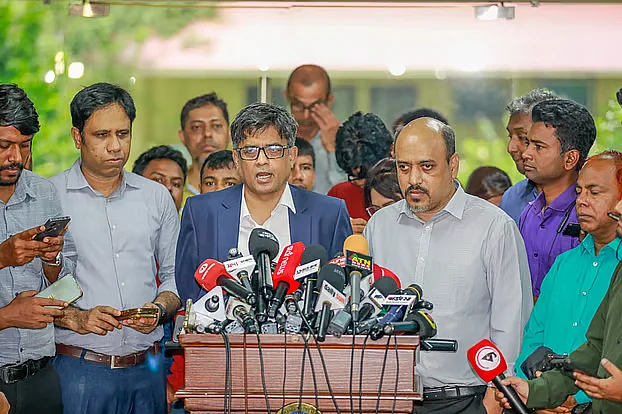
Chief adviser’s press secretary Shafiqul Alam and deputy press secretary Abul Kalam Azad Majumder briefed the newspersons after the meeting.
Press secretary Shafiqul Alam quoted the inspector general of police (IGP) as saying, “They (police) will be working as the striking force and play the major role to maintain law and order.”
“The army is already active at the field level with magistracy power since 5 August last year,” he said adding that 60,000 army personnel will be deployed during the polls.
Shafiqul Alam said the government is considering forming a ‘National Information Centre’ as the spread of rumours and misinformation tends to rise during elections.
“The centre will quickly identify and counter rumours and deliver accurate information to the public,” he said, adding, “It will also help promote the positive and immediate actions taken by law enforcement agencies, which often go unnoticed due to a lack of publicity.”
Speaking regarding the recent criticism centering the intelligence failure to provide any information before the unrest that unfolded in several parts of the country in recent times including Gopalganj, Shafiqul Alam said, “The government has already formed a probe commission headed by a former Supreme Court justice over the matter.
He said intelligence agencies have been instructed to work in a more coordinated manner and gather information in advance to avoid such failures in the future.
Election-related administrative reshuffles also came up at the meeting. On this, deputy press secretary Abul Kalam Azad said, “There will be changes not across the board, but only where necessary.”
He added that law enforcement agencies have been instructed to swiftly identify potential election ‘hotspots’—areas where violence or unrest could occur. They have also been directed to send reports on the situation in those areas to the centre so that additional security measures can be taken if needed.
At the start of the day, US Chargé d’Affaires Tracy Ann Jacobson held meetings with top government officials. The discussions focused on counterterrorism efforts, political dialogue through the consensus commission, and tariffs, press secretary Shafiqul Alam said.
“The government is maintaining a zero-tolerance policy on counterterrorism and giving top priority to election security,” he added.
The press secretary expressed hope that with strong coordination among the army, police, and civil administration, the country is moving towards a safe and fair election.