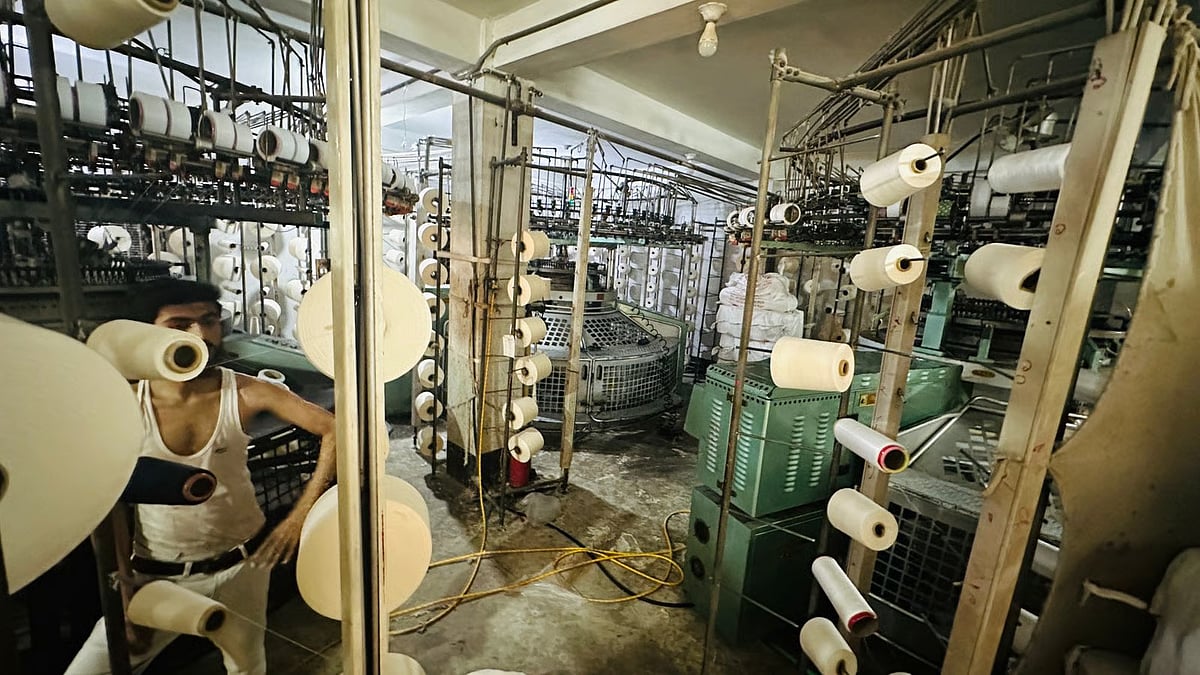
Rising fuel prices to increase industrial production cost
Load-shedding has intensified over the past month due to the ongoing energy crisis.
As a result, industrial factories have been forced to operate diesel-powered generators for extended periods to maintain production.
On the very day fuel prices were increased, truck fares for transporting raw materials and finished goods also rose. Consequently, higher fuel costs are driving up industrial production expenses.
Several industrial owners told Prothom Alo that the increase in fuel prices will inevitably raise production costs.
However, they warned that if fuel supply does not normalise despite the price hike, the crisis could worsen significantly. In such a situation, they would have no option but to incur losses.
Furthermore, higher fuel prices may also lead to an increase in electricity tariffs.
With global prices of liquefied natural gas (LNG) on the rise, there are concerns that gas prices in the country may also increase. Overall, they are preparing for further cost pressures in the near future.
On Saturday night, the Energy and Mineral Resources Division raised fuel prices by Tk 15 to Tk 20 per litre. Diesel prices have increased by 15 per cent to Tk 115 per litre, the highest in the country’s history.
Octane prices rose from Tk 120 to Tk 140 per litre, petrol from Tk 116 to Tk 135, and kerosene from Tk 112 to Tk 130.
Following the outbreak of war involving Iran, Israel, and the United States on 28 February, the Strait of Hormuz—an important route for global fuel transportation—effectively became closed.
Consequently, global crude oil prices exceeded USD 100 per barrel. Due to supply shortages and rising prices, the government introduced a rationing system for fuel distribution last month.
Kamrul Hasan, Chief Business Officer (CBO) of ACI Toiletries under ACI Group, told Prothom Alo that truck fares have already increased due to higher fuel prices.
He added that operating generators will also become more expensive, thereby increasing production costs.
Responding to whether product prices would increase, Kamrul Hasan said, “A brand represents consumers’ trust and comfort. Therefore, we do not raise prices unless we are left with no alternative. At the onset of the Middle East crisis, packaging material prices rose by 50 per cent. Fuel prices have now increased further. We have not yet raised prices, but we are reviewing the situation.”
After the outbreak of conflict in the Middle East last month, prices of raw materials and shipping costs increased, leading to a 10–12 per cent rise in rod prices.
As a result, the price per tonne of rod rose to Tk 90,000–95,000. Industry insiders in the steel sector have indicated that fuel price hikes may push rod prices even higher.
Mohammad Jahangir Alam, president of the Bangladesh Steel Mills Association (BSMA), stated that the increase in fuel prices could raise rod prices by Tk 200 per tonne and cement prices by Tk 4–5 per bag.
He told Prothom Alo, “Fuel price hikes are increasing production costs both inside and outside factories. However, due to weak market demand, we are unable to raise prices.”
At the Exclusive Can factory in Majukhan, Tongi, Gazipur, various companies manufacture paint cans, ice cream boxes, lubricant containers, and medicine bottles.
Currently, the factory experiences load-shedding for four and a half to five hours daily. Although generators are used during outages, production can only reach up to 80 per cent capacity.
Due to the fuel shortage, however, the factory is now operating at only 50 per cent capacity.
Confirming the situation, Syed Nasir, managing director of Exclusive Can, said, “Our primary concern now is whether we will be able to obtain sufficient fuel despite the price increase. Our staff are unable to purchase diesel from many filling stations, forcing us to procure it elsewhere at higher prices.”
More than 80 per cent of the country’s export earnings come from the ready-made garments sector.
Due to load-shedding and diesel shortages, production in many garment factories has declined by 20 to 25 per cent.
As a result, the increase in fuel prices has created fresh concerns among garment manufacturers.
Mohammad Hatem, president of the Bangladesh Knitwear Manufacturers and Exporters Association (BKMEA) said, “Due to the fuel crisis, the cost of transporting garments from Dhaka to Chattogram by covered van increased last month and will rise again. During production, factories experience at least two hours of load-shedding and sufficient diesel is not available to continue operations. If fuel remains unavailable even after the price increase, our losses will only escalate.”