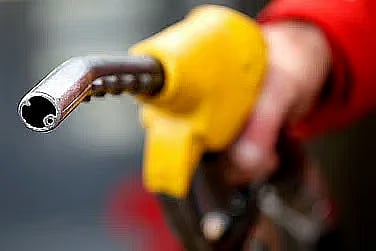
An energy shortage has begun to disrupt the regular supply of essential commodities as well as life-saving medicines. Some companies are unable to supply goods to the market in line with demand, as fuel shortages are preventing them from putting all their transport vehicles on the road. The crisis is also beginning to hamper production in factories.
In response, various trade bodies representing different sectors have written to the Ministry of Power, Energy and Mineral Resources and the Ministry of Commerce over the past two days, requesting that fuel supply be ensured. However, as of Monday evening, no directive had been issued by the government.
Business leaders say that irregular supplies of fuel oil have created difficulties at every stage—from production to distribution. If fuel supply is not increased quickly, they warn, the shortage of goods could take a severe turn.
Amid the ongoing conflict, oil and gas production and supply in Middle Eastern countries are being disrupted, pushing global oil prices sharply upward. Fearing shortages, people in Bangladesh have also been queuing up for long hours in front of petrol pumps to buy fuel. In such circumstances, the Bangladesh Petroleum Corporation (BPC) has reduced fuel supplies to filling stations since last Sunday.
Impact on supply of essential goods
Pran-RFL Group, one of the country’s leading industrial conglomerates, operates around 3,500 trucks to transport its products. The company usually purchases fuel for these trucks directly from depots, but in recent days it has been unable to obtain fuel from them. As a result, 20 to 30 per cent of its trucks are lying idle.
Stating this, Kamruzzaman Kamal, marketing director of Pran-RFL Group, told Prothom Alo, “We have been told to collect fuel from filling stations according to serial numbers. But once you join the queue, half the day is gone. Moreover, most pumps do not even have fuel available. If fuel supply does not return to normal, there is a risk that the supply of goods could come to a halt.”
In an effort to maintain a stable supply of soybean oil, edible oil refining and manufacturing companies wrote to the commerce secretary on Sunday.
The letter said that companies are currently unable to use half of their own transport fleet, while rented vehicles are also unavailable. If the situation continues, the supply of edible oil to the market will be disrupted.
The supply of consumer goods from another leading industrial group, ACI, has also begun to be affected. Kamrul Hasan, chief business officer of ACI Consumer Brands, told Prothom Alo, “Our own trucks are receiving less fuel than required, and as a result our product supply has dropped by around 10 per cent. We are even unable to hire trucks to transport unrefined salt arriving by river to our factories.”
Meanwhile, owners in the pharmaceutical industry are increasingly concerned about maintaining the normal supply of life-saving medicines amid the fuel shortage.
The Bangladesh Association of Pharmaceutical Industries wrote to the energy minister on Monday requesting priority access to fuel at filling stations for vehicles transporting medicines, as well as relaxation of limits on fuel sales.
Responding to a query, the association’s secretary-general, Md Zakir Hossain, said that fuel is required to transport medicines from factories to central warehouses, and from warehouses to depots and retail outlets. However, trucks now have to queue for fuel at night.
“If the situation continues like this, the supply of medicines will be severely affected,” he warned.
Industrial production disrupted
Export-oriented garment factories rely on diesel-run generators and boilers to maintain uninterrupted production. Under the current crisis, factories are unable to obtain diesel in the quantities they require. As a result, production is being halted during periods of electricity load shedding.
The Bangladesh Garment Manufacturers and Exporters Association (BGMEA) has written to the secretary of the Power and Mineral Resources Division requesting that filling stations be instructed to supply at least 500 litres of diesel to each factory.
BGMEA president Mahmud Hasan Khan said that factories typically face increased pressure to produce and ship goods ahead of Eid. “If steps are not taken immediately to ensure fuel supply, the situation could become severe,” he warned.
What needs to be done
Khondaker Golam Moazzem, research director at the private think tank Centre for Policy Dialogue (CPD), said that under the current circumstances it may not be possible to maintain normal production, and all stakeholders would have to accept this reality.
However, he suggested that the government could prioritise fuel supply for food items, medicines and export-oriented industries.