PKSF’s project
Hands-on training changing youth’s fortunes
Kazi Tuhin is a resident of Bekutia Union in Jashore Sadar Upazila. When his father died in 2018, Tuhin was only a higher secondary student. Financial hardship following his father’s death forced him to discontinue his studies. He remained unemployed for a long time. Although he occasionally did odd jobs, the wages were very low.
In this situation, Kazi Tuhin received six months of hands-on training in electrical work and maintenance through a project of the Palli Karma-Sahayak Foundation (PKSF) in 2023. He then took a small loan and opened his own shop.
At present, Tuhin repairs all kinds of electrical appliances, including refrigerators and televisions, and also does household electrical wiring and set up connections. He now earns around Tk 40,000 a month and has created employment for two other people at his shop.
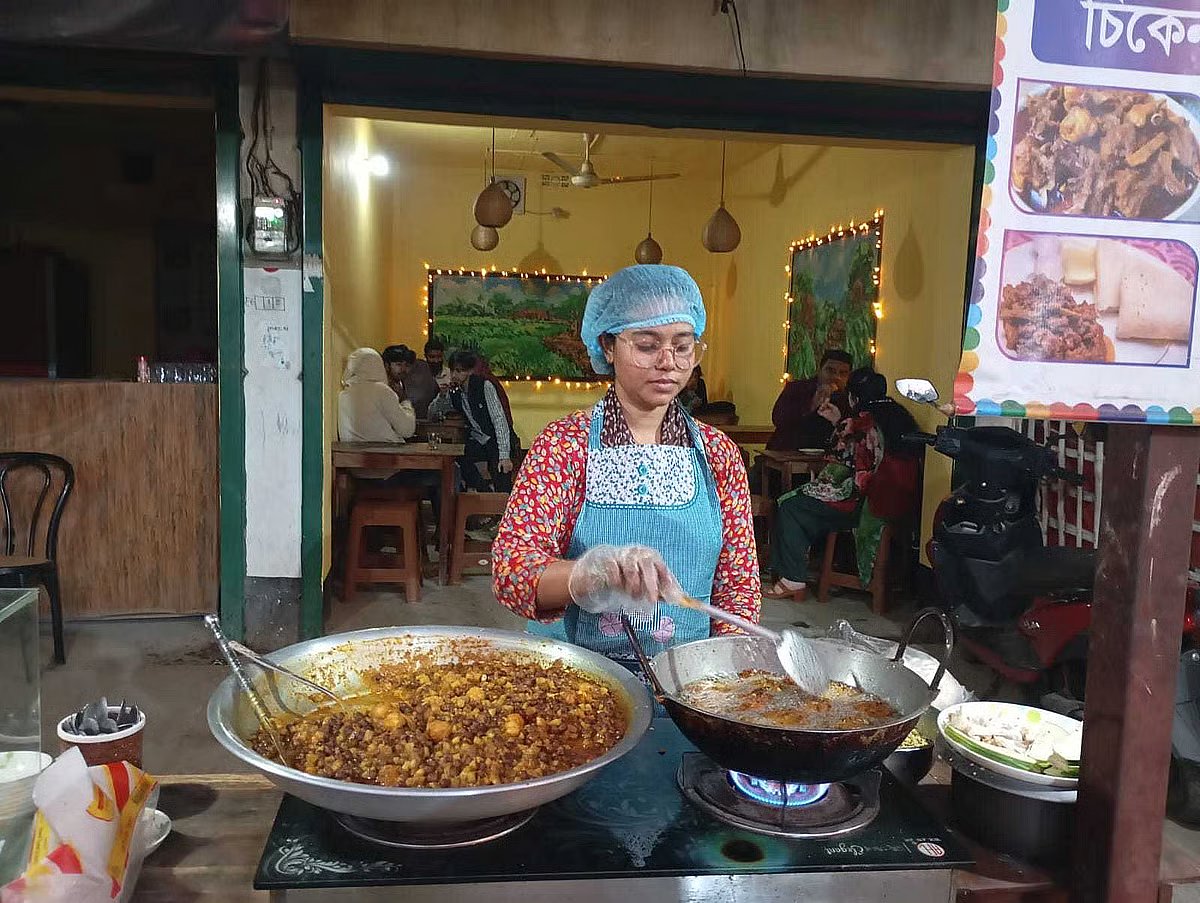
Another young woman from Jashore, Marzia Afrin, also received training through the same PKSF project, learning to make baked and pastry items. She now produces a wide range of baked and pastry products, including 'singara', 'chops', 'peyaju' along with frozen foods.
The tea served in her shop is also popular among local residents. Marzia’s shop is located on the Dharmatala-Chanchra Road in Jashore Sadar Upazila and she sells her products online as well. Altogether, her monthly income now exceeds Tk 170,000.
Through PKSF’s project, which follows a master-apprentice learning model, around 73,000 young people like Kazi Tuhin and Marzia Afrin across the country are receiving various forms of training from skilled artisans. Training has already been completed by around 35,000 young people. Many of them have become entrepreneurs, while others are working in different organisations on good salaries.
The project is being implemented across more than 400 upazilas in all 64 districts through 89 partner organisations at the field level.
Under the project, around 73,000 young people nationwide are receiving various forms of training from skilled master craftspersons.
The project is jointly financed by PKSF and the World Bank, with total funding of USD 250 million.
Many trainees are now earning more than Tk 100,000 per month after completing the training.
Since 2022, PKSF has been implementing the Recovery and Advancement of Informal Sector Employment (RAISE) project to ensure sustainable employment by building the necessary skills of unemployed youth and those from low-income families.
Conversations with trained entrepreneurs, employed participants and trainers during a recent on-site visit to various RAISE project activities in Jashore, revealed numerous such stories of socio-economic transformation.
Who receives the training
PKSF officials said that around 2.1 million (21 lakh) young people enter the country’s labour market every year. A large section of them remain unemployed for long periods, while many others are forced into low-paid and risky informal jobs due to a lack of education and skills.
The RAISE project was launched to develop skills among a segment of these unemployed and unskilled youths. The project is also providing capacity-building training and financing facilities to around 150,000 micro-entrepreneurs affected by the Covid-19 pandemic.
The project is jointly financed by PKSF and the World Bank, with a total budget of USD 250 million (USD 25 crore). It is being implemented in more than 400 upazilas across all 64 districts through 89 partner organisations on the field level.
Under the project, six-month training courses are offered in 26 different trades, including graphic design and multimedia, computer and mobile phone servicing, light engineering, welding, auto mechanics, garment making and tailoring, along with food preparation.
Participants not only acquire hands-on technical skills from master craftsmen, but also develop communication skills and gain basic knowledge of business management. After completing the training, a specified number of participants receive certificates approved by the National Skills Development Authority.
Women, people with disabilities and other marginalised groups are given priority under the project. For example, Lutfunnesa, who was paralysed by polio in childhood, could not continue her education beyond secondary level. Due to her disability, she also faced abuse from her in-laws.
Later, after learning about the RAISE project from a friend, she enrolled in graphic design training. She has already done graphic design and website management work for several organisations.
Master-apprentice model
The apprenticeship programme of the RAISE project is mainly implemented through the traditional master-apprentice learning model. In this model, one or more apprentices learn by working closely with an experienced master or master craftsperson (MCP) in a specific trade.
This helps them build long-term professional capacity, while also providing them with practical knowledge of customer management and business operations. Across the country, training is being conducted through around 16,000 such masters.
Various light engineering machines are manufactured at the SMR Agro factory located by the Jashore-Chuknagar highway. Currently, three young people are receiving training there under the RAISE project, while four others have previously completed their training. The three apprentices are being trained by the factory’s owner, SK Mahfuzur Rahman.
Mahfuzur Rahman said, although there is strong demand for work in the light engineering sector, there is a shortage of skilled workers. However, trainees from the RAISE project are much more attentive to their work. In addition to technical skills, they are taught business skills, including customer interaction, shop management, pricing and supply management. As a result, they quickly become equipped with market-relevant skills.
Speaking about the project, PKSF managing director Md Fazlul Kader said that the RAISE project is being implemented by utilising Bangladesh’s traditional master-apprentice model. Through the project, support and financing are being provided not only for wage-based employment, but also for those interested in becoming entrepreneurs.
The PKSF official added that the project has been particularly successful because it involves children from families already engaged in microcredit programmes.