Prothom Alo Explainer
Chittagong Port: What’s in the Laldia agreement, who gains, who loses
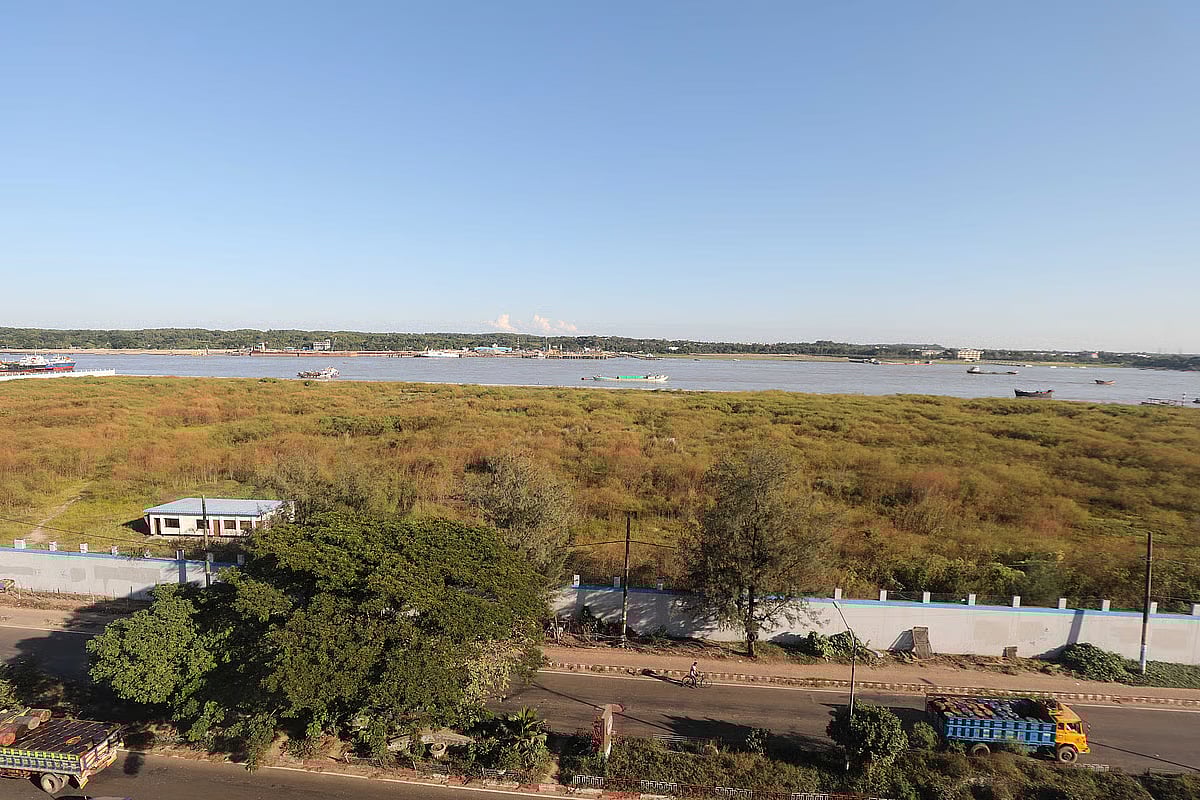
Laldia Container Terminal is now at the center of discussion. After the signing of an agreement between APM Terminals of Denmark’s Maersk Group and the Chittagong Port Authority at a hotel in Dhaka on 17 November, the discussion has spilled over into street protests.
According to the agreement, the foreign company will build and operate the terminal on Laldia Char in Patenga. Questions have also arisen as to why the interim government is not disclosing various information regarding this 33-year contract.
Against this backdrop, what exactly is a concession agreement? What does the Laldia concession agreement contain, what information has been disclosed, and what remains undisclosed, this report attempts to explore those questions.
What is a concession agreement?
First, we must understand what a port concession agreement is. A concession agreement is signed between a government agency and a private entity under a public–private partnership project.
Typically, land is handed over to a private company for a certain period to improve or build a terminal. The private company invests to construct or upgrade the terminal. In return, it collects service fees, a negotiated portion of which goes to the government agency.
Globally, private companies enter port infrastructure construction and operational agreements averaging 30 years, during which they recover investment and profit. After the contract term, the infrastructure is handed back to the government.
Are concession agreements confidential?
Whether a concession agreement document is confidential depends on both parties. Since the private company assumes investment risks, certain business protections are ensured. These protections mainly relate to commercial elements included in the contract. Therefore, there is usually an obligation not to disclose business-related aspects.
This confidentiality requirement is stated in the non-disclosure agreement (NDA) section of the contract. However, there is no obligation stating that all information must remain undisclosed.
If no unforeseen disruptions occur, revenue for both parties is assured. The port earns without investment, while the operator recovers capital and profits. Their indirect profit may be higher—for example, Maersk Line vessels will receive berthing priority at Laldia. Even if congestion occurs, they will avoid idle vessel penalties of #10,000–15,000 per day. Their business volume may also increase.
The Laldia agreement also includes an NDA concerning business matters, meaning not everything is barred from disclosure. The government may publish information outside business-sensitive areas if it chooses.
Globally, concession agreements are generally not made public. India is an exception, there are examples of publishing concession contracts there. Most of these involve agreements between state entities and domestic companies. The website of India’s Department of Economic Affairs contains 220 concession contracts related to infrastructure development, including 22 involving ports.
In Bangladesh, before Laldia, the Awami League government signed a contract with Saudi company Red Sea Gateway Terminal to operate the Patenga Container Terminal. Other than some basic information, nothing else was disclosed from that agreement.
What’s in the Laldia agreement?
According to multiple related sources, the Laldia agreement document includes sections on definitions and interpretations, concession granting, pre-construction conditions, security deposit, project design, responsibilities of the parties, maintenance and repairs of the terminal, environmental and social obligations, minimum service standards, fees, ownership of concession area and project assets, compensable events, force majeure and political unrest clauses, contract termination, compensation upon termination, intervention rights of the grantor (port authority), third-party relations—including compensation, confidentiality, dispute settlement, transfer and change of ownership, among many other articles.
Attached to the main contract are annexures detailing technical, financial, operational, and legal information required for project implementation.
What has been disclosed?
A few pieces of information were released on the day of signing:
The concession agreement spans 33 years—three years for construction and the remaining 30 for operation. If conditions are met, the term may be extended for an additional 15 years.
APM Terminals under Maersk Group is globally renowned and highly capable. If they operate the terminal efficiently, export processing time will decrease. As long as the contract contains nothing harmful to the state and does not increase business costs, we view it positively.BGMEA president Mahmud Hasan Khan
The port authority will receive US $21 per TEU (container) for up to 800,000 TEUs handled. For between 800,000 and 900,000 TEUs, it will receive $23 per TEU. There is a third tier for volumes exceeding 900,000 TEUs, but that rate has not been disclosed.
Under the PPP (public-private partnership) framework, the company will invest $550 million, about Tk 67 billion, to build the three-berth terminal capable of simultaneously docking three ships.
After signing the agreement, the port will receive Tk 2.5 billion (250 crores) in upfront fees.
What else is in the agreement?
Chittagong Port Authority has not officially released any details. The port’s chairman, Rear Admiral SM Moniruzzaman, is currently abroad. Other officials are not speaking. However, multiple sources connected to the agreement provided some insights.
One is that although the agreement was signed on 17 November, it will take effect 90 days later. During this period, the foreign company must complete several procedural tasks, including establishing a project company in Bangladesh.
APM Terminals and its local partner, Bangladesh’s QNS, will jointly form this company. The port will receive 50 per cent of the upfront fee once the contract becomes effective, and the remaining 50 per cent when operational activities begin.
Requirements for APM Terminals are outlined in the contract. Even before construction, procedural conditions must be fulfilled. Failure to comply will result in show-cause notices and fines. If APM Terminals still does not comply, the port may terminate the contract. Meaning, if the operator breaches conditions and the contract is cancelled, APM Terminals will not receive compensation.
However, if the port authority breaches conditions leading to contract withdrawal or cancellation, the port must compensate APM Terminals. The compensation amount is unknown, but it reportedly exceeds the total cost incurred by the operator.
Facing global challenges, including the reciprocal tariffs imposed by the US president Donald Trump and upcoming LDC graduation, Bangladesh needs new technology, efficient management, and domestic and foreign investment. Such investment agreements must be transparent. Citizens and local experts must clearly understand the terms.CPD distinguished fellow Mustafizur Rahman
The contract includes a performance guarantee clause by APM Terminals. It requires the operator to handle 80 per cent of the terminal’s designed capacity, 800,000 TEUs, from the third year onward. That means handling 640,000 TEUs annually.
If the company fails to meet this target, it must still pay $21 per TEU for 640,000 TEUs. Typically, such agreements also include government performance guarantees for the operator, but the port authority negotiated to exclude it.
Additionally, if the port increases service tariffs after signing, the operator must share a percentage of the resulting increased revenue with the port. The exact percentage remains unknown.
Under the agreement, APM Terminals must carry out dredging in front of the jetties at its own expense. In the Patenga Terminal contract, the Saudi operator is also dredging at its own cost.
If political instability, such as hartals or blockades, halts terminal operations for a specified period, the port must compensate APM Terminals. Details of this compensation are not yet known. Compensation is also guaranteed if APM Terminals suffers losses due to legal or regulatory changes.
Concession agreements typically include provisions regarding escrow accounts—secure bank accounts operated by third parties to mitigate financial risks. All terminal income is deposited there, and payments are distributed based on priority—first to financing banks, then to the granting authority, and lastly to the operator.
According to sources, this provision is not part of the Laldia agreement. The reason cited is that APM Terminals will not share revenue based on percentage but will pay fixed container-handling fees. The Patenga agreement also lacked such an account.
Residents previously evicted from 49 acres of Laldia Char—where the terminal will be built—were not rehabilitated, nor did they receive compensation from the government. IFC, the mediator of the agreement, required APM Terminals to provide compensation.
A mandatory social support and rehabilitation clause has been included. The amount is uncertain but reportedly not less than $15 million, (about Tk 1.84 billion).
APM Terminals vs Chittagong Port—Who gets what?
APM Terminals will invest throughout the construction and operational phases. The port authority will not spend any money. According to the company, it will invest $550 million.
Investment by APM Terminals has already begun. The PPP Authority hired IFC as transaction adviser on behalf of the port authority, and APM Terminals covered that cost. The PPP Authority has also taken fees from the company for project development.
After the contract becomes effective, APM Terminals must pay 50 per cent of the upfront fee. Then the operator must gradually invest in design, construction, and equipment installation.
Once operational, revenue sharing begins based on containers handled. Assuming an annual volume of 800,000 TEUs over 30 years, total throughput would be 24 million TEUs. The port may earn $504 million from per-container fees alone.
In addition, the port will earn from existing vessel tariffs—from anchorage to berthing—averaging USD 19,000–20,000 per feeder vessel. With three ships berthing simultaneously, at least 300 ships could dock yearly, earning $6 million annually—or $180 million over 30 years.
Including upfront fees, total projected port earnings may exceed $700 million over 30 years. After expiry, Chittagong Port Authority will regain the terminal infrastructure.
APM Terminals will begin recovering investment after commercial operations start. It will not earn money during the first three years. Revenue begins once container handling starts.
The primary revenue sources are container handling and storage charges. Based on IFC’s assessment and tariff adjustments, estimated earnings per container box (counting both 20-ft and 40-ft containers as one box) may be $173.66. For 800,000 TEUs, that equals 504,426 boxes. APM Terminals’ annual revenue may therefore be $87.5 million—and $2.63 billion over 30 years.
Additional revenue will come from services like unstuffing and delivery. From this, the operator must cover investment and operating costs. Part of these operational expenses will go to Bangladeshis employed there.
If no unforeseen disruptions occur, revenue for both parties is assured. The port earns without investment, while the operator recovers capital and profits. Their indirect profit may be higher—for example, Maersk Line vessels will receive berthing priority at Laldia. Even if congestion occurs, they will avoid idle vessel penalties of #10,000–15,000 per day. Their business volume may also increase.
What’s the economic benefit, or loss, for Bangladesh
About 99 per cent of Bangladesh’s import-export container trade moves through Chittagong Port. Due to capacity shortages, growing container volumes frequently cause congestion. No new terminals are expected before Laldia, meaning not before 2030. With rising demand, congestion will worsen. Therefore, building new terminals is unavoidable, the longer the delay, the greater the challenge in foreign trade.
Handing over existing terminals, especially New Mooring Container Terminal, to foreign operators would not significantly increase capacity. But Laldia could add capacity to handle 800,000 TEUs annually, helping alleviate severe shortages.
Most containers carry imported raw materials for export-oriented industries and exported finished goods. The faster container processing becomes, the more exporters benefit. For example, according to NBR, goods worth $42.26 billion were exported through Chittagong Port in the last fiscal year. One-fourth of that may eventually be exported using Laldia—meaning enhanced trade efficiency may be more valuable than direct revenue.
When contacted, BGMEA president Mahmud Hasan Khan told Prothom Alo, “APM Terminals under Maersk Group is globally renowned and highly capable. If they operate the terminal efficiently, export processing time will decrease. As long as the contract contains nothing harmful to the state and does not increase business costs, we view it positively.”
Freight forwarders transport export goods from depots to foreign buyers. Former Bangladesh Freight Forwarders Association vice-president Khairul Alam told Prothom Alo that non-commercial information that can legally be disclosed should be made public to remove public doubts about the agreement.
Khairul Alam added that APM Terminals will invest to ease container handling for import-export movement. Since they handle everything, from ships to containers to freight forwarding, there will be efficiency. If large vessels can berth at Laldia and Maersk launches direct container services to Europe or America, the benefits for Bangladesh would exceed revenue considerations.
Asked for comment, CPD distinguished fellow Mustafizur Rahman told Prothom Alo that facing global challenges, including the reciprocal tariffs imposed by the US president Donald Trump and upcoming LDC graduation, Bangladesh needs new technology, efficient management, and domestic and foreign investment. Such investment agreements must be transparent. Citizens and local experts must clearly understand the terms.
Regarding workforce development, Mustafizur Rahman emphasised training Bangladeshi workers so that after technology transfer, domestic operators can eventually run the terminal.
* The report has been rewritten in English by Farjana Liakat