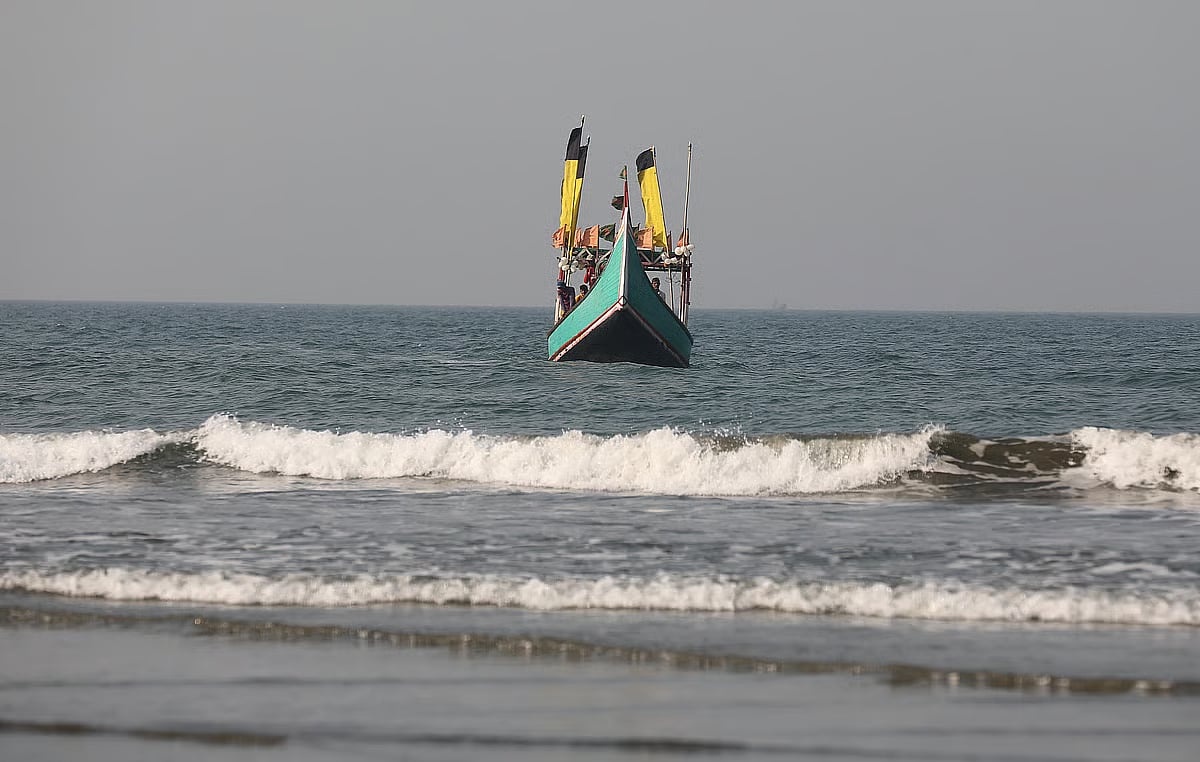
Fish catch in the sea
Bangladesh sees decline, India and Myanmar see rise
Bangladesh’s sea fish harvest from the Bay of Bengal has been consistently declining over the past three years. Harvest of hilsa, crabs and shrimp have fallen significantly. As the volume of fish caught at sea decreases, the overall national supply of fish has also slowed.
The situation, however, is quite different in neighbouring countries. India has increased its annual sea fish harvest to such an extent that it is now among the world’s top 10 countries in sea fish production. Even war-torn Myanmar continues to see yearly increases in its sea fish harvest.
Fisheries officials in Bangladesh attribute the decline in sea fish harvest to rising sea temperatures caused by climate change and to cyclones. They also state that overfishing has reduced fish stocks.
According to data from the Department of Fisheries, total sea fish production in the 2021–22 financial year was 706,000 tonnes. In the following year, it dropped to 679,000 tonnes.
Most recently, in the 2023 – 24 financial year, it fell further to 628,000 tonnes. This means that sea fish production in 2023–24 was almost 7.5 per cent lower than in 2022–23. Fisheries officials have indicated that the figure dropped even further in the 2024–25 financial year, which ended last June. However, the Department has not yet officially released the data.
China leads in sea fish production. India ranks sixth among the top 10 countries. According to India’s department of fisheries, the country harvested 4.127 million tonnes of marine fish in 2021–22, 18 per cent more than in the previous year. In the most recent 2023–24 financial year, India’s harvest rose to 4.495 million tonnes.
Experts in the sea sector state that fish stocks have declined due to years of overfishing. Md Abdullah Al Mamun, assistant director of the department of fisheries, told Prothom Alo that, 20 years ago, the number of commercial trawlers operating in the sea was fewer than one hundred, but that figure has now risen to 265.
He stated that although trawlers are prohibited from fishing within 40 metres from the shore, many do not comply. The number of small boats has also exceeded 29,000. These boats are using modern technologies that they are not permitted to use and illegal nets are also being deployed. Fishing is even taking place within 5 to 10 metres of the coastline, which disrupts the breeding cycle and prevents fish eggs and fry from developing.
Globally, China leads in sea fish production. India ranks sixth among the top 10 countries. According to India’s department of fisheries, the country harvested 4.127 million tonnes of marine fish in 2021–22, 18 per cent more than in the previous year. In the most recent 2023–24 financial year, India’s harvest rose to 4.495 million tonnes.
20 years ago, the number of commercial trawlers operating in the sea was fewer than one hundred, but that figure has now risen to 265.Md Abdullah Al Mamun, assistant director of the department of fisheries
Data from Myanmar’s department of fisheries shows that the country harvested 3.295 million tonnes of sea fish in 2020–21. In the latest 2023–24 financial year, this increased further to 3.414 million tonnes, indicating that sea fish production continues to rise despite ongoing civil conflict.
Meanwhile, Bangladesh’s harvests of hilsa and shrimp have declined the most. According to the department of fisheries, in 2023–24 the country’s hilsa harvest fell by nearly 6.5 per cent compared to the previous year. Shrimp production dropped by almost 44 per cent, while crab production declined by more than 16 per cent.
Regarding the decline in sea fish harvest and the necessary measures to address it, Mohammad Shariful Azam, deputy director of the Sustainable Coastal and Marine Fisheries Project told Prothom Alo, “Since 2019, we have been observing a decrease in shrimp harvest. Therefore, under the Marine fisheries regulations, we adopted a policy not to issue any new licences for shrimp trawlers. Licences for these trawlers will not be renewed until 2028.”
Stakeholders in the sector state that in order to increase sea fish production, uncontrolled fishing in the Bay of Bengal must be brought under strict monitoring.
Md Zia Haider Chowdhury, additional director general of the department of fisheries, told Prothom Alo that satellite trackers have been installed on five trawlers on a pilot basis to ensure surveillance. He recommends bringing all trawlers under digital monitoring in phases.
Meanwhile, declining fish harvest have placed fishermen who depend on the sea in a difficult situation. After repaying advance loans, they are struggling to make any profit. Cox’s Bazar alone has more than five thousand wooden fishing boats and these boats are now catching significantly less fish.
Md Delwar Hossain, general secretary of the Cox’s Bazar fishing boat owners’ association told Prothom Alo, “For six to seven consecutive months, the harvest has been very poor. For several years now, harvests have been decreasing. A week-long trip to the sea costs between two to three lakh taka and low harvests are making it increasingly difficult to repay debts.”
When contacted about the overall situation, Md Sajdar Rahman, director of the blue economy cell of the department of fisheries told Prothom Alo that cyclones in the sea have become more frequent and sea temperatures have risen.
He added that jellyfish populations have increased and overfishing has further depleted fish stocks. Therefore, he stated, sea fish harvest must be reduced further.
At a meeting of the Bangladesh small-scale fisherfolk association held at the National Press Club on Tuesday, Farida Akhter, fisheries and livestock adviser to the interim government told the media, “We must prevent Indian fishermen from entering Bangladeshi waters to catch fish.”
According to the Food and Agriculture Organization (FAO) of the United Nations, 79.7 million (7 crore 97 lakh) tonnes of fish were harvested from the sea globally in 2022. Asian countries accounted for half of this catch.
That year, China alone harvested 14.8 per cent of the world’s total sea fish, 11.819 million (1 crore 18 lakh 19 thousand) tonnes. Indonesia, in second place, caught 6.843 million (68 lakh 43 thousand) tonnes, while India harvested 3.597 million (35 lakh 97 thousand) tonnes. Bangladesh’s share in global sea fish production was only 0.9 per cent.