New tariff can be a gateway to a resilient export future: BGMEA
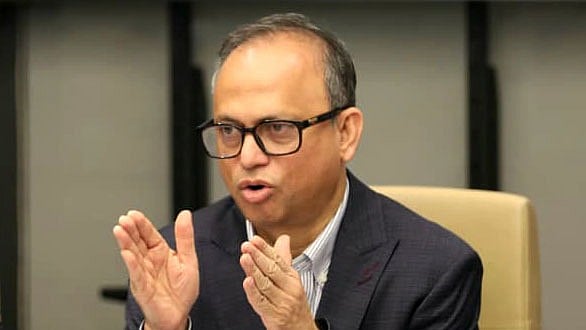
Bangladesh Garment Manufacturers and Exporters Association (BGMEA) President Mahmud Hasan Khan welcomed the recent reduction in US tariffs on Bangladeshi exports, calling it a "critical relief" for the country’s apparel industry amid rising global competition.
At a press conference held today at the BGMEA conference room, the newly appointed president expressed gratitude to the interim government of Bangladesh, especially the commerce and security advisors, for their leadership during the tough negotiations.
Their teams helped Bangladesh avert what could have been a major crisis for our export sector, he noted.
The United States has reduced its additional import tariff on Bangladeshi products from 35 per cent to 20 per cent, bringing it closer to the rates imposed on Bangladesh's major competitors, including China (30 per cent) and India (25 per cent).
This adjustment creates a more balanced playing field for Bangladesh, he added.
The BGMEA chief highlighted that the journey to this outcome was fraught with challenges.
On 2 April, the US had announced a new tariff regime under the "Liberation Day Tariff," initially setting Bangladesh’s rate at 37 per cent, significantly higher than India’s 26 per cent and Pakistan’s 30 per cent. The proposed tariffs were to be implemented from 9 April, but were later deferred by 90 days following diplomatic engagements.
While the deferment allowed for further negotiations, uncertainty loomed until mid-July. On 2 July, when the US slashed Vietnam’s tariff from 46 per cent to 20 per cent, concerns deepened in Bangladesh, especially after an initial US offer of only a 2 per cent reduction for Bangladesh. Subsequent talks finally resulted in the recent adjustment.
He said throughout the negotiation period, BGMEA engaged with stakeholders, government bodies, and even began talks with US-based lobbying firms despite limited access due to ongoing NDAs between the two governments.
The government unofficially informed the private sector to engage lobbyists as the second round of talks between the US and Bangladesh authorities on 9-11 July saw little progress. Later, BGMEA started primary discussion with a lobbyist farm.
“The new 20 per cent additional tariff comes on top of the existing 16.5 per cent MFN duty, bringing the effective average rate to 36.5 per cent. However, an important exception has been made if at least 20 per cent of a product’s raw materials originate from the US — such as American cotton — the additional tariff may not apply to that portion of the product's value,” he said.
BGMEA President also added that Bangladesh must continue diplomatic talks to further reduce the tariff.
“We don’t have any room for complacency, since the US executive order indicates further negotiations with other countries are ongoing and may result in even lower tariffs for them. Bangladesh must continue diplomatic and trade talks to remain competitive.”
Khan called for renewed focus on backward linkage investments, design innovation, and product and market diversification.
“The US is not just our largest market — it’s a long-term trade partner. We are committed to deepening this partnership,” he added.
The BGMEA President urged the government to provide continued policy support, especially for small and medium-sized factories that are vulnerable to rising production costs.
“At a time when the industry is already struggling, the tariff increase will undoubtedly raise our production cost. The government must come forward especially ensuring that small and medium-sized factories that are vulnerable to rising production costs don’t get harmed.
“We hope all policy supports by the government will continue at the interest of industry and country as a whole, efficiency of all relevant offices including NBR will increase, customs-related policies will become industry-friendly, Chattogram port’s handing would be more efficient, and industries will get uninterrupted electricity and gas supplies,” the BGMEA President added.
He asserted that BGMEA will continue to provide data-driven insights and engage in regular consultations with stakeholders to enhance competitiveness.
“If we work together with a shared vision, this tariff can become the gateway to a stronger, more resilient export future for Bangladesh,” he concluded.