Int’l Vulture Awareness Day
Vultures at risk: How safe food can save a species
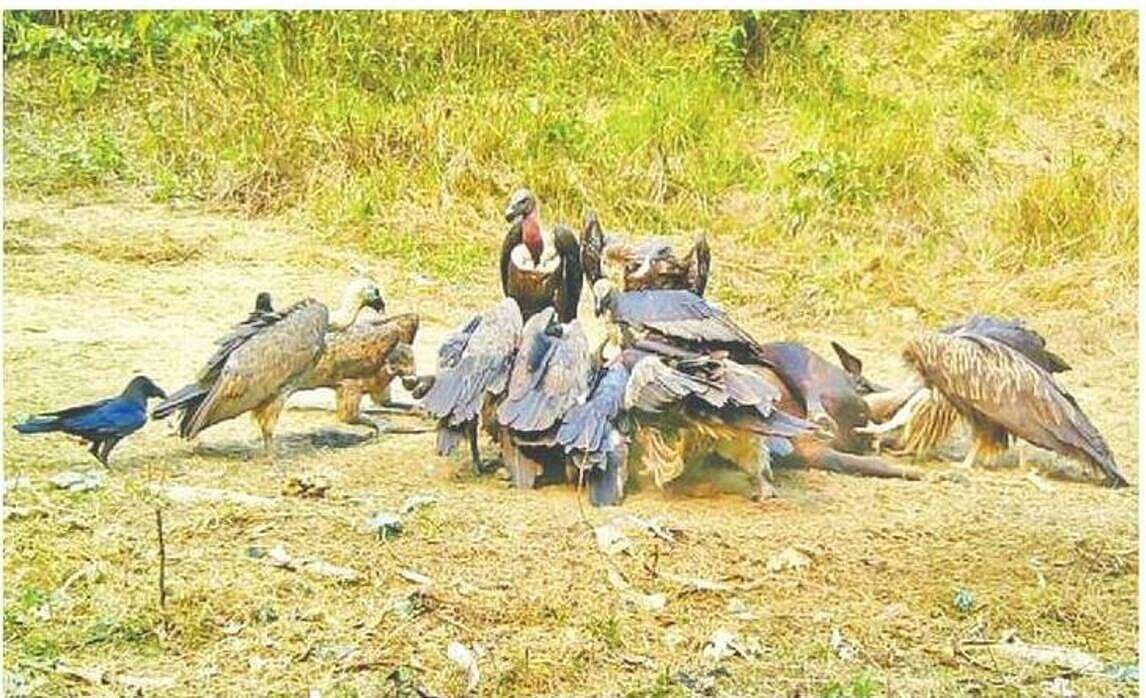
When we reached the Rema-Kalenga forest in Habiganj on 27 March this year, it was even before the break of dawn. We had set up a ‘special restaurant’ here to provide safe food for vultures. The carcasses of entire cows are regularly brought to this restaurant, or feeding station rather, as food for these birds. The vultures come and feed of these animals. We established this feeding station in 2014 through an initiative of IUCN, the International Union for Conservation of Nature, together with the Forest Department.
When we reached the Rema forest that morning, there were 13 vultures gorging themselves at this 'restaurant.' All of them were local vultures of Bengal, with an exception of one. They included five baby vultures too. It was such a satisfying sight. We had located the homes of 12 vultures in the Rema-Kalenga forest this year. Basically we feed them for seven months during the breeding season. This also facilitates the vultures who have made nests and laid eggs. It is easy for them to avail safe food.
Alongside the vulture restaurant in Rema forest, there is also a vulture monitoring center. Through a small hole inside that room, one can observe everything happening at the restaurant for the vultures. I spent almost three hours sitting in that room that day. It was an extraordinary experience. The chicks were frolicking around and eating along with their parents. Some flew up to the trees after eating, while others bathed and then perched with wings outstretched. That is usually what vultures do after their meals.
A restaurant for vultures! Many are surprised when there hear of such a thing. Some people may even secretly think we are crazy. But hardly anyone had noticed that in just over the last three decades this species has almost disappeared from the face earth. There are barely 250, or even fewer, vultures surviving in this country. The main reason behind their disappearance is unsafe food. If painkiller drugs like ketoprofen, diclofenac, or flunixin are used in veterinary treatment and that animal dies, then if vultures feed on the carcass, they die instantly. The drug in such dead cows damages the vultures’ kidneys, leading to death from poisoning. In this way, vultures have vanished across the world.
There has been research on the effect of these drugs on vultures. Around 274 scientific research papers can be found on this topic and all state that in order to save vultures, an environment free of harmful drugs must be ensured. Diclofenac has been banned in our subcontinent. In Bangladesh, ketoprofen has also been banned. However, although ketoprofen is no longer found on the market in recent times, over the past year the market has been flooded with another harmful drug called flunixin. When safe veterinary drugs like meloxicam and tolfenamic acid are available, it is incomprehensible why these harmful ones are still appearing in the market.
The initiative of this special restaurant for vultures is mainly to ensure that they get safe food, so that the few vultures that remain do not disappear as well. Some time ago, a vulture chick fell ill. We kept it in the care center for several days and nursed it back to health. Now that chick, too, roams freely in nature and comes to the restaurant to feed.
Today, 6 September, is International Vulture Awareness Day. This year’s theme is “A harmful drug-free environment, a commitment to vulture conservation.”
Apart from the Rema-Kalenga forest in Habiganj district, most of the remaining vultures in Bangladesh survive in the Sundarbans region. Without safe zones for vultures, they will not be able to survive in the wild. That is why a drug-free environment is absolutely essential for their conservation.