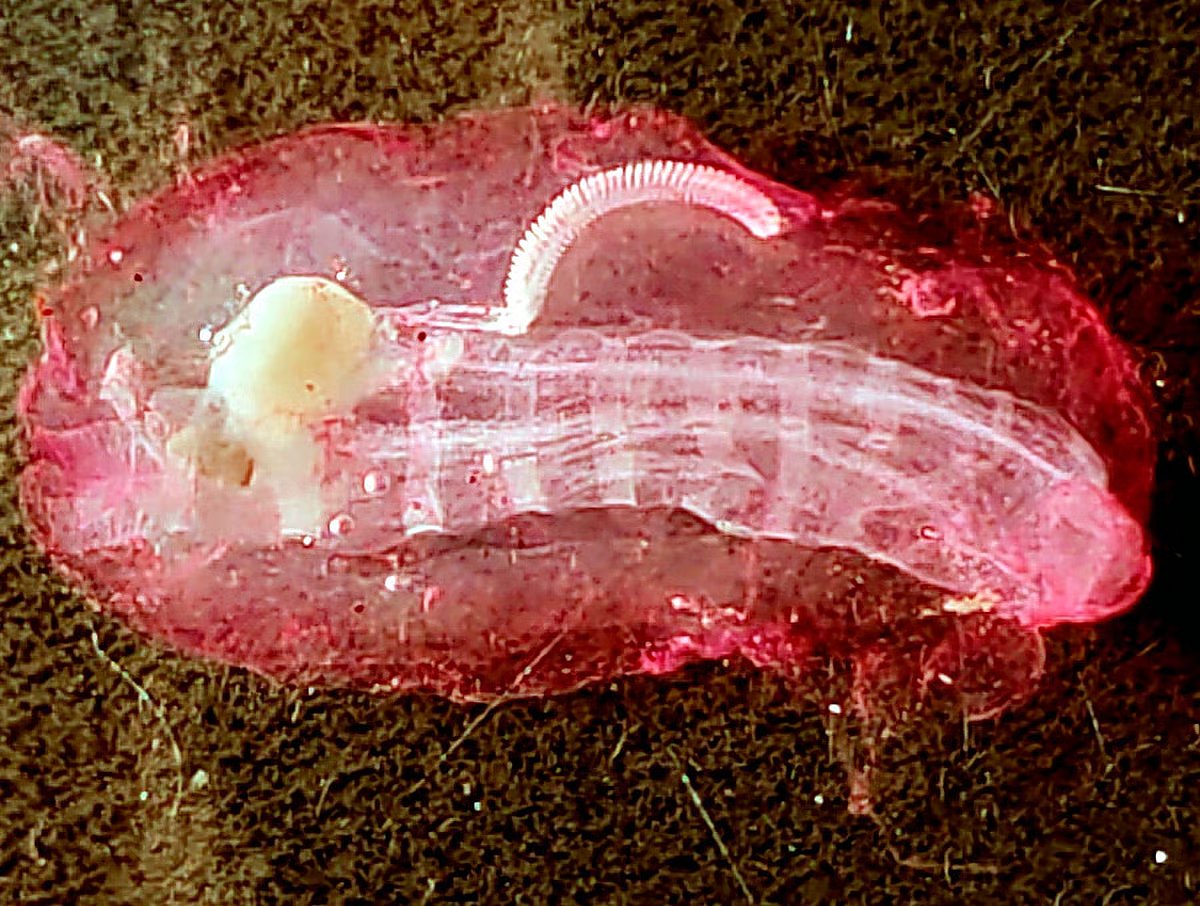
Fish disappear off St Martin coast, tiny jellyfish appear: What does it indicate?
The coral-rich rocky island of St Martin’s, off the coast of Cox’s Bazar, is traditionally regarded as a haven for fish. At present, however, the area is experiencing an acute shortage of fish.
Fish are not being caught by the island’s approximately 250 fishing trawlers. Instead, large numbers of jellyfish and small jellyfish-like organisms known as gelatinous zooplankton are being hauled up in fishermen’s nets.
Fisheries experts explain that gelatinous zooplankton, which resemble jellyfish, are composed of a soft, jelly-like covering. Local fishermen refer to them as ‘nuinya.’
These organisms are unable to swim effectively against currents and instead drift along with the flow of the water. Contact with the human body can cause itching.
They are harmful to marine fish, as they destroy fish food, eggs and fry. This may be one of the contributing factors behind the reduced presence of hilsa and other fish species in the Bay of Bengal.
The rapid increase in gelatinous zooplankton in the sea has heightened concern among local trawler owners and fishermen.
Recently, a team of researchers from the department of marine science at the University of Chittagong conducted research at St Martin’s Island and observed swarms of gelatinous zooplankton spread across vast areas of the sea.
Fish scare on the island
Abu Taleb, former president of the St Martin’s Boat Owners Association and owner of two trawlers, told Prothom Alo that thousands of tourists have been travelling to St Martin’s Island since 1 December.
During that period, some small hilsa, black chanda, popa, flying fish and other small species were being caught.
However, for the past seven to eight days, no fish have been caught at all. Instead, large swarms of nuinya (gelatinous zooplankton) are being observed across extensive areas of the sea, a phenomenon not seen in the past.
Fishermen believe that marine fish have disappeared from the area due to the presence of nuinya. The reason behind the sudden appearance of these organisms along the St Martin’s coast remains unknown, highlighting the need for research.
Khondaker Mahmud Pasha, deputy director of the department of environment in Cox’s Bazar, stated that jellyfish and jellyfish-like dead organisms have recently been washing ashore along the St Martin’s and Chhera Island.
Speaking to Prothom Alo he said, “We do not have the opportunity to verify whether the presence of jellyfish or gelatinous zooplankton has increased in St Martin’s. Research is required to determine why this has suddenly occurred and why fish have disappeared from the sea.”
A team of researchers from the Institute of marine sciences at the University of Chittagong conducted research within the maritime boundary to the south-west of St Martin’s Island and identified an unusually high abundance and widespread presence of gelatinous zooplankton across a vast area.
Marine researchers and fisheries experts report that at least 25 species of jellyfish inhabit the Bay of Bengal, although three species are commonly observed along the Cox’s Bazar and St Martin’s coasts.
Among them, the white jellyfish (known locally as shada nuinya) is more frequently seen at the end of the monsoon or at the beginning of winter.
These jellyfish appear white or light bluish in colour and are suitable for human consumption. Another species, the moon jellyfish, is found along the Cox’s Bazar and Kuakata coasts.
It is transparent and glass-like in appearance, with light pink to reddish reproductive organs. Contact with the body may cause mild itching. Box jellyfish, however, are more commonly found along the St Martin’s and Teknaf coasts.
This species is extremely poisonous and its sting can be fatal to humans. Both jellyfish and gelatinous zooplankton are considered highly detrimental to fishery resources.
In this regard, Dr Ashraful Haque, chief scientific officer of the Cox’s Bazar Marine Fisheries Research Centre, told Prothom Alo that the presence of jellyfish or gelatinous zooplankton may increase due to the impacts of climate change and rising sea temperatures.
He noted that if the presence of marine turtles in the sea declines, the number of jellyfish may increase, which in turn can adversely affect marine fish stocks.
This is because jellyfish are the primary food source of marine turtles, while the primary food of jellyfish consists of fish eggs, larvae and fry.
However, he added that the centre currently has no updated data or research findings regarding the presence of jellyfish or gelatinous zooplankton around St Martin’s Island.
What the researchers say
Recently, a team of researchers from the Institute of marine sciences at the University of Chittagong conducted research within the maritime boundary to the south-west of St Martin’s Island and identified an unusually high abundance and widespread presence of gelatinous zooplankton across a vast area.
Under the leadership of professor Dr Mohammad Shah Nawaz Chowdhury, a research team from the Institute of Marine Sciences has been conducting long-term studies on the presence and distribution of jellyfish and closely related species around St Martin’s Island in the context of global climate change.
The presence of jellyfish or gelatinous zooplankton may increase due to the impacts of climate change and rising sea temperatures. He noted that if the presence of marine turtles in the sea declines, the number of jellyfish may increase, which in turn can adversely affect marine fish stocks. This is because jellyfish are the primary food source of marine turtles, while the primary food of jellyfish consists of fish eggs, larvae and fry.Dr Ashraful Haque, chief scientific officer of the Cox’s Bazar Marine Fisheries Research Centre
As part of this research, the team carried out an 11 day continuous survey from 20 to 30 December, assessing the current condition of the marine aquatic environment across an extensive area of approximately 250 square kilometres.
This survey covered the coastal waters of St Martin’s Island as well as areas extending up to 12 nautical miles to the south-west of the island.
The head of the research team, professor Dr Shah Nawaz Chowdhury, told Prothom Alo that during the survey, marine scientists from the University of Chittagong discovered large swarms of gelatinous zooplankton belonging to the Salpidae family.
Each swarm extended over several kilometres. The density of these organisms within the swarms was so high that their presence could be easily detected even from the surface of the water.
Professor Shah Nawaz Chowdhury further stated that the presence of this organism around St Martin’s Island was first recorded in a separate study conducted by researchers from the same institute in 2021.
That study was published in ‘Thalassas, an International Journal of Marine Sciences’ by the renowned publisher Springer.
According to professor Shah Nawaz Chowdhury, such a large-scale presence of jellyfish-like organisms across extensive areas surrounding St Martin’s Island has not been observed before.
He believes that the presence of these organisms indicates an imbalance in the marine aquatic ecosystem.