Climate change
Winter’s duration shortens, concerns arise
1. At present, Bangladesh experiences an average of eight cold spells a year, but by the end of the century this could fall to just zero to two days annually.
2. Night-time temperatures are rising faster than daytime temperatures, increasing health risks such as heart disease, respiratory problems and insomnia, while shorter winters will allow mosquito-borne diseases such as dengue to spread year-round.
3. Yields of winter crops such as wheat, potatoes and mustard will be severely affected, with an increased risk of crop sterility.
4. Rangpur, Rajshahi and Khulna divisions are the main hotspots of rising temperatures, but risks are also increasing in relatively moderate regions such as Sylhet and Mymensingh.
5. Without proper urban planning, expanded green cover and the protection of water bodies, winter could virtually disappear from Dhaka by the middle of the century.
There is a saying that “even tigers flee from the cold of Magh.” It is now the month of Magh. But where is that bone-chilling cold that made tigers flee? Recalling the recent past, one might say: just a short while ago, there was biting cold from the end of December. Yes, there was winter indeed. But how many days did it last?
No, winter is no longer lasting. That is what retired schoolteacher Zahidul Islam (71), a resident of the Old Market area of Tetulia upazila town in Panchagarh—the northernmost region of the country—believes. In this region, winter used to arrive earlier and stay longer. The severe cold of this area is widely known. But this time, the duration of such cold was shorter.
Zahidul Islam says, “There was a time when we saw winter-like conditions starting from mid-Ashwin. And the biting cold would last until mid-Falgun. On 21 February, we used to go to the Shaheed Minar wrapped in warm clothes to pay tributes. During Poush and Magh, fog and cold made it difficult to even step outside. But now, in Magh itself, it feels like winter has already begun to leave.”
Bangladesh is a hot country. Now the nature of heat is changing—it is no longer just about a few weeks of heat waves. The duration of heat is increasing, and nighttime temperatures are not dropping. And winter—which was once known for “fog and cold waves”—is gradually becoming shorter. If this trend continues, by the end of the century winter may be greatly reduced. Where on average there used to be 8 to 10 cold waves, there may be only two to four. The number of winter days may decline. Bangladesh faces the risk of adverse impacts on agriculture, health, and various other sectors.
According to a recent joint research-based report titled The Future Climate of Bangladesh by the Norwegian Meteorological Institute and scientists from the Bangladesh Meteorological Department, the trend of shrinking winter duration will intensify further in the future. This two-year-long research presents scenarios for the periods 2041–2070 and 2071–2100. The report was published in December last year.
Based on this research, two of the most sensitive aspects of Bangladesh’s future climate—rising temperature and declining winter—have been presented in detail. It also shows which regions will experience more heat, where winter will decline most rapidly, and which districts may almost lose “cold waves.”
For future projections, the report used the Coupled Model Intercomparison Project Phase 6 (CMIP-6) model developed by NASA’s Center for Climate Simulation. This model was also used in the Sixth Assessment Report of the Intergovernmental Panel on Climate Change (IPCC). High-resolution data were downscaled to lower resolution or smaller scales for practical use. Global report data were interpreted in the context of Bangladesh. Natural climate variability (such as El Niño and natural changes) is analysed over 30-year periods. Therefore, the report considers three time segments: historical context (1985–2014), mid-century (2041–2070), and end of the century (2071–2100).
Why this research
Meteorologist Md. Bazlur Rashid of the Bangladesh Meteorological Department led this research with six local and international researchers. He told Prothom Alo, “On behalf of the Meteorological Department, we have been conducting research comparing the situation from nearly half a century ago with the present conditions. Earlier, we examined heat waves in Bangladesh and presented possible future scenarios. It was then that we observed the reduction of winter. Based on these past data, we tried to project the situation up to the end of this century using various models. This could be an important document for policymakers. If carbon emissions are not controlled, Bangladesh’s winter season may shrink. Its impacts would be frightening and far-reaching.”
Four types of scenarios
The report considers multiple emission scenarios to estimate future climate conditions and changes in winter. These are: low, medium, high, and very high emission scenarios.
Low emission scenario: This assumes that carbon dioxide emissions are reduced to zero by 2050. In such a case, by the end of the century, global warming may range between 1.0 and 1.8 degrees Celsius. While this would meet the goal of limiting global warming below 2 degrees Celsius, the 1.5-degree target would not be achieved.
Medium emission scenario: Following this path, by the end of the century, global average temperature could increase by 2.1 to 3.5 degrees Celsius.
High emission scenario: In this case, carbon dioxide emissions could nearly double by 2100, causing global average temperature to rise by 2.8 to 4.6 degrees Celsius.
Very high emission scenario: This is considered an extreme emission scenario. Under this condition, carbon dioxide emissions could triple by 2100, and global warming could increase by 3.3 to 5.7 degrees Celsius.
Hans Olav Hygen, a researcher at the Norwegian Meteorological Institute involved in the study, told Prothom Alo, “Among the four levels, we consider the high emission scenario to be the most realistic. Because reaching zero emissions by 2050 is almost impossible. Again, it is also difficult to say at this point that emissions will reach an extreme level.”
Seasonal cycle and current regional heat map of Bangladesh
The research divides Bangladesh’s climate into four seasons: pre-monsoon (March–May), monsoon (June–September), post-monsoon (October–November), and winter (December–February). Using the reference period (1985–2014), it shows that April–May in the pre-monsoon is the hottest time of the year. During this period, daily average temperatures range from about 25 to 29 degrees Celsius depending on the region. Daily maximum temperatures rise on average from 29 to 36 degrees Celsius. The highest temperatures are observed in the northwestern and southwestern parts of the country.
Comparing minimum (night) temperatures reveals a different picture—relatively warmer in the south and cooler in the north. During the day, the west experiences intense heat, while at night the south remains warmer—together resulting in a higher overall “heat load” in the southwest. This baseline map is important because future changes will not be uniform everywhere. Impacts will vary by region within the same country.
One of the key messages of the report is that temperatures will rise in all seasons in Bangladesh. Under the high emission scenario, the projection shows that by mid-century (2041–2070), daily average temperatures could increase by about 1 to 2 degrees Celsius. By the end of the century (2071–2100), this increase could reach 1.5 to 4.5 degrees Celsius depending on season and region.
Monsoon: Temperature will rise, but comparatively less
According to the research report, the rate of temperature increase during the monsoon will be comparatively lower. However, the major risk of the monsoon is not temperature but “warm nights” associated with humidity. In such conditions, sweat does not dry and the body cannot cool down. This leads to increased “heat stress.”
The report states that the fastest temperature increase may occur by mid-century. During the mid-century period, post-monsoon daily average temperature increase could be the highest—around 1.8 degrees Celsius. What was once considered a season of comfort and relief may, in the future, become the “beginning of new heat.”
Winter: The biggest shock by the end of the century
The most dramatic change may come in winter. By the end of the century, daily average winter temperatures could increase by as much as 3.3 degrees Celsius. In other words, winter will be the biggest victim of warming.
In Bangladesh, a cold wave is declared when the daily minimum temperature falls below 10 degrees Celsius for three consecutive days or more. The Bangladesh Meteorological Department classifies cold waves into three categories—mild (8–10°C), moderate (6–8°C), and severe (below 6°C). Such low temperatures occur only during the winter season.
In this study, a simple index was used to identify cold waves, counting single-day cold wave conditions. Even if consecutive days were considered, it would not significantly change the overall conclusions or climate trends of the research.
On average, Bangladesh has experienced eight days of cold wave conditions per winter (daily minimum temperature below 10°C). In the western and northeastern regions, cold waves occurred for 10 to 25 days per season, reflecting their relatively cooler winter climate. In contrast, the rest of the country experienced fewer cold wave days—generally 0 to 10 days per season.
The highest number of cold wave days was recorded in Panchagarh, Thakurgaon, Moulvibazar, and Habiganj districts. This identifies these areas as particularly vulnerable during winter. Geographic location and climatic characteristics play a key role behind this regional variation. Therefore, the research emphasises the importance of location-specific preparedness and early warning systems to reduce health and livelihood risks in these areas.
Looking to the future, the study shows that even by mid-century (2041–2070), cold wave events will decrease significantly, and by the end of the century they may become almost rare. Under the high emission scenario, cold wave days could drop to about two days per season by mid-century, and to less than one day by the end of the century.
Similar trends are observed under all emission scenarios. Under the low emission scenario, cold wave days could decline to 0–10 days per winter. Under the very high emission scenario, cold waves may nearly disappear by the end of the century—only 0 to 2 days per year.
The report notes that although the warming trend is visible across the country, eastern and northern regions show slightly higher temperature increases in most seasons and scenarios. This means that climate risk “hotspots” are not limited to the west—northeastern regions are also becoming critically important.
Another important finding of the report is that nighttime temperatures are rising faster than daytime temperatures. This is not just about “warming” but a major health warning. Humans and nature both rely on cooler nights to recover and regenerate. When nights remain warm, body temperature does not drop, leading to disrupted sleep and increased risks of heart disease and respiratory problems. This risk is higher in Bangladesh due to high humidity and dense urban settlements where heat becomes ‘trapped.’
According to another report titled Changing Climate of Bangladesh by the Norwegian Meteorological Institute and the Bangladesh Meteorological Department, cold waves were observed in Rangpur as early as November in 1981. Before 2006, cold waves used to begin in the first week of December. But since then, they have declined. This indicates that winter used to start in November and last until February, but its duration has now shortened.
Meteorologist Bazlur Rashid, a researcher involved in the study, told Prothom Alo that the severity of winter can be understood by the number of cold waves. Earlier, cold waves occurred intermittently over several months. Now their duration has reduced, and as a result, the overall length of winter is also shrinking.
Not just Dhaka, most divisions at risk of heatwaves
The report provides a separate analysis of heatwaves. Compared with the reference period, the intensity, timing, and seasonal spread of future heatwaves are all expected to increase.
In Dhaka, heatwaves used to occur mainly in the pre-monsoon months (March–May) and occasionally extend into June. Future projections indicate that even under low carbon emissions, the number of heatwaves will rise. Under medium emissions, heatwaves are expected to become more frequent and could persist throughout the year. In high and very high emission scenarios, the picture is more concerning, with heatwaves increasing even during the monsoon and post-monsoon periods. Alarmingly, the report mentions the possibility of heatwaves extending into the winter months (December–February), signalling a break in the usual seasonal pattern.
Hans Olav Hygen, a researcher at the Norwegian Meteorological Institute, said that if temperatures continue to rise at this rate, winters could become rare in Dhaka by the middle of this century. However, he noted some ‘ifs’. If advanced urban planning is implemented, green coverage is increased, and water bodies are restored, the situation could improve. Ultimately, the outcome depends on how policymakers in the country envision Dhaka’s future and the measures they are willing and able to take.
Division-wise risk
Research by the Department of Meteorology indicates that the same trend will be observed in the seven divisions of Bangladesh outside Dhaka, though the intensity will vary. Rangpur, Rajshahi, and Khulna are identified as the most at-risk divisions. Under medium to high emissions, both the frequency and duration of heatwaves in these areas could increase the most.
Barishal and Chattogram currently experience relatively fewer heatwaves. The interaction between sea and land has somewhat ‘moderated’ the climate in these regions. However, under high emission scenarios, heatwaves are expected to rise significantly in these divisions towards the end of the century.
In Sylhet and Mymensingh, current pre-monsoon and monsoon rainfall keeps heatwave occurrences comparatively low. Nevertheless, future projections indicate a growing risk of heatwaves, meaning these ‘low-risk’ areas can no longer be considered safe.
Potential impact on agriculture
A reduction in winter could first affect winter crops. Wheat, potatoes, mustard, and various vegetables thrive within specific temperature ranges. A shorter winter season could alter the timing of harvests. The study notes that there could also be increased pressure from pests, diseases, and irrigation systems.
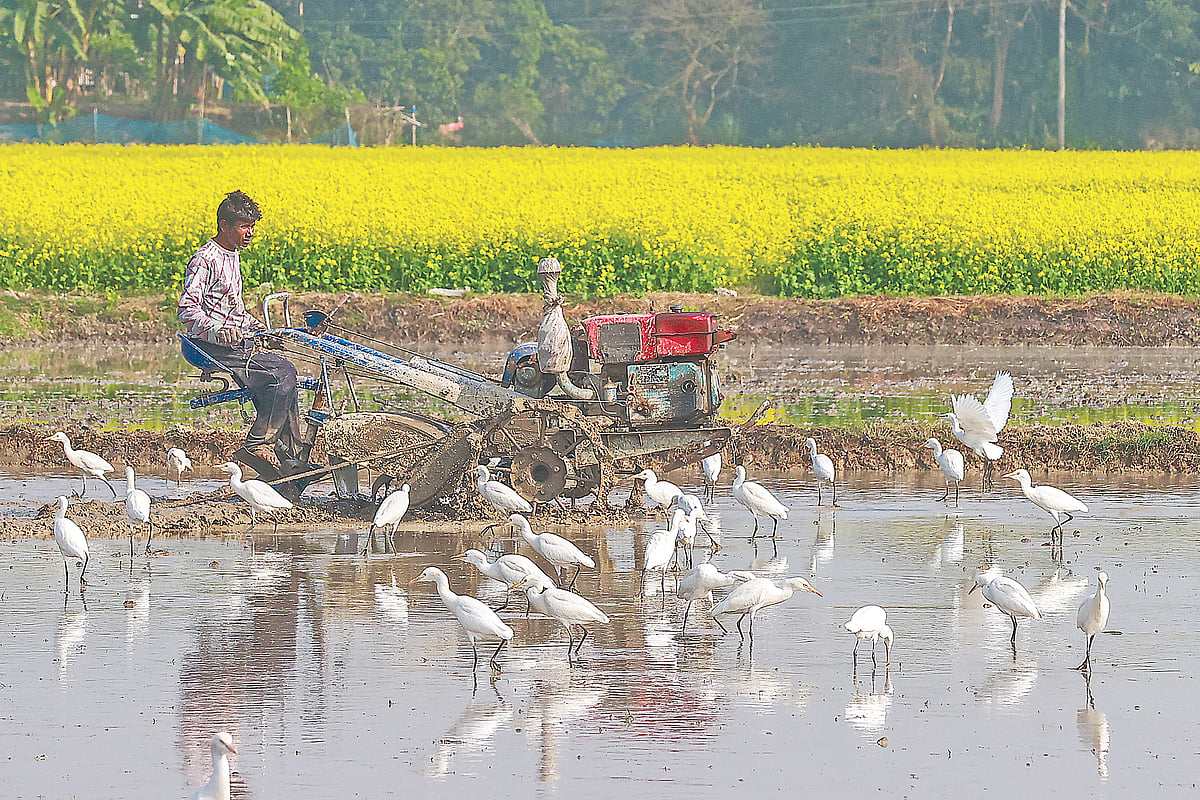
The effects of rising temperatures are already being felt, particularly on winter crops. Wheat cultivation, for example, requires a colder climate. According to agricultural experts, reasonably cool weather is needed at least until mid-February. However, in many areas, winter has already started disappearing after mid-January.
Mohammad Mahfuz Bazzaz, director general of the Bangladesh Wheat Research Institute, told Prothom Alo that higher daytime temperatures are not problematic for wheat. The issue arises if night temperatures rise. During the day, the plant produces food through photosynthesis, but at night it consumes the stored food. If nighttime temperatures increase, the expenditure of stored food rises, which prolongs the grain-filling period.
This is already happening and could increase in the future. Keeping these factors in mind, the Wheat Research Institute is now focusing on developing heat-tolerant wheat varieties. Director General Mahfuz Bazzaz said, “A major part of our research is now devoted to developing varieties that can survive under heat stress. Several varieties, from BARI–30 to BARI–32, are heat-tolerant. These have been developed to cope with current temperatures. However, given the projected rise in future temperatures by the Department of Meteorology, wheat cultivation could face severe losses.”
Weather is already affecting wheat cultivation. Iarul Islam, a farmer from Mongolpur in Biral upazila, Dinajpur, said he used to grow wheat every year. But now, temperature has become a problem. On top of that, maize has been introduced. Reduced winter poses less risk for maize, but wheat faces higher risk.
The report titled ‘Climate Change Effects on Fisheries and Crop Production in Bangladesh: An Econometric Analysis’ highlights the risk posed to agriculture due to rising temperatures. The research was published in 2023 in the South Asian Journal of Agriculture. It states that the impact of maximum temperature increase is clearly negative. The study found that excessive heat creates thermal stress on crops and fish, exacerbates water shortages, increases the risk of pest and disease attacks, and reduces yields. For example, wheat requires at least 60 days below 15 degrees Celsius; an average increase of 4 degrees Celsius shortens this cold period, creating a risk of crop sterility. The research shows that between 2009 and 2020, climate-related disasters caused total losses of approximately Tk 584.66 in the crop sector and around Tk 77.17 billion in the fisheries sector.
SM Idris Ali of Brahmkhola village in Sirajganj Sadar upazila has been involved in agriculture for more than four decades. He cultivates various foreign fruits, including dragon fruit and oranges. He said, “I can no longer find any similarity with the situation two decades ago. Perhaps because of foreign fruits or different hybrid crop varieties, the impact of reduced winter is not immediately visible. But from my experience, I can see that flowering in citrus fruits such as jambura and lemon is taking longer.”
Impact on health
Research notes that a rapid rise in night-time temperatures can lead to sleep disruption, heat stress, dehydration, increased risks of heart disease and stroke, and added strain on kidney health. Productivity declines in extreme heat. Those most at risk include workers who labour outdoors, such as construction workers, agricultural labourers and transport sector workers.
However, the impact of the rise in vector-borne diseases is already visible. The most serious consequence for Bangladesh has come from mosquito-borne dengue. In 2023, the number of people infected with and killed by dengue in Bangladesh was higher than at any time in the previous 23 years. A renewed outbreak of dengue began in Bangladesh in 2020, and the disease has now become almost year-round. At present, Bangladesh experiences only about 45 days of winter, a period during which mosquito breeding becomes difficult.
If winter shortens further, the breeding tendency of Aedes mosquitoes that carry dengue pathogens will increase, potentially leading to similar levels of dengue and chikungunya infections throughout the year, believes Nazmul Haider, a Bangladeshi scientist and researcher on mosquito-borne diseases at Keele University in the United Kingdom.
He said, “The study by the Meteorological Department is very significant. The research shows that Bangladesh’s average daily minimum temperature will rise by about 2 to 3 degrees. The number of winter days will decrease. As a result, the seasonal pattern of mosquito-borne diseases could break down and spread across the entire year. Beyond this, other diseases such as yellow fever, Zika virus and West Nile virus could also spread in Bangladesh.”
[The report was prepared with assistance from Prothom Alo Dinajpur correspondent Rajiul Islam and Panchagarh correspondent Rajiur Rahman]