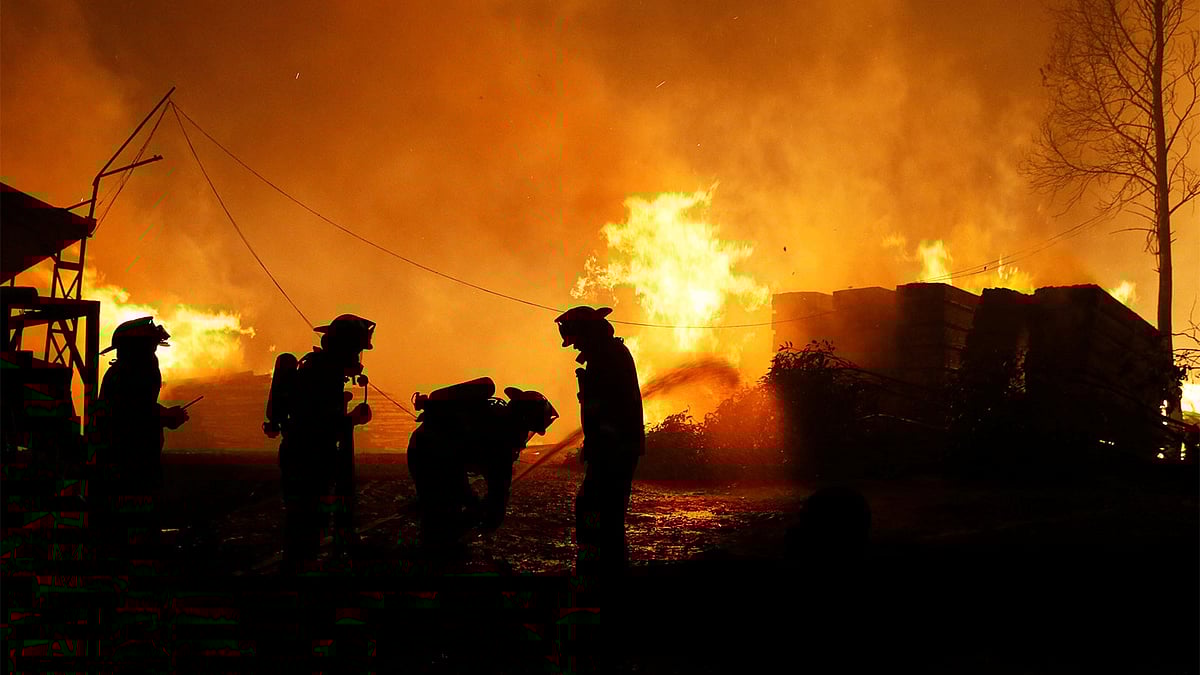
Climate change fuelled conditions for Chile, Argentina wildfires: scientists
Climate change made the hot, dry conditions that fuelled recent devastating wildfires in southern Chile and Argentina up to three times as likely, according to an analysis published Wednesday by the World Weather Attribution network of scientists.
Some two dozen people died in blazes across the South American countries—where it is currently summer—which also destroyed hundreds of homes, forced thousands of people to flee, and threatened some of the world’s oldest trees.
“Parts of Chile and Argentina are seeing significantly drier summers and more frequent fire weather as a result of carbon emissions,” said a WWA press statement with the network’s latest report.
“Human-induced climate change made the weather that accompanied recent wildfires in Chile and Argentina about 2.5 to 3 x more likely,” it added.
The international group assesses the role of climate change in extreme weather events.
Wildfires tore through the Chilean regions of Biobio and Nuble, along with Chubut province in Argentina, and threatened a Patagonian national park home to trees that can live for over 3,000 years, said the WWA.
Tens of thousands of hectares of land were razed.
Co-author Clair Barnes of the Centre for Environmental Policy at Imperial College London said early summer rainfall in the affected areas had dropped by as much as a quarter due to mankind’s burning of fossil fuels that emit planet-warming greenhouse gases.
Fire conditions were exacerbated by the drying effects of the La Nina weather phenomenon.
“Our analysis shows a clear and dangerous fingerprint of climate change on these fires,” said Barnes.
The report highlighted an elevated wildfire risk in both affected regions due to plantations of non-native pine trees that are highly flammable.
And they pointed to a reduction in funding for fire management and response systems in Argentina under budget-slashing President Javier Milei.
“In a government where climate change as a consequence of human activities is denied and nature is given a secondary place, we end up with situations like these, where fires cause more damage than they should,” Juan Antonio Rivera of the Argentine Institute for Snow, Glacier and Environmental Sciences (IANIGLA) told an online press conference.