'Progress', say mediators, after Iran-US talks on ending war
Iran and the United States agreed Monday to set up communications lines to keep the vital Strait of Hormuz open and end fighting in Lebanon, mediators said, after their first round of talks in Switzerland towards ending the war in the Middle East.
The teams led by US Vice President JD Vance and Iran's Mohammad Bagher Ghalibaf opened talks Sunday, starting a two-month negotiating period set out under a preliminary deal agreed last week.
Mediators Pakistan and Qatar said the talks took place in "a positive and constructive atmosphere".
"Encouraging progress has been made including the creation of a mechanism for further technical talks," they said, detailing a contact channel set up to "avoid incidents and miscommunication" at the Strait of Hormuz".
A "de-confliction cell", between the parties and the Lebanese authorities has also been set up to prevent fighting from erupting again, they said.
Technical talks will continue for the rest of the week at the Swiss resort of Burgenstock.
Tehran had effectively closed key waterway Strait of Hormuz in retaliation against the joint attacks by Israel and the United States on 28 February that torched off the war in the Middle East.
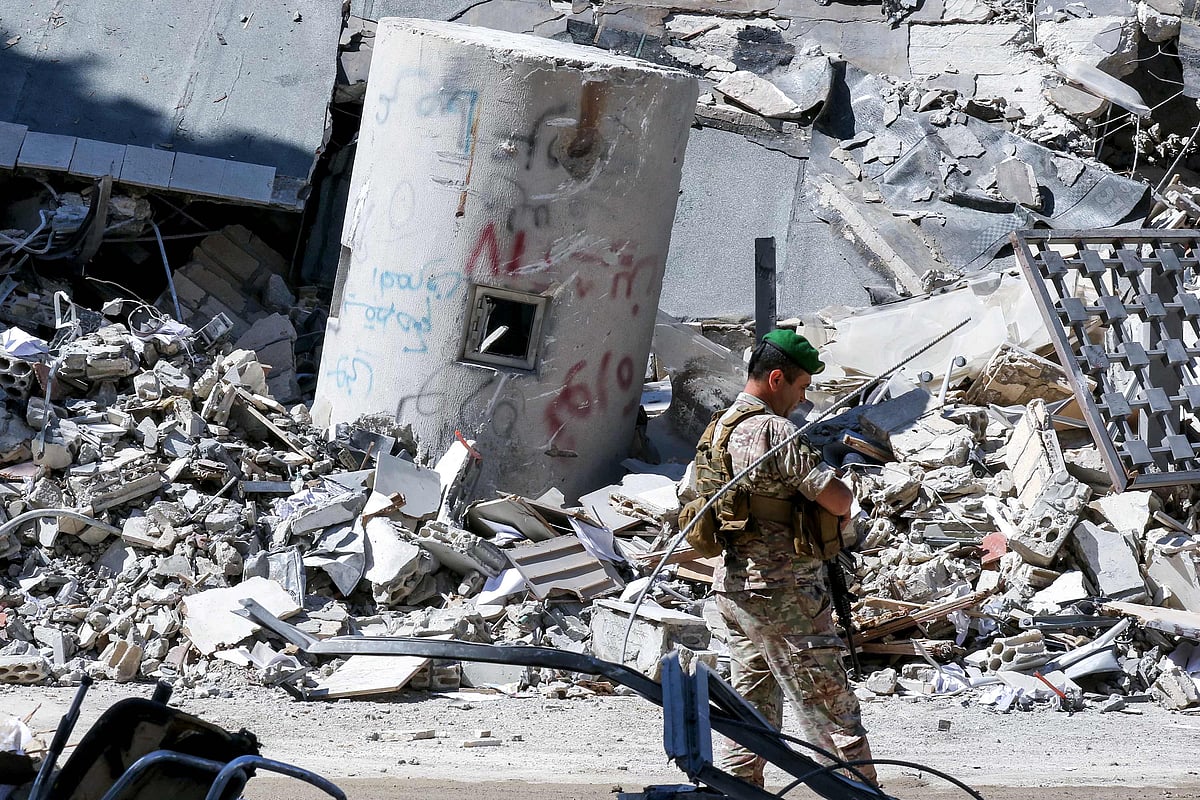
Lebanon had been pitched into the conflict as Iran-allied Hezbollah attacked Israel over the war on Iran, prompting the Israelis' bombardment of the neighbouring country.
After a series of false starts, Washington and Tehran finally signed a memorandum of understanding towards ending the conflict that included a provision to end fighting in Lebanon between Israel and Hezbollah.
But there have been repeated clashes in Lebanon since, which prompted Iran to say it would again shutter the crucial oil and gas trade route, having opened it as part of the deal.
"Tireless Pakistani and Qatari mediation has delivered major progress to end Lebanon War," Iran's Foreign Minister Abbas Araghchi wrote on X after the talks in Switzerland.
"Oil and petrochem exports are waived, blockade lifted, some frozen assets released, and major reconstruction & development plan launched for Iran. 1st real test: Lebanon deconfliction cell," he wrote.
The development came after a shaky start to the negotiations, with the Islamic Republic's delegation walking out in response to US President Donald Trump's threats to strike Iran over its support for Hezbollah Sunday.
Proxies
Trump had threatened to strike Iran if it did not "immediately stop their highly paid PROXIES in Lebanon from causing trouble".
Iran hit back with a warning of its own.
"They would do better to be careful with their statements; our armed forces are ready to respond to them in a different manner. No matter what they say, we are the ones who act," Iran's chief negotiator Mohammad Bagher Ghalibaf said.
Israeli Prime Minister Benjamin Netanyahu meanwhile said troops would remain in south Lebanon "as long as necessary" and vowed that he would "not allow Iran to acquire nuclear weapons".
By Sunday evening, there had been no reports of Israeli strikes or continued fighting, with some residents of southern Lebanon cautiously trickling back to their homes.
The fighting between Israel and Hezbollah has repeatedly threatened to derail peace efforts.
On Friday, planned US-Iranian talks were postponed after Israel launched deadly strikes in Lebanon following the deaths of four of its soldiers in combat there.
Israel's military chief visited troops in south Lebanon on Sunday, where he said Hezbollah was in a "very difficult position".
"Hezbollah has suffered a severe and significant blow, and we are committed to remaining prepared to continue operating and prevent its rebuilding," Lieutenant General Eyal Zamir said.
The overall death toll from the fighting in Lebanon has now surpassed 4,100, the health ministry said.
'New leaf'
US Vice President JD Vance had earlier hailed "a historic meeting" in Switzerland.
Flanked by US negotiators Jared Kushner and Steve Witkoff, Vance added: "The question before us now is how much more can we accomplish together?
"Can we turn over a new leaf? Can we change relations in the Middle East permanently?
"Or do we go back to doing things the old way, which is not our preference, but it's certainly very much something that can happen."
Lebanon aside, there has been no indication that Iran's support for armed groups across the region, which has long drawn the ire of the US and Israel, will be addressed in the negotiations.
Speaking on Sunday, Iranian President Masoud Pezeshkian said Tehran would not relinquish its right to enrich uranium, though he repeated Iran's denial that it wants nuclear weapons.
"We can also state in writing that we have no intention of building a bomb," he said.