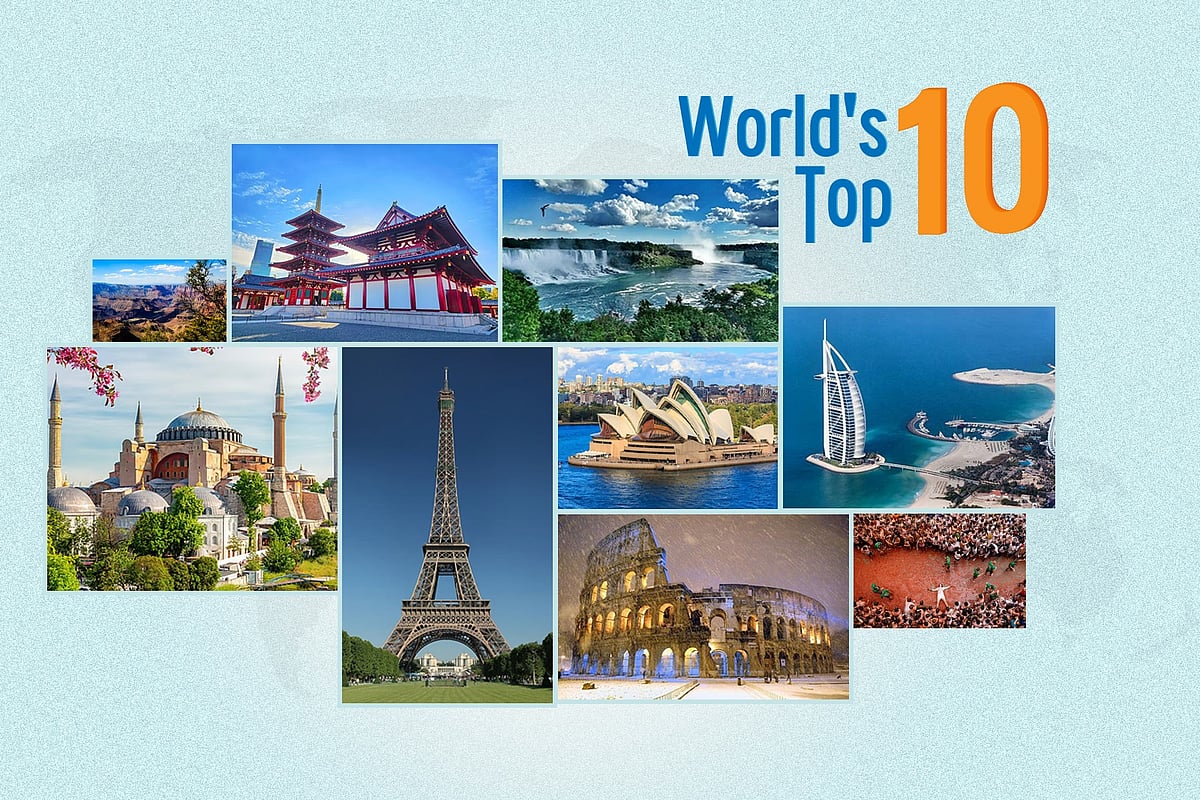
Who doesn’t enjoy standing on the edge of a hill and gazing at the rolling landscape below? Or listening to the roar of ocean waves at night along a vast shoreline, or the sound of falling leaves and dew in a quiet forest? For people burdened by the pressures of urban life, such experiences are priceless—along with the opportunity to see new countries and meet new people. As a result, the global tourism sector continues to expand.
According to data from the United Nations tourism body, UN Tourism, countries worldwide earned a total of USD 1.74 trillion from international tourism in 2024—14 per cent higher than in the pre-pandemic year of 2019.
Tourism revenue depends on several factors. It is not just about how many tourists visit a country; how much each tourist spends on average is equally important. Tourist spending in the United States is very different from that in the Maldives. Let’s take a look at which countries, according to Visual Capitalist, earned the most from tourism in 2024.
United States — Revenue: USD 215 billion
In 2024, the United States topped the global tourism revenue rankings, surpassing countries like Spain and France. Alongside its political and economic importance, the US offers highly diverse tourist attractions. From national parks such as the Grand Canyon to New York City’s skyscrapers, Disney theme parks, and entertainment hubs like Las Vegas—these attractions draw more than 80 million tourists every year.
High-quality infrastructure also plays a major role. International airports such as JFK and an extensive road network make travel within the country relatively easy. The US also leads in per-tourist spending: visitors spend over USD 4,000 per trip on average, driven by luxury hotels, high-end dining, shopping, and major events.
Spain — Revenue: USD 106.5 billion
Spain ranks second globally in tourism revenue. For Bangladeshi football fans, matches between Barcelona and Real Madrid often rival the importance of the World Cup itself. Spain, home to Barcelona, is a major tourist destination.
In 2024, the country welcomed 94 million tourists, marking a 10 per cent year-on-year increase in arrivals alongside a 16 per cent rise in tourism revenue.
Iconic attractions such as Barcelona’s Sagrada Família, Madrid’s Prado Museum, the sunny beaches of Costa del Sol, and Andalusia’s historic Alhambra continue to draw visitors. Notably, most tourists come from other European countries. Spain’s world-class infrastructure—including high-speed AVE trains and major airports like Barajas—supports smooth internal connectivity. Mediterranean weather, festivals such as La Tomatina and the Running of the Bulls, and cuisine like paella and tapas further enhance Spain’s appeal. Average tourist spending stands at EUR 1,327 per visit.
United Kingdom — Revenue: USD 82.5 billion
The United Kingdom ranks third in global tourism revenue. In 2024, 41.2 million tourists visited the country. Major attractions include Big Ben, Tower Bridge, and the British Museum in London (which receives around 6.5 million visitors annually), Edinburgh Castle, Stonehenge, and the natural beauty of the Lake District.
Travel is relatively convenient thanks to Heathrow Airport, the Eurostar rail service, and an extensive motorway network. The global reach of the English language, royal heritage (such as Buckingham Palace), Premier League football, and West End theatre draw strong interest from tourists, particularly from Western countries.
France — Revenue: USD 77 billion
France ranks fourth in global tourism revenue. In 2024, the country welcomed over 100 million international tourists, boosted by the Paris Olympics and the reopening of Notre-Dame Cathedral.
Major attractions include the Eiffel Tower, the Louvre Museum, the Palace of Versailles, the beaches of the French Riviera, and the castles of the Loire Valley. Paris Charles de Gaulle is Europe’s busiest airport, and high-speed trains and extensive metro networks make travel across the country easy. France’s romantic image, art heritage, rich culinary culture, Paris’s status as a fashion capital, and its diverse cultural legacy attract tourists from wealthy nations such as the United States, the United Kingdom, Germany, Belgium, and China.
Italy — Revenue: USD 58.7 billion
Italy ranks fifth in global tourism revenue. In 2024, approximately 71 million international tourists visited the country. Iconic attractions include the Colosseum in Rome, the canals of Venice, the Uffizi Gallery in Florence, the Amalfi Coast, and Tuscany’s vineyards.
High-speed Frecciarossa trains, Rome’s Fiumicino Airport, and ferry services make travel convenient. As the birthplace of the Renaissance, along with its pasta- and pizza-based cuisine, Milan-centred fashion industry, and festivals such as the Venice Carnival, Italy’s appeal is immense. Average tourist spending exceeds EUR 700 per trip.
United Arab Emirates — Revenue: USD 57 billion
The UAE ranks sixth globally in tourism revenue. In 2024, around 25 million tourists visited the country, with 18.7 million overnight visitors staying in Dubai alone.
Dubai’s main attractions include the Burj Khalifa, Dubai Mall, Palm Jumeirah beaches, and luxury resorts. World-class infrastructure—Dubai International Airport (handling 92 million passengers), hubs of Etihad and Emirates, and modern metro systems—ensures seamless travel. Tax-free shopping, skyscrapers, desert safaris, Ferrari World in Abu Dhabi, and major events such as Formula 1 Grand Prix and Expo continue to attract tourists. Dubai has effectively become one of the world’s most dynamic cities. Simplified visa policies have also boosted arrivals.
Turkey — Revenue: USD 56.3 billion
Turkey ranks seventh in global tourism revenue. Blending Ottoman heritage with modernity, Turkey has emerged as a major global destination. In 2024, 52.6 million foreign tourists visited the country.
Key attractions include the Hagia Sophia in Istanbul, Cappadocia’s hot air balloons, the ancient ruins of Ephesus, the beaches of Anatolia, and the white terraces of Pamukkale. Strong infrastructure—such as Istanbul Airport (Europe’s third-busiest), high-speed trains, and coastal highways—facilitates easy travel from Germany, Russia, the UK, and Iran. Relatively lower costs and traditional cuisine also make Turkey highly attractive to tourists.
Japan — Revenue: USD 54.7 billion
Japan ranks eighth in tourism revenue. Major attractions include Tokyo’s Shibuya Crossing and Senso-ji Temple, Kyoto’s Fushimi Inari Shrine, Mount Fuji, the Hiroshima Peace Memorial, and Osaka’s historic castles.
Seamless connectivity is ensured through bullet trains traveling at speeds of up to 320 km/h, Narita and Haneda airports, and extensive subway networks. Cherry blossom season, anime and pop culture, Japanese cuisine such as sushi and ramen, and a weak yen have significantly increased tourist inflows.
Australia — Revenue: USD 54.7 billion
Australia ranks ninth in global tourism revenue. Located at the southern edge of the world, the vast country attracts visitors for many reasons. Major attractions include the Sydney Opera House and Harbour Bridge, the Great Barrier Reef, Melbourne’s laneway culture, and the beaches of the Gold Coast.
World-class infrastructure—such as Sydney and Melbourne airports and the Trans-Australian Railway—supports tourism flows. Unique wildlife like kangaroos and koalas, adventure activities such as surfing and diving, vibrant city life, and wine regions like Barossa Valley make Australia highly appealing. Tourists spend an average of AUD 6,400 per trip.
Canada — Revenue: USD 49.9 billion
Canada ranks tenth in global tourism revenue. In 2024, 23.5 million international tourists visited the country. Key attractions include Niagara Falls, Banff–Lake Louise, Stanley Park in Vancouver, the CN Tower in Toronto, and the historic Old Town of Quebec City.
Advanced infrastructure—such as Toronto Pearson International Airport, VIA Rail, and the Trans-Canada Highway—ensures easy travel. Natural wonders like the Rocky Mountains and the Aurora Borealis, modern urban life, cuisine featuring poutine and maple products, and events such as the Montreal Jazz Festival continue to attract tourists. Average spending per trip is CAD 1,400.
The reality is that the world’s wealthy are now prioritising unique experiences over purchasing goods. The way Jeff Bezos organised his wedding last year clearly reflects this trend. At the same time, the global middle class is expanding, and overall travel is increasing. Countries that attract more tourists tend to have better infrastructure and more efficient transportation systems. Bangladesh can learn from this reality. Despite possessing the world’s longest sea beach and abundant natural beauty, the country has yet to successfully attract large numbers of tourists.