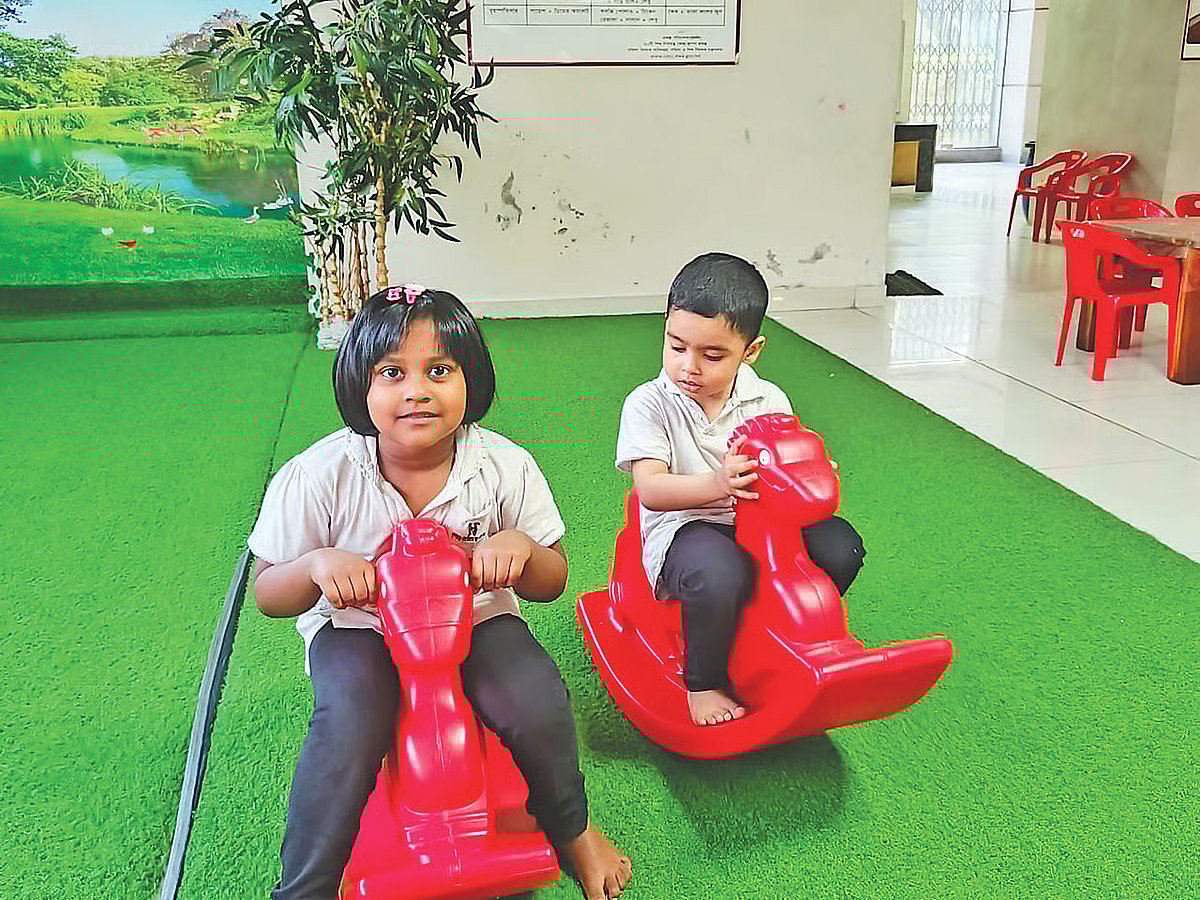
The rape and murder of a seven-year-old child in Dhaka has left parents across the country deeply shaken. For many families, especially parents of young daughters, the incident has created a growing sense of fear, helplessness and insecurity. One question now weighs heavily on many minds: where are our children truly safe?
As a mother of a young daughter myself, it is difficult not to feel disturbed by the thought that a child could become the victim of such brutality inside a neighbouring apartment in her own building.
Studies on violence against children repeatedly show that, in most cases, the perpetrator is someone known to the child. A 2025 article published by the National Institute of Mental Health in Bangladesh stated that nearly 85 per cent of child sexual abusers are familiar to the victim — relatives, friends or trusted individuals.
While stronger law enforcement and institutional protection remain essential, child safety also depends heavily on awareness within families and communities.
Protecting children is not only the responsibility of the state; it is also shaped by how attentive, responsible and emotionally present parents are in a child’s daily life.
In many South Asian families, people hesitate to say “no” in order to avoid discomfort or awkwardness. Yet nothing should take priority over a child’s safety.
Young children should be discouraged from moving around outside alone. However, caution and fear are not the same thing. Raising children through constant fear, restriction or intimidation can negatively affect their emotional development. Children who grow up seeing the world only through fear may struggle to develop confidence, judgment and trust.
As a mother, I believe communication is one of the most important aspects of child safety. Parents need to speak regularly with their children, listen to them carefully and try to understand their feelings. It is not enough to simply say “no.”
Children should also understand why certain situations may be risky and why informing family members before going somewhere is important. Awareness built through discussion is often far more effective than control built through fear.
Many families live in the same neighbourhood or apartment building for years. Because the environment feels familiar, children are often allowed to play alone, use elevators unsupervised, move between floors, visit neighbouring apartments or go to rooftops freely. Parents frequently assume that since the child is “inside the building,” the risk is minimal.
Raising children through constant fear, restriction or intimidation can negatively affect their emotional development. Children who grow up seeing the world only through fear may struggle to develop confidence, judgment and trust.
But many spaces like staircases, rooftops, corridors, empty floors and elevators inside residential buildings remain outside active adult visibility. Familiar surroundings do not automatically guarantee safety. Parents need to remain aware of where their children are going, who they are spending time with and how long they are away. At the same time, children should also be gently taught why some situations may be unsafe.
Today, many parents teach children about “good touch” and “bad touch.” Teaching bodily boundaries is certainly important. But child safety also requires setting boundaries even with relatives, family friends and familiar adults.
In many South Asian families, people hesitate to say “no” in order to avoid discomfort or awkwardness. Yet nothing should take priority over a child’s safety.
Parents also need to understand that children do not experience “danger” the same way adults do.
A conscious parent also pays attention to behavioural patterns. Some adults show unusual interest in children. Some insist on being alone with them. Others slowly test boundaries through affection, jokes or casual physical familiarity. These behaviours should not be ignored simply because the person is socially trusted or “like family.”
Too often, familiarity itself becomes a reason to stop being cautious.
Responsible parenting also means recognising children as individuals. In many households, children are controlled in the name of discipline. They are taught to respect elders, but not always taught how to protect their own boundaries. Their lives revolve around routines — school, meals, studies and sleep — while their discomfort and emotions are often overlooked.
As a result, many children gradually learn that their feelings are not important. Their complaints may be dismissed, doubted or treated as childish imagination.
Parents also need to understand that children do not experience “danger” the same way adults do.
They may sense discomfort, fear or unusual behaviour without being able to explain it clearly. A child may suddenly avoid a person, refuse to visit a certain place, become unusually quiet or appear fearful around someone familiar. These reactions should not be casually dismissed as childish behaviour.
A child’s first and most important place of trust is the family. If children feel they will not be believed, or worse, that they will be scolded or punished for speaking up, they learn to remain silent.
And sometimes, that silence itself becomes the greatest danger.
No matter how young a child is, they should still be treated as an individual with feelings, instincts and growing judgment. Parents play the most important role in shaping that judgment through open communication, emotional safety and age-appropriate guidance.
Children should grow up understanding that not every restriction is punishment; sometimes it is simply protection shaped by care.