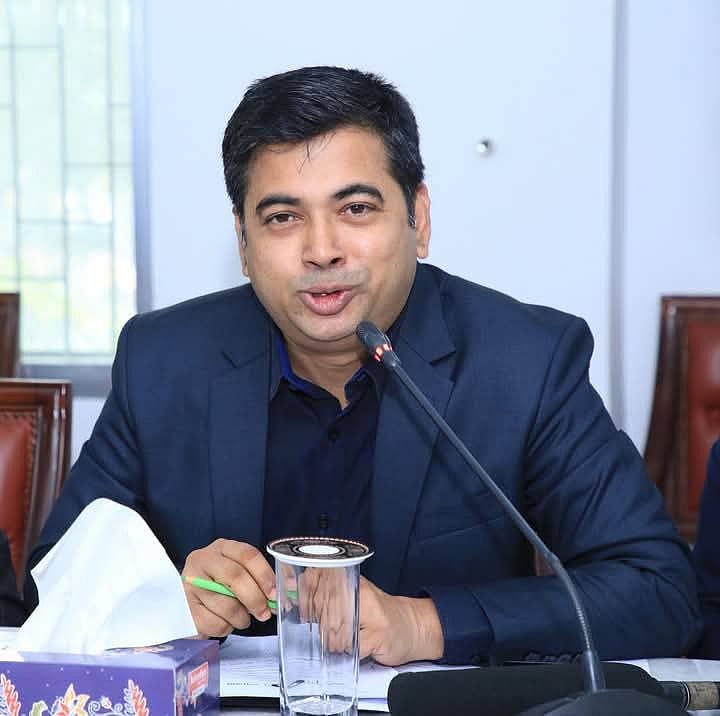
Exclusive Interview: Pervez Siddiqui
Bangladeshi migrants not in good shape
Pervez Siddiqui is a Bangladeshi peacebuilder, human rights advocate, and IVLP awardee of the US Department of State, with over a decade of leadership in migration and social justice. He is the Founder and Executive Director of the Films 4 Peace Foundation (F4P) and has produced more than 30 documentaries on migrant workers’ rights. Trained in peace and conflict studies in Dhaka, Oslo, and UNSW, he continues to champion the rights and dignity of migrants and marginalized communities in Bangladesh and beyond. On the eve of International Migrants Day, he spoke with Prothom Alo English Online in a Zoom meeting. Rabiul Islam conducted the interview.
How are our migrants?
Around 10.4 million Bangladeshi migrants have gone abroad for work. But many of them have returned. So there is no accurate data as to how many migrants are working abroad at the moment.
You know, migrants are playing a very important role in the economy of the country. They are working very hard to earn money. However, our migrants are not in good shape as I have been noticing this since 2006, I can say that many of our migrants remain vulnerable and unprotected. A separate ministry has been established, many acts and rules have been formulated, but there is no change in exploitation. Every year, our migrants drown in the Mediterranean Sea or they are dying in the forests of Africa and Europe in search of safer and better opportunities.
The government has no accurate data as to how many migrants have been languishing in the jails at different countries or how many migrants have been undergoing treatment at the hospitals. How many are victims of trafficking. Good governance in the migration sector is still missing. So I can say that our migrants are not in good condition.
How do the NGOs play a role?
NGOs working on migration issues have very limited resources. Only a few NGOs have been working actively. For example, around 10,00,000 migrants have been going abroad for work every year. At best, we are able to reach 50,000 migrants. It would have been better If a stronger partnership between the Ministry of Expatriates’ Welfare and the NGOs would improve outreach and services for migrants.
Are the NGOs able to create pressure on the government to ensure good governance in migration sector?
We, too, must admit our limitations. For example, labour migration to Malaysia took place through syndicates. If we could create pressure on the government, a large number of our migrants would not have been cheated.
But I will say that most of the ministries are not people centric. They lack strong commitment to migrant welfare. Potential labour markets including Qatar, UAE and Malaysia are now closed. The ministries have to take initiatives to open the closed markets. However, there is a lack of coordination among the ministries.
Are the NGOs working in collaboration?
We have been working through a platform named Bangladesh Civil Society for Migrants (BCSM). There are 26 members in this platform including RMMRU, BRAC, WARBE Development Foundation, BOMSA, OKUP etc. We have been rasing voice on various issues through this platform. We are pressing for adopting good practices.
What is the main problem of our migrants?
Over 90 per cent of our migrants go abroad through friends and relatives. Due to lack of fair recruitment, the migrants are cheated in the destination countries. Moreover, we are not able to place skilled manpower. On the contrary, India is placing skilled manpower. As a result, India is receiving a higher amount of remittance from Saudi Arabia and United Arab Emirates (UAE).
Do you think labour migration is taking place unprofessionally?
I will not say that the labour migration is taking place unprofessionally. But I must say that the overseas labour market has not been explored effectively. We still do not have a clear understanding of where the demand lies. Accordingly skilled manpower has not been created. Infrastructures have been established in many upazilas in the name of Technical Training Centres (TTCs). But these institutions have not been able to create demand based quality skilled manpower. There are huge demands of caregivers in Japan. You just take information from the Bureau of Manpower Employment and Training (BMET) how many people have been sent to Japan for work. Many government teams have gone to Japan for various labour migration purposes. But real progress remains slow. The ministry has no research cell. It should have a dedicated research cell. The cell will carry out research on the demand of manpower in labour-crisis countries.
What are your expectations on the eve of International Migrants Day?
The Government of Bangladesh has been observing International Migrants Day since 2008. On this occasion, I hope that migrants—the true heroes of our economy—will be duly honoured. At present, we see that only those who are relatively wealthy and send large amounts of remittances are recognised through the award of CIP status by the ministry. However, I firmly believe that the contribution of every migrant matters, regardless of the amount they remit.
I would like to see a migrant seated on the stage alongside the Chief Adviser as a symbolic gesture of respect. I also expect that migrants will be treated with dignity at our embassies and will not face harassment at airports. Those languishing in prisons abroad should be released with active support from the government. Migrants who have been unsuccessful in their journeys should be reintegrated into society with dignity and proper assistance.
Above all, I hope for a future in which migrants can go abroad safely, legally, and at zero migration cost.
Thank you
Pervez Siddiqui: Thank you too