Opinion
Heat waves are devastating our livestock economy; we are not prepared
Bangladesh is entering a new climate reality where heat waves are no longer occasional seasonal events but recurring structural shocks. While the human toll of extreme heat is increasingly visible, another crisis is unfolding quietly across the countryside: heat waves are inflicting severe economic and health damage on the country’s livestock and poultry sectors. The consequences extend far beyond farmyards.
Livestock supports millions of rural households and plays a vital role in Bangladesh’s food system. The sector contributes roughly 1.8 to 2 per cent of national GDP and about 16 per cent of agricultural GDP, while around 20 per cent of the population depends directly on livestock for their livelihoods. When extreme heat strikes, the effects ripple through rural incomes, food prices, and national nutrition security. Yet despite its importance, Bangladesh’s livestock economy remains dangerously exposed to rising temperatures.
The silent economic shock of extreme heat
Heat waves damage livestock production in ways that are often poorly documented in official statistics but painfully visible to farmers. Poultry production is particularly vulnerable. Chickens are highly sensitive to heat stress, and temperatures above about 30 -32°C begin to reduce productivity, while prolonged exposure to temperatures above 34 -35°C can lead to severe physiological stress and mortality.
During heat waves, poultry farms commonly experience sudden spikes in mortality, especially among broilers nearing market weight. Even when birds survive, production declines sharply. Heat-stressed chickens eat less, drink excessively, and divert energy away from growth and egg production.
Egg output can fall by 10-20 per cent during extreme heat events, while broiler weight gain may drop significantly. For small and medium farms operating on narrow margins, a single severe heat wave can wipe out weeks of income.
Dairy production suffers in similar ways. Many dairy farms in Bangladesh rely on Holstein-Friesian crossbreeds, which are highly productive but poorly adapted to tropical heat. When temperatures rise, cows reduce feed intake and experience metabolic stress. Milk yield declines, fertility drops, and calving intervals lengthen. For farmers who depend on daily milk sales to sustain household income, these changes translate into immediate financial hardship.
Heat also affects the traditional roles of cattle in rural economies. In many parts of Bangladesh, cattle are still used for ploughing, transport, and hauling agricultural goods. During extreme heat, animals tire quickly, become dehydrated, and are at risk of heat exhaustion or collapse. Reduced working capacity directly affects agricultural productivity and household resilience.
The economic losses become particularly visible during the annual Eid-ul-Azha livestock market season, when millions of animals are transported across the country. Under extreme heat conditions, long-distance transport often results in dehydration, weight loss, and stress-related illness, reducing both survival rates and market value.
Heat waves and disease: a dangerous combination
The impact of heat waves extends beyond immediate productivity losses. Extreme heat also creates conditions that increase disease risk in livestock systems. Heat stress weakens animals’ immune responses, making them more susceptible to infections and slowing recovery when disease occurs. Poultry farms frequently report higher incidences of bacterial and viral diseases during hot periods, particularly in crowded sheds with poor ventilation. Cattle and goats face similar challenges.
If heat waves continue to intensify under climate change, the consequences for Bangladesh’s food system could be substantial. Higher poultry mortality and lower egg production would tighten protein supply and drive price volatility
Diseases such as hemorrhagic septicemia, diarrheal infections, and respiratory illnesses often increase during extreme heat events, especially where water quality deteriorates or animals become dehydrated. At the same time, rising temperatures accelerate the activity of disease vectors such as flies, ticks, and mosquitoes.These vectors contribute to the spread of several livestock diseases in South Asia, including lumpy skin disease, anaplasmosis, and peste des petits ruminants (PPR). Heat waves therefore amplify both direct heat stress and indirect disease pressures.
Why Bangladesh’s livestock systems are highly vulnerable
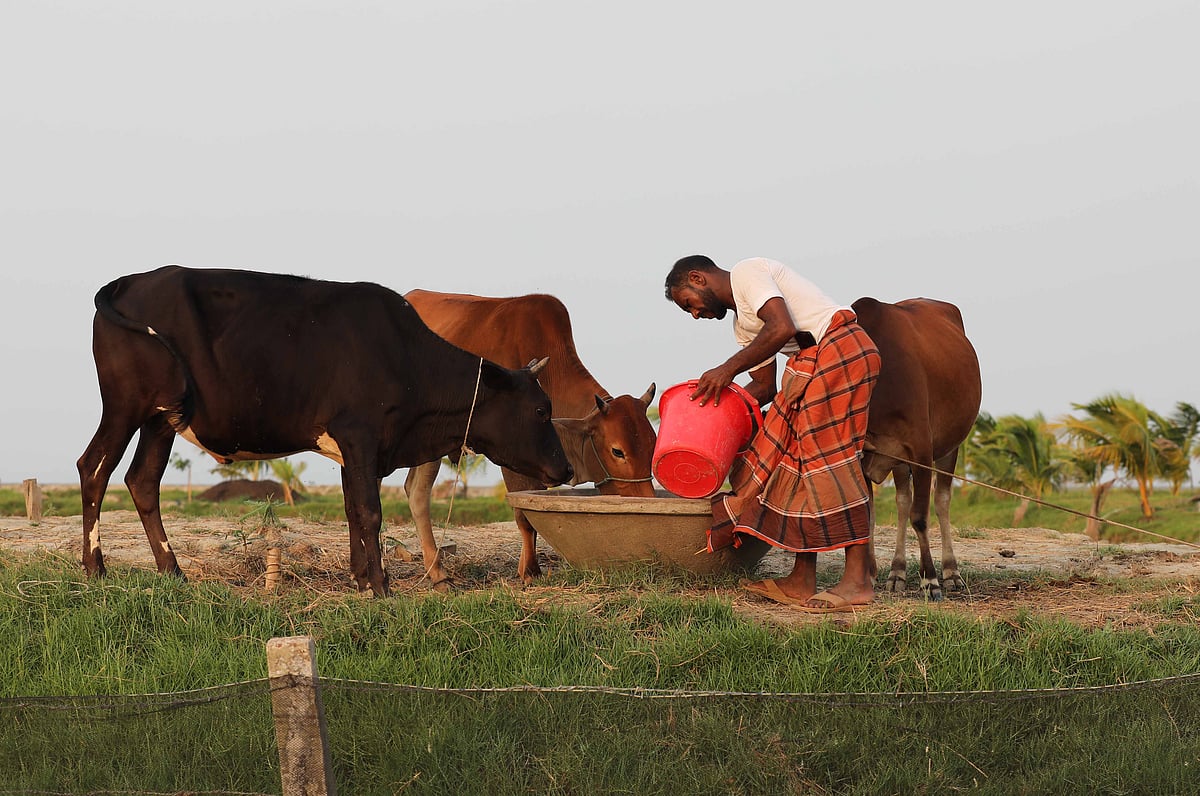
Several structural weaknesses make Bangladesh’s livestock sector particularly susceptible to heat stress. Many poultry farms rely on tin-roofed sheds with high stocking densities and minimal airflow. Without ventilation systems, these structures trap heat and effectively become “heat chambers” during extreme weather. Dairy and beef cattle are often tethered in open yards or fields with little or no shade.
Cooling systems such as fans, sprinklers, or heat-reflective roofing are rare in smallholder farms. Livestock transport systems are another weak point. Animals are frequently transported long distances in overcrowded trucks with limited ventilation, shade, or access to water. Perhaps most importantly, Bangladesh lacks a national framework for protecting animals during heat waves.
The country has developed early-warning systems and disaster protocols for floods and cyclones, and heat alerts for humans are becoming more common. But livestock, a cornerstone of rural livelihoods, remains largely absent from climate preparedness planning.
The economic cost of inaction
If heat waves continue to intensify under climate change, the consequences for Bangladesh’s food system could be substantial. Higher poultry mortality and lower egg production would tighten protein supply and drive price volatility. Reduced milk yields could strain the dairy sector. More frequent disease outbreaks would increase veterinary costs and reduce farm productivity. Ultimately, these pressures translate into higher food prices, declining farm incomes, and greater vulnerability for rural households.
Countries such as India and Pakistan have already documented large economic losses in livestock sectors during extreme heat events. Bangladesh is likely experiencing similar impacts, but without systematic monitoring, much of the damage remains invisible.
What Bangladesh must do now
Protecting livestock from extreme heat should become a national policy priority. First, heat-wave early warning systems should include targeted advisories for livestock and poultry farmers. SMS alerts linked to meteorological forecasts could provide practical guidance on hydration, ventilation, and emergency management. Second, basic ventilation standards should be incorporated into poultry farm licensing and extension programs.
Low-cost improvements such as ridge ventilation, side curtains, and reflective roofing can significantly reduce heat stress. Third, government support programs could help farmers invest in cooling infrastructure such as shade nets, fans, sprinklers, and water storage systems. Fourth, breeding strategies should promote more heat-tolerant livestock lines.
Overreliance on highly productive but heat-sensitive exotic breeds increases vulnerability under rising temperatures. Finally, animals must be incorporated into national disaster management frameworks such as the Standing Orders on Disaster (SOD), ensuring that livestock protection becomes part of climate adaptation planning.
A climate resilience test
Heat waves are already reshaping Bangladesh’s climate, economy, and food systems. Ignoring their impact on livestock risks undermining food security, raising protein prices, and deepening rural poverty. Protecting animals is not merely an animal welfare issue, it is an economic necessity. Bangladesh cannot build climate resilience while leaving its livestock behind.
* Prof. Dr. KBM Saiful Islam is former Dean, Faculty of Animal Science & Veterinary Medicine, Former Chairman, Department of Medicine and Public Health, Sher-e-Bangla Agricultural University