A powerful earthquake is followed by aftershocks. These aftershocks dissipate the dislocations caused by the main quake. Scientific studies show that the first day after an earthquake produces the highest number of aftershocks, which then halve the next day, gradually declining over time.
A bloody popular uprising generates many aftershocks in a similar way. These aftershocks play a role in managing the post-uprising situation. A year has passed since the July Uprising, and naturally, by now, the rate of aftershocks should have declined significantly. Yet the political developments in Bangladesh suggest otherwise. It appears that certain actors or political forces are deliberately attempting to prolong the aftershocks. They seem unaware that what was legitimate and acceptable immediately after the uprising is no longer so a year later.
It is often said that in matters of love, war, or revolution, all is justified. Yet there are limits to where and when such action should stop. German-American political theorist Herbert Marcuse argued that any violent revolution may be justified, but if it does not conclude swiftly, it risks losing its moral foundation.
On 5 August in Bangladesh, no revolution occurred; the July Uprising was a reaction to the violent repression by Hasina’s authoritarian government. Any resistance by students and citizens was justified—it was what shaped the student-public unity. The most urgent post-uprising task should have been to bring all forms of violence, conflict, and confrontation to an end. That did not happen. Rather, it has become evident that some actors are deliberately keeping these tensions alive. Consequently, scopes are appearing to raise questions about the moral foundation of the July Uprising. Even the defeated forces of the uprising and their supporters have begun raising such questions.
The July Uprising toppled a long-entrenched autocrat like Hasina. Simultaneously, it challenged the roots of authoritarianism embedded within the state apparatus. Dismantling these entrenched autocratic structures was essential for the uprising to achieve a successful outcome. This process represented a form of post-uprising aftershock, enabled by the strength of the students and citizens.
At the same time, some radical, opportunistic, and communal groups have exploited the weakened post-uprising state apparatus to assert their ideological influence. Their primary tool has been the mob. Using mobs, they have attacked shrines, religious sites of minorities, and cultural institutions, and destroyed artworks. Media outlets have also fallen victim to these mob attacks.
These incidents represent another form of post-uprising aftershock. Unfortunately, mob-driven aftershocks continue unabated. The most dangerous aspect is that certain political forces have now become entirely reliant on mobs to press their legitimate or illegitimate demands. In fact, there are sufficient reasons to consider some political party activities or their statements as mob-driven actions.
The 2024 uprising united diverse political parties, forces, and individuals against Hasina’s rule. After the uprising, no single political party was able to establish exclusive control over the situation. While the parties in support of the uprising formed an interim government in agreement, they retained ambitions to assert control within the structures of power. Over the past year, these parties have sought to establish dominance across various state, governmental, and social spheres. They have achieved partial success, but no single actor has achieved complete control. This partial dominance is highly precarious.
Greek political scientist and Oxford University professor Stathis Kalyvas, in his book The Logic of Violence in Civil War, explains that when a faction achieves partial dominance but not full control, it generates “targeted violence”. Acts of violence occur or are instigated to demonstrate strength, maintain dominance, or extend influence.
Recent violent incidents indicate that Bangladesh is probably currently experiencing such a period. An interim government has been running the country, while political parties, according to their capacities, have established partial dominance in various areas, seeking to maintain and expand it. Over the past year, while questions about governmental performance may arise, there is no doubt that these parties’ partial dominance has significantly hindered the administration of the state.
It is apparent that some political forces are generating mob violence merely to display power or maintain dominance. Since these acts are being carried out by forces allied with the uprising, the interim government is unable to take firm action.
This situation of partial dominance by different political parties and forces simultaneously creates conditions for violence and poses significant obstacles to the interim government’s ability to govern effectively. The military has played an important role in post-uprising governance and administration. Yet its uneasy relationship with the interim government is a subject of wide discussion. This has been influencing both politics and public perception.
Furthermore, hopes for post-uprising reforms in various sectors have largely faded. Disagreements among political parties have increased over this. Beyond areas of consensus, there is little opportunity or time for substantial reform. As a result, transferring power to an elected government through elections has become a practical necessity. The government understands this and announced the election schedule even before the timeframe it initially communicated.
However, some political parties and leaders convey anti-election rhetoric. When there is little room for reform and the government is under pressure from multiple political forces, steadfast insistence on reform effectively translates into opposition to the election. This creates uncertainty and a state of paralysis in politics, which in turn risks perpetuating violence. Some factions may actively desire this. Such a situation provides the defeated forces of the uprising an opportunity to reorganise.
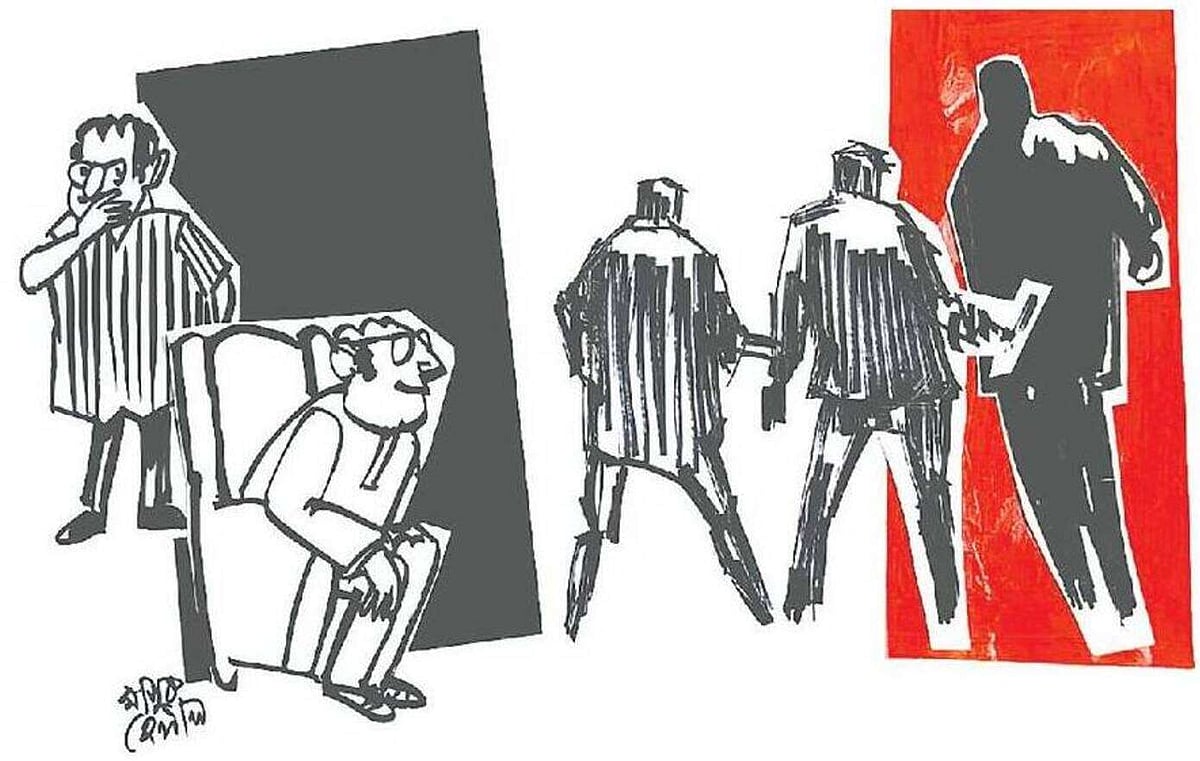
Slovak philosopher Slavoj Zizek has observed, “Sometimes doing nothing is the most violent thing to do”. According to him, even inaction can be a form of violence. In this sense, refusing to hold elections, avoiding compromise, or creating paralysis through inaction can also be seen as a form of violence. Bangladesh is now experiencing two forms of violence – active violent attacks and the violence of inaction.
If this dual violence continues in post-uprising Bangladesh, the country’s crisis will deepen further. All democratic forces aligned with the uprising must recognise this reality. There is no alternative to holding the elections scheduled for the first half of February to overcome the current paralysis, safeguard the moral foundation of the uprising, and block the path of defeated forces’ resurgence.
* AKM Zakaria, deputy editor, Prothom Alo