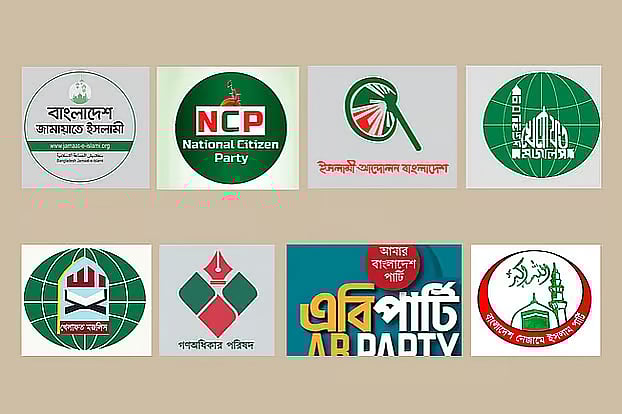
Dramatic shifts are taking place in the political landscape of Bangladesh and its neighbouring countries. It is essential to interpret recent events in Bangladesh within the context of these broader changes. Notably, the elections of student unions in higher educational institutions, along with news of a simultaneous movement involving eight parties—including Jamaat, NCP, Khilafat, and Islami Andolon—have drawn attention. What’s more striking is that within 24 hours, multiple parties involved labeled the report as 'baseless'. This sequence of events has undoubtedly captured the attention of political analysts both at home and abroad.
Questions have arisen: Why this sudden joint movement? What are its potential gains and losses? And why is there apparent indecision even among its initiators?"
The issues that the BNP is opposing in the National Consensus Commission appear to be the very same demands being raised by the eight parties mentioned in reports about a possible joint movement.
Jamaat has previously participated in joint movements or alliances under the leadership of others. This time, it may be taking the initiative itself in an attempt to demonstrate significant political strength.
Who is the target of the movement
Bangladesh has a rich history of joint political movements. Notably, there was a successful united movement against the military regime led by General Ershad. We’ve also seen various forms of joint protests and rallies against the recently ousted government. However, compared to those previous movements—their targets, agendas, and structures—this reported 'eight-party joint movement' seems to carry some key differences. Initial media reports have already suggested this. A more detailed assessment or commentary will require further developments.
Although eight parties were initially named as initiators of this joint movement, subsequent reports have revealed indecision and internal disagreements within some of these parties. Leaders from a few of them have even called the reports "misleading." As of the time of writing, Jamaat has not commented on the veracity of the joint movement reports.
In the 1980s, the joint opposition forces were up against a military junta. In the last decade, it was a government accused of dismantling the electoral system. Both movements enjoyed broad public support and, despite many ups and downs, ultimately achieved their goals. Naturally, the question now arises: who is the intended adversary of this newly proposed joint front? Is it the interim government?
There is little justification for launching a movement against a government that identifies itself as 'interim' and claims it intends to hold elections and step down within four to five months. Even so, it is reported that some of the eight parties announcing their intention to join the proposed joint movement will also present certain demands to the government.
Following the initial reports, uncertainty has surfaced regarding the mutual understanding and commitment among the potential participants in the joint movement. However, reports published in various newspapers on 13 September make it clear that these parties are not only targeting the government, but also view the BNP and other centrist forces as political rivals. Among their proposed 'four-point demands', the first and foremost is the implementation of proportional representation in elections.
Fulfilling this demand is beyond the scope of an interim government—it neither has the mandate nor the authority to make such a change. In contrast, if the BNP were willing, it might be possible. Yet, many of the parties that participated in the 2024 movement do not support a proportional electoral system. So this is not something the BNP can concede on its own either.
However, the very issues that the BNP is opposing in the National Consensus Commission appear to be the same demands being raised by the eight parties mentioned in reports of a proposed joint movement. This suggests that the direction of this "eight-party" movement is aimed at the BNP and other groups with similar perspectives. One inevitable consequence of this will be the formal fragmentation and hostility among the forces that led the mass uprising of 2024.
If the joint movement proceeds in its current proposed form, what had so far been expressed as verbal disagreements during the Consensus Commission meetings is likely to take on a full-fledged political character. This could also trigger increased tension and unrest in society. Undoubtedly, this would be perceived as a "victory" for the political forces ousted from power in 2024.
For them, the breakup of their former adversaries and the deepening hostility between those factions—possibly lasting a long time—would be a moment worth celebrating. That this outcome is arriving within just 13 or 14 months is, from their perspective, a notable development. However, it is a negative kind of achievement. While it might give them temporary comfort, it will not rebuild their political standing, nor will it erase their past.
In contrast, Jamaat-e-Islami stands to gain the most from the proposed eight-party joint movement. To put it more bluntly, if the movement truly gets underway, by September 2025, Jamaat's overall achievements may surpass all its successes of the past five decades.
The potential joint movement: gains and losses
The victory of Jamaat's student wing in the Dhaka University Central Students' Union (DUCSU) election has significantly advanced their position in the broader struggle for national power. This victory in such a strategic 'skirmish' will serve them well in the larger political 'battle'—and it already appears to be doing so, as evidenced by the inclusion of NCP and Deobandi-aligned parties in reports of the joint movement.
That two such significant developments occurred within a single week is not coincidental. Despite long-standing ideological and political differences between Jamaat and both the NCP’s political-national outlook and the Deobandi scholars' theological positions, all sides now seem to be making an effort to move closer together. This shift has major implications, both locally and regionally. It is also interconnected with the DUCSU and JUCSU election outcomes.
Additionally, we must consider the wider social and political shifts that have been unfolding in nearly every 'power centre' of society since late August 2024. These shifts provide important context for understanding this realignment.
In the DUCSU election, Shibir, the student wing of Jamaat, won, while the left-leaning and centrist groups did not exactly lose either. In fact, the latter performed impressively compared to their actual organisational strength. For Shibir, the result was also a satisfying response to their four decades of various efforts on the Dhaka University campus. But beyond the gains and losses of these two forces, the main impact of this election has been felt in the direction of the Rupayan Tower in Banglamotor.
The National Citizen Party (NCP) is a relatively new party. Since its inception, its core—and almost sole—source of strength has been the educated middle class and student community. The fact that students were looking for a political and social alternative outside of Jamaat, BNP, and Awami League is what led them last year to support the Anti-discrimination Student Movement and the new party that emerged from it. But the main message of the DUCSU election was that the student body, by and large, no longer holds strong expectations from this newly formed party. And yet, this campus was the very birthplace of the NCP and its key organisational stronghold.
On 9 September, the students of Dhaka University delivered a serious assessment of the past year of the Anti-discrimination Student Movement—an assessment the NCP cannot afford to ignore. In such a challenging moment, the NCP’s participation in the proposed joint movement of eight parties appears to be a necessary attempt at organisational and political survival.
But there is considerable confusion over whether the NCP is truly joining the proposed joint movement based on a party-wide consensus. Posts by the party’s organisers on social media suggest that its younger ideologues are facing internal tensions and ideological debates regarding collaboration with Jamaat.
Since Jamaat-e-Islami appears to be taking the lead role in this potential eight-party movement, if the NCP joins, critics may interpret it as a silent ideological surrender to Jamaat. On the other hand, some may argue that a joint movement does not imply ideological endorsement—only tactical unity around specific programmes.
There are precedents in Bangladesh’s history where ideologically opposed parties have engaged in joint movements with Jamaat. However, joint political action inevitably involves a degree of cultural accommodation. For example, in the 1980s, the anti-junta joint movement was not about bringing Jamaat to power. It aimed to reduce societal polarization and foster coexistence. And it was, to an extent, successful. Jamaat’s later long-term alliance with the BNP was also built on similar considerations.
This time, it cannot be definitively said that Jamaat is entering the joint movement purely to return to power, although the possibility that it could evolve into an electoral alliance remains strong.
Will the joint movement turn into an electoral alliance?
Through this new 'joint front', Jamaat is primarily seeking to expand its political influence, which has grown over the past year. By bringing NCP into the fold, Jamaat could present itself with an appealing youthful front. By aligning with Deobandi scholar-led parties, it could also neutralise long-standing theological opposition from those critical of Maulana Maududi’s ideological legacy.
Such a coalition would help Jamaat advance further within the educated middle class while simultaneously opening doors to broader acceptance within the madrasa-based religious community. Since Jamaat already holds significant influence in financial, bureaucratic, and diplomatic arenas among the potential eight parties, it is likely to take a leadership role in the movement—while the others may have little choice but to follow its lead.
Over the past few decades, Jamaat has only taken part in joint movements or alliances under the leadership of others. This time, it seems to want to demonstrate its own political capability by initiating one itself. From its perspective, this would be a bold and positive strategic experiment—one that may even help it culturally counter old domestic and international criticisms.
However, such a coalition may not be as uncomfortable for Char Monai-aligned groups or other members of the joint initiative as it might be for many younger organisers within the NCP, who have long championed a progressive, centrist political stance.
If the proposed joint movement becomes election-oriented, it could benefit Islami Andolon Bangladesh (IAB) and similar groups. Participating under a joint banner would likely increase their chances of winning seats compared to contesting elections alone. The same possibility—albeit limited—exists for the NCP as well.
But while Islamist parties can rely on vote-brokering at the grassroots level, the NCP may struggle to operate in that same way. Jamaat and Qawmi-oriented parties have clear sociopolitical voter bases. In contrast, the NCP would face significant ideological and cultural compromises if it were to engage in seat-sharing negotiations under such an alliance—something that would not be required of the Islamist parties.
Surely, the NCP's theorists and senior leadership are well aware of this dilemma. That may explain why, immediately after the news broke, social media accounts affiliated with NCP circles erupted in debate over the issue.
According to some political commentators, the pressure on the NCP to join this eight-party movement stems from the influence of ideological trends that have taken root within the party over the past year, as well as from earlier periods of social engagement.
Among NCP organisers who support this strategic shift, the thinking seems to be that joining a joint initiative before the election offers more tactical benefits than standing alone with long-term patience as the sole vanguard of the mass uprising. Needless to say, such calculations would inevitably strengthen Jamaat-e-Islami’s position in the next parliament.
Whether these calculations are linked to the demand for banning the Jatiya
Party is now also a matter of curiosity among political analysts.
●Altaf Parvez is a researcher
*The opinions expressed are the author’s own.