In a democratic order, a caretaker government is hardly an ideal mechanism for conducting elections. Such an arrangement would not have been needed had those in power properly fulfilled their entrusted responsibilities and abandoned the tendency to secure victory by any means.
There are virtually no examples of robust, sustainable democracies in countries where caretaker governments exist. Even so, the system is the lesser of two evils for Bangladesh. Yet history shows that this system has also destroyed political parties, who once boasted that it was the fruit of their own movements.
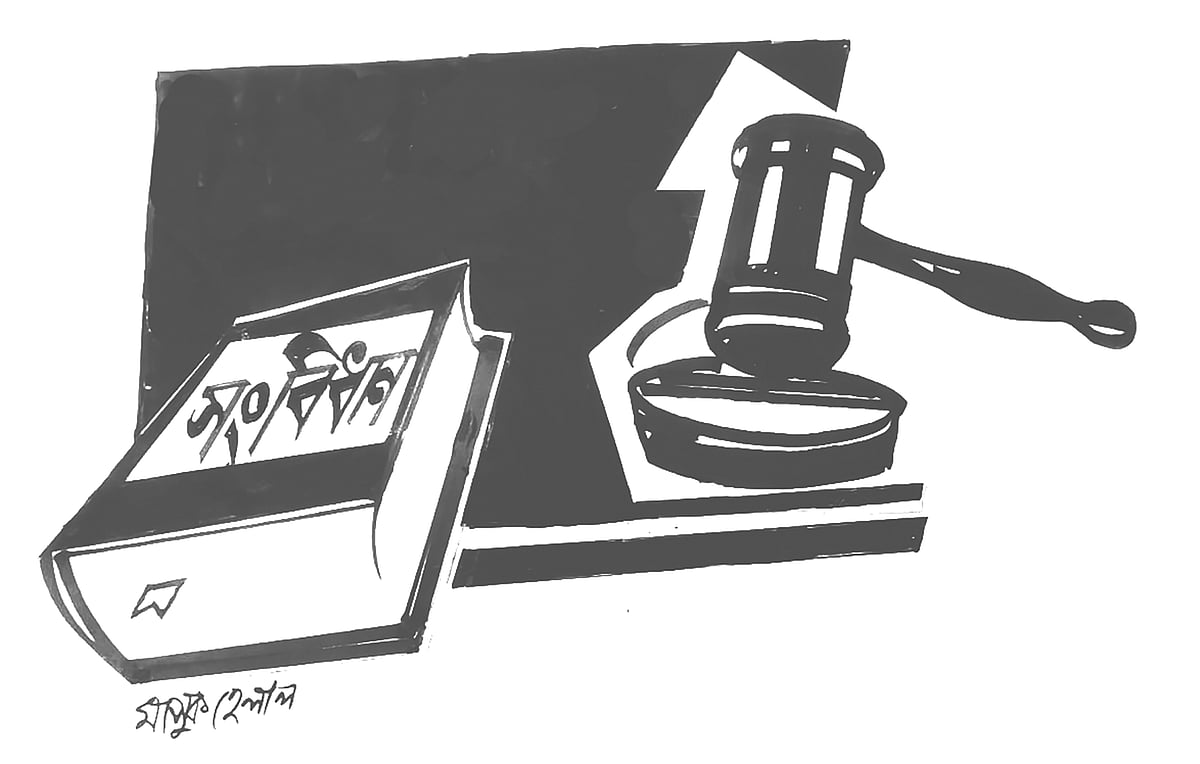
On Thursday (20 November), the Appellate Division of the Supreme Court reinstated the non-partisan caretaker government system. However, it will not take effect immediately. The public will have to wait at least five years. The election scheduled for February 2026 will be held under the interim government. Only after the newly formed parliament is dissolved will the subsequent election be held under a caretaker government.
Article 58B(1) of the 13th Amendment, which related to the non-partisan caretaker government, stated that a non-partisan caretaker government would remain in place from the date the Chief Adviser assumed office, after parliament was dissolved or upon expiry of its term, until the newly appointed Prime Minister assumed office following the formation of parliament.
Article 58C(2), regarding the formation of the caretaker government and the appointment of its advisers, stipulated that the Chief Adviser and the other advisers must be appointed within 15 days of the dissolution or expiry of parliament.
But there is no such scope now. Following the mass uprising of 2024, an interim government, led by Professor Muhammad Yunus, was formed on the advice of the Supreme Court. The head of government has already announced that the 13th parliamentary election will be held in the first half of February.
Attorney General Md Asaduzzaman has described the abolition of the caretaker system as the burial of democracy, and its reinstatement as the beginning of a walk along democracy’s highway. While I agree with his statement, I must add that even if we have stepped onto this highway, whether we reach our destination will depend entirely on the democratic mindset of our politicians.
We have had about four reasonably good elections under caretaker or interim governments. Yet those who lost those elections never accepted the results. No opposition party remained in parliament for a full term. Nor have ruling parties ever taken the opposition’s views into account in lawmaking; instead, they have acted in an authoritarian manner.
In future, if the caretaker government is restored, it will remain in office only for three months. An elected government, however, will operate for five years. If that government does not govern democratically, the caretaker administration will be powerless. It cannot be expected to clear away the debris of five years within just three months.
The caretaker system has a long history, so does its abolition. During the anti-Ershad movement, the first caretaker government, then called the ‘interim’ government, was formed under justice Shahabuddin Ahmed, based on the outline agreed upon by the three major alliances. The BNP came to power through the election conducted by that government. Later, during the BNP's tenure, the Awami League, Jatiya Party, Jamaat-e-Islami and left-leaning groups all launched movements again demanding a caretaker system. It was finally established constitutionally through the 13th Amendment.
In Bangladesh, no government with a two-thirds majority has ever exited gracefully. After independence, the Awami League won 293 seats in the first election; within three years it introduced BAKSAL. Ziaur Rahman’s parliament also held a two-thirds majority, and the Sattar government that followed his death was ousted by a military coup. In the 1988 election, Hussain Muhammad Ershad’s regime secured a two-thirds majority but could not remain in power for more than two years; the mass uprising of 1990 forced him out.
Only two parliaments in Bangladesh have been balanced: those of 1991 and 1996. The BNP formed the government after the first, and the Awami League after the second. Analysts widely regard these two parliaments as comparatively effective, where the opposition could play a limited, yet meaningful, role.
The fall of the Awami League in the 2024 uprising began with the abolition of the caretaker system in 2011. A parliament without an opposition cannot deliver democracy. The then Prime Minister Sheikh Hasina abolished the caretaker system almost single-handedly, using a High Court verdict as a shield, although Justice Khairul Haque’s summary verdict had stated that two elections could still be held under the caretaker system. That provision was removed in the full verdict, and even before that the Jatiya Sangsad (national parliament) had already passed a law abolishing the 13th Amendment.
The reinstatement of the caretaker system has been welcomed by the Bangladesh Nationalist Party (BNP), Jamaat-e-Islami, Khelafat Majlis and several other parties. The BNP has said that this will prevent the return of fascist rule. The National Citizen Party has described the verdict as “epoch-making.”
This verdict, however, raises a new question: will the future caretaker system follow the model of the 13th Amendment, or that outlined in the July Charter?
Even leaders of the Bangladesh Awami League (whose activities have been banned), now fugitives, have demanded from undisclosed locations that the next election be held under a caretaker government. This is the irony of history. Had Awami League leaders remembered this while in power, the political trajectory might have been very different.
Under the four elections held during caretaker or interim governments, the BNP and Awami League both came to power in turns, sometimes alone, sometimes in alliance, but neither was banished from politics.
By abolishing the caretaker system in 2011, holding the uncontested election of 2014, the night-time election of 2018, and the ‘dummy’ election of 2024, the Awami League has ultimately engineered its own downfall.
* Sohrab Hasan is a poet and journalist
* The views expressed are the author’s own