Opinion
Mango trade, women’s labour displacement, and the risk of famine
Mango is indeed a popular fruit for its mesmerising taste. In recent years, it has become economically popular too because of its significant economic returns. The northern region of Bangladesh is renowned for its extensive mango production and trade. Around this single crop, a complex, however, enthusiastic economic system is running. And, a group of stakeholders including the owners of the orchard, farmers, traders, labourers, transporters, wholesalers, and numerous other actors take the share of this value chain.
However, behind this apparent successful value chain and the “sweetness” of this mango-economy, several critical but often overlooked questions are entrenched. If we go a little deeper, the question is- who benefits most from this expanding trade, how are profits usually distributed, who bears the hidden social and economic costs, what happens when a single cash crop gradually replaces a diversified agricultural system, how does this transformation reshape women’s employment, mobility, and safety.
Failure to address those thought provoking questions may ultimately risk the entire social, economic, and food-security related harmony of the region, and would draw devastating consequences in the coming years.
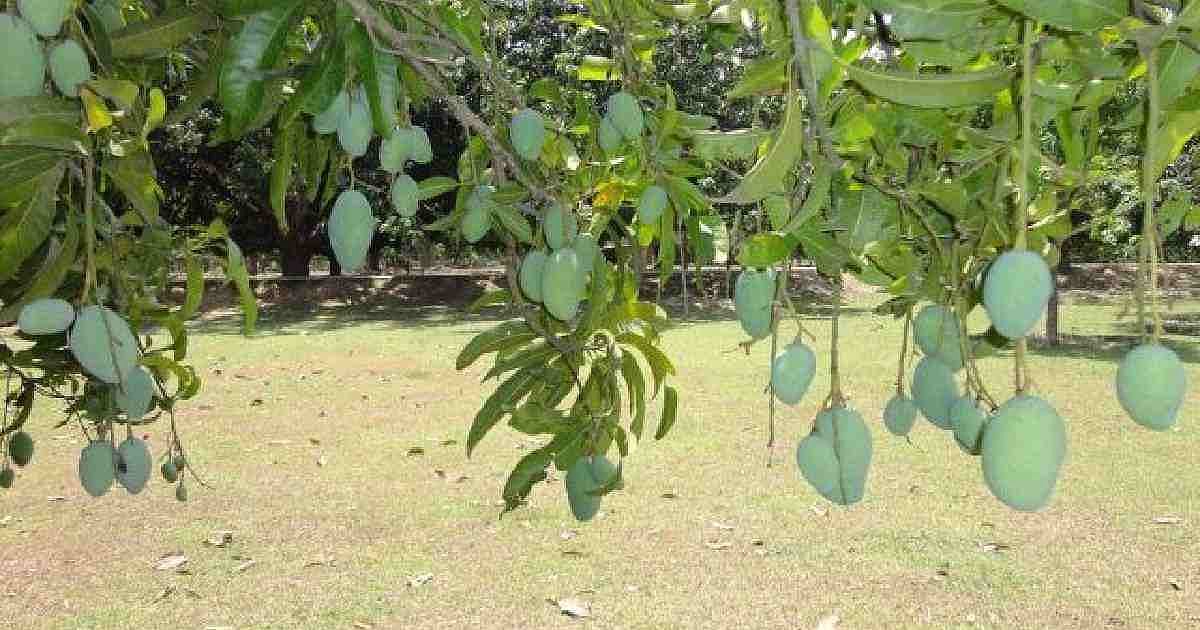
Let me concentrate on Naogaon district of the Rajshahi Division, which sees a remarkable boom in the mango economy. Even just a few years back, the district was famous for rice production and widely recognised as the rice-hub of the country. Today, however, the landscape tells a different story, particularly Sapahar and Porsha upazilas. The landscape is covered with seemingly endless stretches of mango orchards, while trucks laden with freshly harvested mangoes travel continuously towards markets in the capital.
According to local residents, large-scale commercial mango cultivation in Naogaon is a relatively recent phenomenon. Even five to seven years ago, mango cultivation was not as widespread as it is today. In a remarkably short period, mango has gradually occupied a large share of agricultural land, replacing rice and other crops to become the region’s dominant cash crop.
A deeper look reveals another concerning dimension- a deeply rooted gendered discrimination has emerged within the structure of the expanding mango economy. The rapid expansion of mango cultivation is quietly pushing women out of the labour market.
Historical record and local evidence both argue that Naogaon was once renowned for producing premium rice varieties such as Kataribhog and Kalijira. Until a few years ago, nearly 2,000 rice mills operated in Naogaon; thousands of daily labourers, mostly indigenous women, used to work there.
However, the current picture is different, rice fields have been shifted into mango orchards, rice mills are gradually shutting down, and thousands of women workers are losing their livelihoods.
The questions are: who owns these mango orchards? Can’t women work there?
Local realities say that the relatively wealthy landowners and large landholders are the primary actors behind mango cultivation. Some of the small and medium landholders have also converted their own land into orchards, while others, specially smallholders farmers who had small pieces of lands have leased out those for long periods. External investors have also entered the sector. As large tracts of farmland are converted into orchards, small and fragmented landowners have been compelled to follow the same path, as rice cultivation has become increasingly difficult in such a changing landscape.
Local smallholder farmers say that many of their small plots are no longer practically usable for rice cultivation, as they are surrounded by mango orchards. There is limited access for tractors and for transporting harvested rice, leaving them with no option but to lease out their land for 10–12 years.
Such long-term leasing reflects a major economic shift in the region. A major share of the farm lands are now controlled by investors who are often not local. They lease land, manage production, and collect profits at the end of the season. Meanwhile, smallholder farmers-once dependent on rice cultivation-are becoming increasingly detached from agriculture. Many are effectively becoming land-less farmers, excluded from agricultural livelihoods, without stable employment, and living with deep frustration and uncertainty. Indeed, the dreams of these small holder farmers have been swept away by the aggressive mango economy.
If we even say, was rice just a crop? Not really; it was in a row their food, employment, and the foundation of the local economy. Rice cultivation involved year-round labour—sowing, nurturing, harvesting, threshing, and storage. So, the year-round work for livelihoods for thousands of rural households was also there. However, the conversion of rice fields into mango orchards has weakened this agricultural safety net. Mango is a seasonal cash crop; its economic activity is concentrated in only a few months. While it creates employment during the mango season, these communities remain unemployed for the rest of the year.
History shows that the Irish Famine of 1845–1852 was caused by the dependency of a single potato variety (the Lumper). That famine led to the death of around one million people and mass migration.
Thus, the argument against mango-economy is, it has disrupted income stability in the long run for the marginal populations. For an agrarian region, crop diversity is essential. The dominance of a single crop, particularly when it is a non-grain cash crop, not only reduces agricultural diversity but also negatively affects food security, livelihoods, and environmental balance over time.
There are numerous examples in the history that when a large share of agricultural land in a region gradually shifts toward a single crop - especially a cash crop- overall production and income may appear high trend on paper and in book-keeping records, but the risks of food insecurity increase, that ultimately could draw the risk of famine even.
Again, continuous monocropping depletes soil nutrients, weakens natural pest resistance, and increases reliance on chemical fertilisers and pesticides. This, in turn, can damage long-term soil fertility and agricultural productivity. In the mango orchards of the northern region, pesticide use is very common. Interestingly, local daily labourers often describe their work simply as “spraying poison in the orchards”. During the mango season, workers are vividly seen engaged in this activity almost continuously.
A deeper look reveals another concerning dimension- a deeply rooted gendered discrimination has emerged within the structure of the expanding mango economy. The rapid expansion of mango cultivation is quietly pushing women out of the labour market. As mentioned earlier, Indigenous communities in the plains have a significant presence in these mango-producing areas. Historically, women from these communities have been actively engaged in agricultural labour and have played a vital role in the region’s agrarian economy. Women’s economic participation around rice production is closely connected to their agency-building, control over resources, participation in household decision- making and greater mobility and autonomy.
Many women are unwilling to join mango related work, and families often discourage their participation due to security concerns. It is rarely found that women are working in the orchard, only under extreme hardship, but they prefer to work in a group.
Employment opportunities for women in mango orchards are extremely limited. Since mango production is seasonal, even these limited opportunities are largely controlled by men. A prevailing local perception has emerged that women are not suitable for such work. This is further compounded by safety concerns. Dense orchards create isolated and hidden spaces, which are often unsafe for women. Local discussions have highlighted incidents of harassment and even sexual violence in some orchards, creating fear and insecurity among women.
As a result, many women are unwilling to join mango related work, and families often discourage their participation due to security concerns. It is rarely found that women are working in the orchard, only under extreme hardship, but they prefer to work in a group. Then again, they face wage discrimination -women are usually paid half of a man justified with a common claim that women can’t do hard work, and this disparity is even socially normalised. The misogyny of the system is evident.
When women are pushed to exit from the labour market, that has a long-term social consequence. It creates the increased risk of child marriage, due to insecurity girls are afraid to move alone which negatively affects their education and mobility. As a result, child marriage and school dropout rates are high in those areas.
History shows that the Irish Famine of 1845–1852 was caused by the dependency of a single potato variety (the Lumper). That famine led to the death of around one million people and mass migration. Similarly, the Bengal Famine of 1943 was driven by wartime agricultural shifts and export demands, which led to large-scale replacement of rice cultivation with jute.
We must learn from history. Are we pursuing short-term profits at the cost of long-term risks?
* Masuma Billah is a researcher at Utrecht University, Netherlands
* Views expressed are the author's own