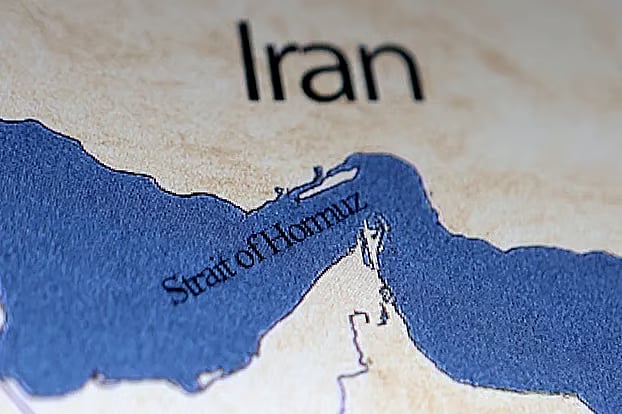
Though distant, the Middle East conflict has already reached Bangladesh’s markets, industries, and even household kitchens. The attack on Iran by the United States and Israel, followed by Iran’s move to block the Strait of Hormuz, has shaken global energy supply systems.
Nearly one-fifth of the world’s oil supply and about 20 per cent of liquefied natural gas (LNG) pass through this route. As a result, crude oil prices have surged beyond US$114 per barrel.
The impact is being felt rapidly in import-dependent Asian economies including Bangladesh. Due to reliance on fuel imports, Gulf labour markets, and global shipping routes, instability in the Middle East has quickly put pressure on the economy. Uncertainty in energy markets, rising food prices, and growing business concerns are already evident.
For the new government, this is not a distant geopolitical issue—it is a major test of economic management. In today’s globalised world, even distant wars ultimately determine prices in local markets.
Fuel crisis and inflation
Energy is a core driver of economic pricing. Bangladesh’s energy sector, being import-dependent, is highly sensitive to global volatility. About 65 per cent of the country’s electricity is generated from imported fuels—oil, coal, and LNG—making the economy vulnerable to global price increases.
In December 2025, petroleum import costs stood at around Tk 790 billion. With crude oil prices now exceeding US$114 per barrel, this cost is expected to rise further. Policymakers now face a dilemma: raise domestic fuel prices or increase subsidies at the cost of fiscal deficits.
Bangladesh’s economy now faces a reality where global geopolitics directly affects everyday living costs. Rising energy prices quickly translate into inflation—transport costs rise, food prices increase, and industrial production becomes more expensive. In February this year, average inflation reached 9 per cent. If the conflict persists, these pressures could intensify.
Low-income households are hit hardest. Urban poor families spend a large share of their income on food, so even small price increases force significant dietary changes—often reducing nutritional intake.
Energy and food security are deeply interconnected. During the 2008 global food crisis, rising energy prices led to increased use of crops like corn and sugarcane for biofuel production, reducing food supply and driving up global food prices. A similar trend could emerge again, intensifying long-term risks.
Economically, this reflects cost-push inflation, where rising production costs drive overall price increases. Energy price hikes do not just increase electricity bills—they reshape the entire cost structure of the economy.
Industry, trade, and food security
The most visible effects of the energy crisis appear in industry, trade, and agriculture. Bangladesh’s export-driven economy relies heavily on the ready-made garment (RMG) sector, which accounts for about 84 per cent of export earnings. However, irregular gas supply disrupts production and increases costs. Energy price increases raise costs at every stage—electricity, transportation, raw material imports, and supply chains. In today’s interconnected global production system, higher energy prices also increase international shipping and logistics costs, weakening Bangladesh’s export competitiveness.
Energy-intensive industries such as cement, steel, and ceramics are under similar pressure. Many small and medium enterprises have already reduced production hours or become cautious in taking new orders. Rising diesel prices increase transport costs, which are ultimately passed on to consumers through higher retail prices.
This underscores a key economic reality: rising energy prices transform the entire production cost structure—not just electricity bills.
Agriculture faces similar risks. About 80 per cent of Bangladesh’s irrigation depends on diesel-powered pumps. With global oil prices exceeding $114 per barrel, diesel prices have risen significantly, reaching around $1.34 per litre in March. Irrigation costs for the boro season are expected to increase further.
At the same time, fertiliser production and import costs are rising. In December 2025, Bangladesh spent more than Tk 52 billion on fertiliser imports. Global fertiliser prices rose by 6.5 per cent in February 2026. Prolonged conflict could disrupt natural gas supply—the key input for nitrogen-based fertilisers—leading to further price increases.
Although Bangladesh’s ongoing canal re-excavation and irrigation infrastructure development initiatives are positive, in the long term it is essential to plan energy and food policies in an integrated manner.
This could raise production costs for staple crops such as rice, wheat, and maize. If farmers cut back on irrigation and fertiliser use, production may decline, posing long-term risks to food security.
Energy and food security are deeply interconnected. During the 2008 global food crisis, rising energy prices led to increased use of crops like corn and sugarcane for biofuel production, reducing food supply and driving up global food prices. A similar trend could emerge again, intensifying long-term risks.
This reality brings forward an important policy question—an energy crisis is not just a problem of electricity production or industry; it can also affect the foundation of food production. Although Bangladesh’s ongoing canal re-excavation and irrigation infrastructure development initiatives are positive, in the long term it is essential to plan energy and food policies in an integrated manner.
Therefore, the energy crisis is already creating pressure on the industrial, commercial and agricultural sectors. However, the biggest concern is its potential long-term impact. Rising production costs, instability in supply chains and increasing agricultural production costs—together these may become a serious risk for the stability of Bangladesh’s economy in the future. Therefore, policymakers need to prepare now so that this potential crisis can be addressed before it materialises.
External pressures and policy challenges
Remittances remain a key pillar of Bangladesh’s economy. In the first seven months of FY 2025–26, expatriates sent home about $18 billion, supporting millions of households.
However, much of this income depends on Middle Eastern economies. Regional instability or economic downturns could disrupt remittance flows. Remittances are not just household income—they are critical for foreign exchange stability. Overdependence on a specific region poses long-term risks.
External sector pressures are also mounting. Although foreign exchange reserves stand at around $30 billion, rising fuel import costs could strain them. Currency depreciation increases import prices, further fueling inflation. Bangladesh’s external debt has reached nearly $70 billion, making it vulnerable to global interest rate and currency fluctuations.
There is an important economic reality here—if external sector stability weakens, its impact quickly falls on inflation, investment and growth.
There are similar structural limitations in the fiscal sector. Bangladesh’s tax-to-GDP ratio is about 8 per cent, which is among the lowest in emerging economies. As a result, the scope of the government’s fiscal policy to deal with economic crises is relatively limited. Subsidies for fuel and fertiliser have already reached a large amount; if the Middle East war is prolonged, this expenditure may increase further, deepening the fiscal deficit.
Therefore, policymakers face a difficult balancing question—on one hand controlling inflation, on the other maintaining fiscal stability. To address this dual challenge, it is essential in the long term to expand the tax base, make subsidies targeted and increase investment in renewable energy.
Ultimately, economic stability does not depend only on temporary policies; it rests on a strong fiscal structure and long-term planning. At the same time, diversification of the labour market is very important. If new employment opportunities can be created in emerging labour markets in Southeast Asia and Europe, remittance flows may become more stable and dependence on a specific region will decrease.
Although investment in renewable energy is important to tackle the energy crisis, regional electricity cooperation can also be an effective strategy. In South Asia, a regional market for cross-border electricity trade is already developing. India has expanded hydropower trade with Nepal and Bhutan, strengthening energy security in the region.
Bangladesh is also gradually joining this initiative. From June 2025, import of 40 megawatts of hydropower from Nepal through Indian transmission lines has started, and in November of the same year a decision has been made to import an additional 20 megawatts. This initiative is a positive step in diversifying Bangladesh’s energy sources and ensuring long-term energy security. In the future, there is also an opportunity to import electricity from Bhutan’s hydropower projects, which may further strengthen regional cooperation.
Therefore, maintaining external sector stability and ensuring energy security is no longer just a matter of economic policy; it has become a strategic priority for Bangladesh’s long-term growth and stability.
Conclusion
Although the Iran war is thousands of miles away, its economic shock has reached Bangladesh within a few days. The impact of the crisis is most evident in three indicators—oil prices, food costs and remittance income. How the government responds now will determine whether this crisis will deepen economic vulnerabilities or create opportunities for reform.
Expanding the tax base, targeting subsidies, increasing investment in renewable energy and diversifying the labour market—these steps are now essential. Economic stability is never accidental; it is the result of conscious policy and institutional capacity. History shows that economic crises often create opportunities for reform. Bangladesh now stands before that opportunity.
* Dr Golam Rasul, is a professor, Department of Economics,
International University of Business Agriculture and Technology, Dhaka.