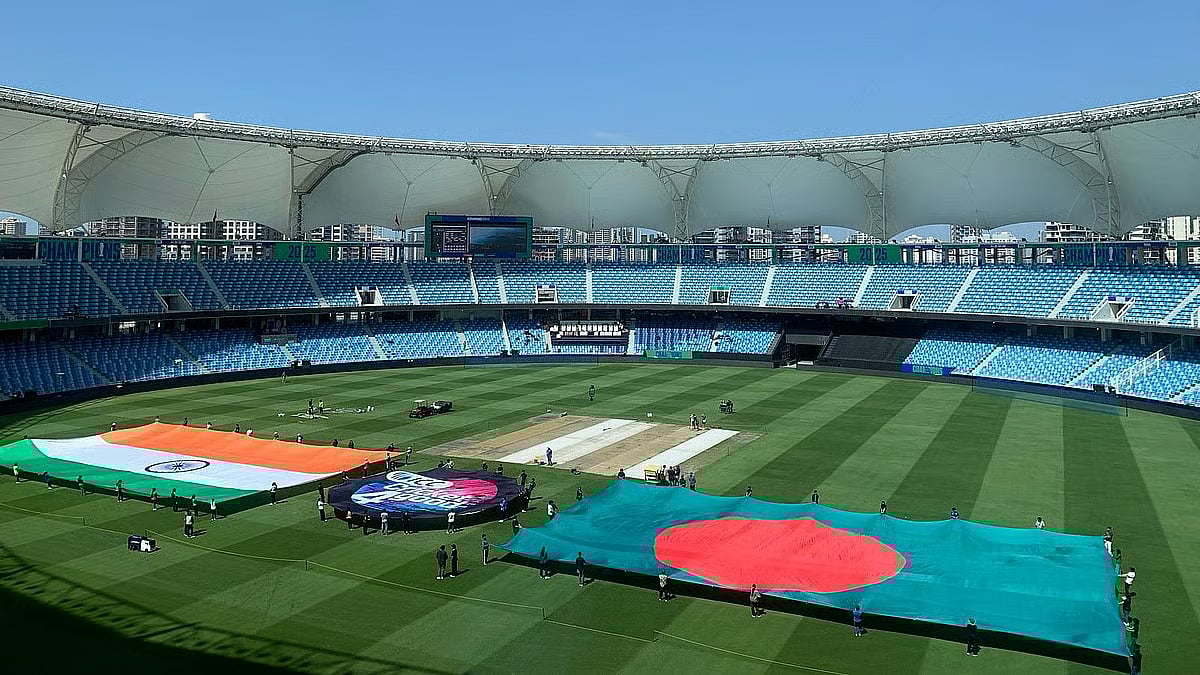
“The Asia Cup can only take place if the venue for the meeting is shifted from Dhaka,” this sharp comment is made to Indian news agency ANI by a source.
In other words, if the venue is not changed from Dhaka, there will be no Asia Cup. The tournament in question is the 2025 T20 Asia Cup, which is supposed to feature six teams. And the meeting facing this “firm ultimatum” is the Asian Cricket Council’s (ACC) Annual General Meeting (AGM), scheduled for 24 July in Dhaka.
But the Board of Control for Cricket in India (BCCI) has refused to attend this meeting in Dhaka. Not only have they refused, but an ANI source also warned yesterday that if the meeting proceeds in Dhaka, it could jeopardise the entire Asia Cup.
The BCCI's stance appears to reflect India’s current attitude toward Bangladesh—at least in sports.
The Indian cricket team was supposed to tour Bangladesh next month for three ODIs and three T20Is, as part of the ICC’s Future Tours Programme (FTP). The schedule had been finalised by both boards as of April. However, in early July, the Bangladesh Cricket Board (BCB) announced that India was postponing the tour—delaying it by over a year, with a tentative date now in September 2026. Neither BCB nor BCCI gave any clear reason.
A similar scenario unfolded in football. In early June, the All India Football Federation (AIFF) withdrew from the SAFF U-20 Women’s Championship in Dhaka, citing no formal explanation. The tournament is now ongoing with only four teams in a different format.
Within a span of just a few weeks, India has either withdrawn from, postponed, or objected to three sports events involving Bangladesh. There’s no official explanation, but reports in Indian and international media hint at the real reasons.
On 2 July, BBC Bangla reported that India’s Ministry of External Affairs has reservations about the cricket team’s tour of Bangladesh due to the “political climate.” A source in New Delhi told the BBC that current diplomatic situation and India’s “negative perception” of Bangladesh’s internal political situation make such a tour inappropriate.
Yet sending a team for a several week tour and attending a two-day board meeting are not the same. So why is BCCI opposing the AGM in Dhaka so strongly?
This year’s ACC AGM is crucial for the Asia Cup, scheduled for August–September in India, though the dates are not finalised. Earlier uncertainty arose after India-Pakistan military tensions in May, when Indian coach Gautam Gambhir openly said, “India shouldn’t play Pakistan.”
Later, however, BCCI Vice President Rajeev Shukla clarified that India can play Pakistan in multilateral events—reviving hopes for the Asia Cup. Some Indian media even published a possible schedule, including an India–Pakistan match on 7 September.
Yet now BCCI is pushing back against the AGM itself.
The objection appears tied not only to India’s stance on Bangladesh but also its fraught relations with Pakistan. The ACC president who called the AGM is Mohsin Naqvi—also Chairman of the Pakistan Cricket Board (PCB) and Pakistan’s current Interior Minister. The Pakistani cricket team is in Dhaka for a three-match T20 series, with the last match coinciding with the ACC meeting. It is likely Naqvi planned his Dhaka trip around this, and the AGM was scheduled accordingly.
This might explain BCCI’s suspicion that the meeting is politically motivated. ANI’s source accused Naqvi of “exerting unnecessary pressure on India” and added: “We asked for a change of venue, but got no response. If Mohsin Naqvi holds the meeting in Dhaka, BCCI will reject any decisions taken there.”
Even more telling is that BCCI isn’t just refusing to attend—they’re insisting the meeting be moved entirely out of Dhaka. Reports suggest that Afghanistan and Oman’s boards may also be reluctant to attend. If so, it’s likely under Indian influence.
Currently, ICC meetings are ongoing in Singapore, with ACC members present. Informal discussions may be taking place there regarding the AGM or Asia Cup.
But big questions loom: Will the Asia Cup AGM be held in Dhaka? Will the Asia Cup itself proceed? And what about India’s scheduled visit to Dhaka in November for the AFC Asian Cup Qualifier—will that also be in jeopardy?
India and Pakistan's political tensions regularly spill over into sports. Now, is Bangladesh being pulled into this long-running “sports diplomacy” standoff too?