Prothom Alo Explainer
Can ministers and state ministers conduct raids with firearms? What does the law say?
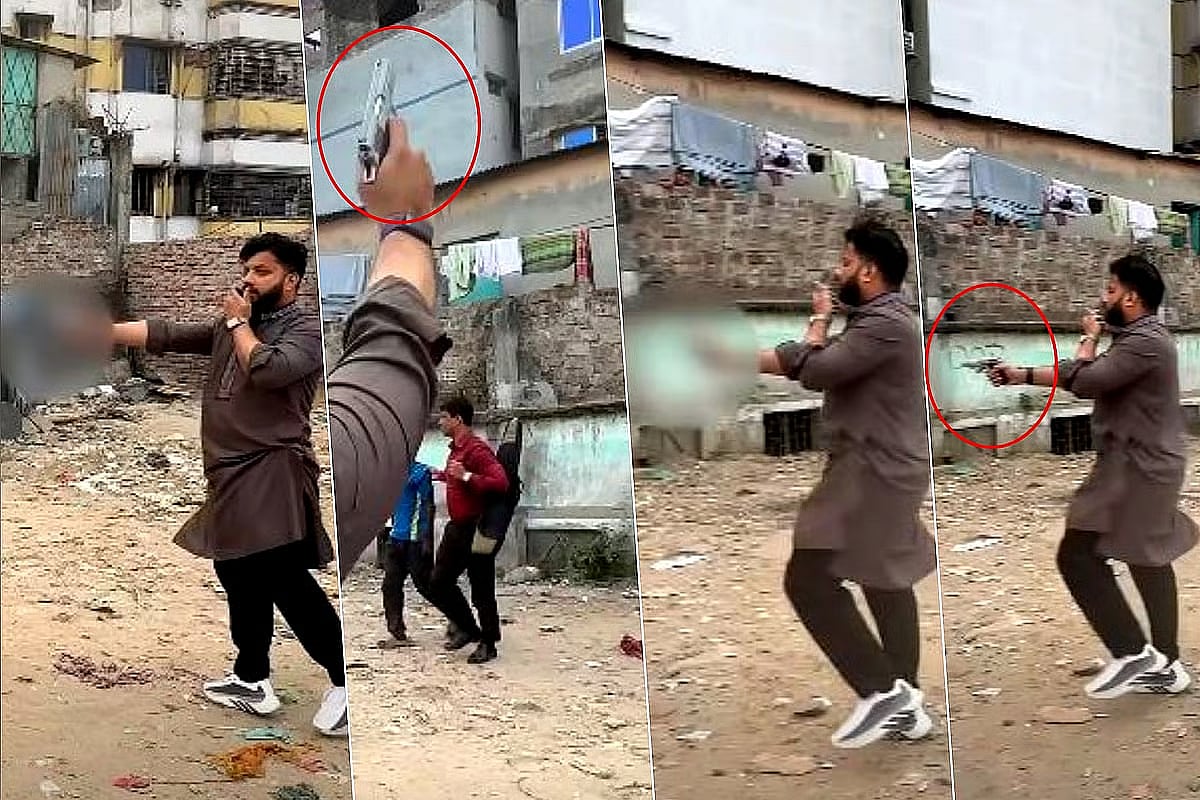
State Minister for Liberation War Affairs Ishraque Hossain took part in an anti-drug operation in Gandaria, Dhaka, holding a firearm aloft. His bodyguards also moved to apprehend several people. The incident has raised questions about whether ministers and state ministers can carry weapons to detain people or conduct raids.
The incident took place on Saturday afternoon near the Dayaganj Gumtighar railway crossing, adjacent to Gandaria railway station. A video posted on Ishraque Hossain’s Facebook page shows him getting out of a vehicle and raising a firearm while instructing others to apprehend several people. Those accompanying him move forward to catch them. At one point, someone is heard threatening to shoot a person. One of the bodyguards is also seen kicking a young man.
Ishraque Hossain has said the firearm he was carrying was legally licensed. He went to the area because, despite complaints from local residents, police had failed to take effective action to stop drug dealing. However, he denied the allegation that he had used the weapon to intimidate anyone.
Meanwhile, Dhaka Metropolitan Police (DMP) Additional Commissioner (Detective Branch) Shafiqul Islam said on Sunday that the deputy commissioner of DMP’s Wari division had been assigned to investigate the incident. Legal action would be taken if the investigation found any violation of the law, he said.
The questions now are: What are the legal powers of a minister or state minister? Does holding a valid firearms licence allow someone to brandish a weapon during a raid? And to what extent are ordinary citizens legally permitted to detain others?
Can ministers and state ministers conduct raids?
Under the Constitution of Bangladesh, ministers and state ministers are part of the executive branch of government. Their responsibilities and powers are determined by the Constitution, the Rules of Business of the Government and relevant laws and regulations.
Article 55 of the Constitution sets out provisions for the exercise of the executive power of the Republic and the conduct of government business. The Rules of Business allocate responsibilities among different ministries and divisions.
However, becoming a minister or state minister does not automatically confer police powers, such as searching people, detaining them or making arrests. Such powers require a specific legal basis.
In particular, the Narcotics Control Act, 2018, specifies which officials are authorised to conduct anti-drug operations.
Section 21 of the law provides powers to seize narcotics in public places or from vehicles in transit and, under specified conditions, to detain and arrest people. Section 23 authorises designated officers of the Department of Narcotics Control, police officers of the rank of sub-inspector or above, and officers of certain other forces to conduct searches and make arrests without a warrant under specified conditions.
These provisions do not grant ministers, state ministers or members of parliament any separate authority to conduct raids by virtue of their positions. Their official status alone does not give them the legal jurisdiction to carry out anti-drug operations.
Does a valid firearms licence permit someone to brandish a weapon?
Having a firearms licence and being permitted to display or use the weapon in any situation are two different things.
Article 25 of the ‘Firearm License Issuance, Renewal and Use Policy 2025,’ issued by the Ministry of Home Affairs on 13 July 2025, sets out the conditions for carrying and using firearms.
Sub-clause 25(a) states: “A person may carry/use a firearm included in their own licence for self-defence. However, a firearm must not be displayed in a manner that may cause fear or annoyance to others.”
Sub-clause 25(b) of the same policy prohibits security guards at financial institutions or other establishments from openly displaying firearms without wearing their uniforms. For ordinary licence holders, however, sub-clause 25(a) prohibits displaying a weapon in a manner that may cause fear or annoyance to others.
In other words, carrying a legally licensed firearm for self-defence is different from raising it to intimidate others or moving to apprehend people. A firearms licence does not confer the authority to conduct a police operation.
Two separate issues are therefore relevant in Ishraque Hossain’s case. First, whether his firearms licence was valid. Second, even if the licence was valid, whether the way he displayed and used the weapon during the incident complied with its conditions.
Is it legal to point a firearm in self-defence?
Bangladesh’s Penal Code recognises the right to private defence, but that right has limits. Sections 96 and 97 recognise the right to defend oneself and, under certain circumstances, another person’s life, body and property.
Section 99 sets out the limits of this right. It states that a person cannot inflict more harm than is necessary for self-defence. Restrictions also apply where there is an opportunity to seek protection from the authorities.
Under Section 102, the right to private defence of the body may begin when a reasonable apprehension of danger to the body arises and continues for as long as that apprehension persists.
In other words, the question of self-defence may arise when someone faces an immediate attack or serious danger. But the mere presence of criminal activity or dangerous criminals in an area does not make conducting an armed operation equivalent to exercising the right to private defence.
Ishraque Hossain has said drug dealers in the area could shoot at them from a distance. He said this was why he was carrying a firearm.
In a statement issued on Sunday, he claimed that 30–35 people approached their motorcade in an aggressive manner, prompting him and government security personnel to raise their weapons in self-defence because they feared an attack.
However, the extent to which they faced an immediate threat of attack at the time is also important in assessing whether displaying the firearms was justified.
Can ministers and state ministers detain people?
Under Bangladeshi law, the power to detain someone is not restricted to the police. Ordinary citizens may also detain people in certain circumstances under Section 59 of the Code of Criminal Procedure, 1898.
According to the first sub-section of this provision, a private individual may arrest someone who commits a cognisable and non-bailable offence in their presence, or someone who has been declared a proclaimed offender. The detained person must be handed over to the police without unnecessary delay. If a police officer is not available, the person must be taken to the nearest police station.
This means that a minister, state minister or member of parliament, like any other citizen, may detain someone if the specified legal conditions are met. However, this provision does not generally authorise them to conduct raids, chase anyone on suspicion alone or carry out searches in the manner of police officers.
In Ishraque’s case, several people were detained and handed over to the police. However, important questions include what they were doing when they were detained, whether any offence was directly witnessed and what allegations have been made against them.
Gandaria police station’s officer-in-charge told the media that six people had been detained and handed over to the police. A white powder-like substance was recovered from them. Tests would be needed to confirm whether it was heroin.
Therefore, the detained individuals cannot yet be definitively described as drug dealers.
Can bodyguards take part in raids while armed?
Ishraque Hossain was accompanied at the scene by two privately appointed bodyguards, Tofazzal Hossain and Lavlu, as well as a government security guard. In the video released publicly, the two private bodyguards are seen carrying firearms, while the government security guard is seen pointing a weapon.
The legal status of private bodyguards differs from that of government security personnel. Their authorisation to carry and use firearms, as well as the scope of their duties, also differs.
Under sub-clause 25(c) of the general firearms policy, a licensed firearm holder cannot be employed as an armed guard to protect another person’s personal safety or property using their own licensed weapon. In such cases, the licence is liable to immediate cancellation.
On 15 December 2025, the Ministry of Home Affairs issued a special policy on firearms licences and the appointment of armed personal guards, or retainers, for politically important persons and candidates for parliamentary elections.
Article 11 of the policy allows eligible individuals or candidates to appoint a maximum of one retainer. Article 16 prohibits the use of an authorised firearm to intimidate or harass anyone. It also prohibits using the weapon for purposes other than personal security.
However, temporary licences issued under this special policy expire 15 days after the announcement of election results. The policy also allows them to be converted into ordinary licences, subject to the fulfilment of specified conditions.
It could not be confirmed under which provisions Ishraque’s two private bodyguards had been appointed, whose names their firearms licences were issued in, or whether the licences remained valid. It therefore remains to be verified whether the conditions of the special policy directly apply to them.
What happens if someone threatens to shoot while displaying a firearm?
Section 503 of the Penal Code defines criminal intimidation. Threatening someone with harm to their body, reputation or property in a manner intended to cause alarm may fall under this provision. It also covers threats intended to compel someone to do something they are not legally bound to do or to prevent them from doing something they are legally entitled to do.
Section 506 prescribes punishment for criminal intimidation. In ordinary cases, the penalty may be imprisonment for up to two years, a fine or both. In specified serious cases, including threats to cause death or grievous hurt, the maximum prison term is seven years.
However, openly displaying a firearm does not, by itself, establish the offence of criminal intimidation under Section 503. The purpose of the threat, the circumstances and the available evidence must be considered.
In the video of Ishraque’s operation, someone is heard threatening to shoot a person, although that individual’s identity has not been confirmed. A young man is also seen being kicked. Depending on the circumstances, other provisions of criminal law may also be relevant to these incidents.
What action can be taken for violating firearms licence conditions?
Administrative action may be taken if the conditions of a firearms licence are violated. Section 18 of the Arms Act, 1878, empowers the relevant authority to revoke or suspend a licence in specified circumstances. The authority may take such action by recording its reasons in writing in the interest of public peace and safety.
Article 25 of the 2025 firearms policy also provides for the possible cancellation of a licence if the conditions governing the carrying and use of firearms are violated. Whether a particular incident constitutes a violation of the law or licence conditions must, however, be determined by examining the evidence and applicable provisions.
What can ministers and state ministers do?
Ishraque Hossain has said residents of his constituency have long complained about drug dealing. He said he had repeatedly brought the matter to the attention of the police but alleged that they had failed to take effective action.
On the other hand, Gandaria police station’s officer-in-charge, Moniruzzaman, said around 300 police personnel, accompanied by members of the Detective Branch and the Special Response Battalion, had conducted an operation in the area on 11 October. He also said the state minister remained in regular contact with the police.
If the police fail to control drug dealing or other crimes in an area, elected representatives can bring the matter to the attention of the relevant police officers, senior authorities or the responsible ministry. They can demand appropriate action, seek administrative accountability and call for due legal process.
However, allegations of police inaction do not allow an elected representative to create new police powers for themselves.
Senior Supreme Court lawyer Sharif Bhuiyan told Prothom Alo that the role of the government and ministers was to issue directives, while the responsibility for taking action lay with the police. The way the state minister had displayed his firearm was illegal, he said.