Police want AI cameras to curb yaba, how will these work?
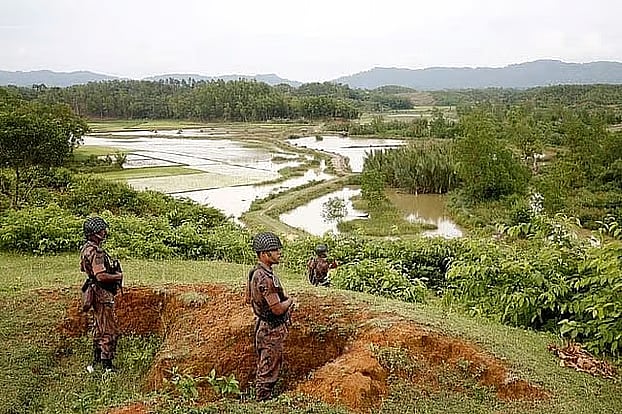
Yaba enters Bangladesh after being smuggled across the Myanmar border. From there, it is transported through hilly trails, old roads, and alternative routes to Cox’s Bazar town and various other parts of the country. To evade surveillance by law enforcement agencies along the border, smugglers frequently change routes and employ new tactics. As a result, although yaba shipments are intercepted at the border, its spread has not been stopped.
For this reason, the police have taken an initiative to monitor the long route used to smuggle yaba from the border to urban areas. A proposal has been made to establish permanent checkpoints at 11 key locations in Cox’s Bazar and Bandarban. These checkpoints will be equipped with artificial intelligence (AI)-powered facial recognition cameras, CCTV cameras, drug-detection dog squads, and vehicle and luggage scanners.
A total of 321 police personnel have been requested to operate the checkpoints. The estimated cost for equipment and infrastructure is approximately Tk 13 crore (Tk 130 million). The Chattogram Range Police sent the proposal to police headquarters on July 27.
The proposal was prepared by Md. Nazimul Haque, Additional Deputy Inspector General of the Chattogram Range, after visiting the border areas of Cox’s Bazar and Bandarban. He told Prothom Alo that the proposal was drawn up with the goal of ensuring that yaba is not allowed to enter the country under any circumstances.
Md. Nazimul Haque said suspected yaba dealers would be stopped and searched at the checkpoints. If they are not identified there, the AI cameras will be used to identify them. Photographs of the dealers and their associates will be stored in the system. As soon as they enter the area, the cameras will identify them. Drugs hidden in vehicles and luggage will be detected by scanners. If drugs still cannot be detected on someone, the dog squad will then be deployed.
Surveillance from the border to the city
Law enforcement agencies have conducted numerous operations to prevent drug trafficking. Even so, they have been unable to stop yaba from entering the country. From 2025 through July of this year, the Border Guard Bangladesh (BGB) seized 15,134,945 yaba tablets, while the Department of Narcotics Control seized 43,562,811 tablets.
According to a report submitted by the Chattogram Range DIG, yaba enters Bangladesh from Myanmar’s Rakhine State through the Naf River, by sea routes, and through various points along the border. The Ukhia and Teknaf border areas of Cox’s Bazar and Naikhongchhari in Bandarban have been identified as key entry points for yaba.
However, police believe that monitoring the border alone will not be enough to stop the drug. After crossing the border, yaba is transported using alternative roads and hilly routes. Police plan to establish permanent checkpoints at points where these routes connect with major roads.
For this purpose, seven locations in Ramu, Cox’s Bazar Sadar, Ukhia and Chakaria in Cox’s Bazar, and four locations in Naikhongchhari, Bandarban, have been selected. The proposed locations include Rangkut Buddhist Monastery and the Ponero Chhara Forest Office in Ramu; Bhangar Mor, Chaufaldandi Iron Bridge and the railway station in Cox’s Bazar; Court Bazar Road in Ukhia; and Harbang Road in Chakaria. In Naikhongchhari, the proposed locations are Bailey Bridge, Sonachhari Chaurasta intersection, Baishari Petan Alipara intersection, and the Dakbanglo intersection in Ramu’s Gorjania.
Bhangar Mor to have the largest checkpoint
Of the 11 proposed checkpoints, Bhangar Mor has been identified as the most important. The location is at the end of Marine Drive. Police plan to establish extensive surveillance there to prevent yaba from reaching Cox’s Bazar town and the tourist areas.
The proposal calls for 42 police personnel to be stationed there. They will work in three shifts and include three sub-inspectors (SIs), three assistant sub-inspectors (ASIs), 29 male constables and seven female constables.
The checkpoint is proposed to have one dog squad, one luggage scanner, one vehicle scanner, three AI-powered facial-recognition cameras and 15 CCTV cameras. The proposal also estimates Tk 1.7 million for constructing a 500-square-foot semi-permanent building and an RCC parking pavement.
Old roads also under surveillance
Police also want to bring old yaba-trafficking routes under surveillance, rather than focusing only on the main roads.
The Ponero Chhara Forest Office–Katiar Matha area in Ukhia has been identified as an important route. According to the police proposal, traffickers have a tendency to use old roads to transport drugs from Teknaf and Ukhia to Cox’s Bazar. A 33-member checkpoint has therefore been proposed for the area.
The Rangkut Buddhist Monastery area in Ramu has also been deemed important. Police believe this point could help prevent drugs arriving via the road that branches off from the Marichya checkpoint and from the hilly areas.
Meanwhile, the Dakbanglo intersection in Gorjania has been identified as important because it is a four-way junction surrounded by remote, forested hill areas.
In other words, the central strategy of the police plan is to prevent drugs from reaching cities or other parts of the country after entering through the border. To achieve this, surveillance zones will be established at every important junction where routes from the border connect to major roads.
Three checkpoints in Naikhongchhari
The proposal gives particular importance to Naikhongchhari in Bandarban. Because of the risk of drugs being transported through small hilly roads near the border, three permanent checkpoints have been proposed there: Bailey Bridge, the Chaurasta intersection in Sonachhari union, and the Baishari Petan Alipara intersection.
Each checkpoint is proposed to have 33 police personnel. The Baishari Petan Alipara intersection is about 22 kilometers from Naikhongchhari Police Station. This hilly junction could become an important route for transporting drugs.
Meanwhile, the Sonachhari Chaurasta is where four roads meet. Police believe it would therefore be comparatively easy to stop and inspect vehicles there.
Traffickers to be caught on camera
The Chattogram Range Police do not plan to rely solely on police personnel to guard the 11 checkpoints; they also want to bring them under technological surveillance.
According to the proposal, a total of 31 AI-based facial-recognition cameras and 140 regular CCTV cameras will be installed at the checkpoints. Photographs of suspected yaba dealers and their associates will be stored in the AI system. The plan is for the cameras to identify them as soon as they enter the coverage area of a checkpoint.
The system will also include six vehicle-scanning machines and eight luggage scanners.
Each of the six vehicle scanners is estimated to cost Tk 15.5 million, for a total of Tk 93 million. Each of the eight luggage scanners is estimated to cost Tk 4.5 million, bringing their total cost to Tk 36 million.
The proposal also estimates Tk 500,000 for AI-based facial-detection software and Tk 2.852 million for 23 65-inch televisions.
In other words, technology accounts for a major portion of the proposal. Police believe these technologies will help reduce the opportunity for traffickers to evade detection by concealing drugs in vehicles or luggage.
If one route closes, another is found
Akhtar Kabir Chowdhury, secretary of Citizens for Good Governance (SUJAN) Chattogram, has stressed that combating drugs requires not only law enforcement operations but also shutting down trafficking routes. He told Prothom Alo that while law enforcement operations are necessary to control drugs, it is equally important to close the routes used to transport them. He said the proposed technological measures should therefore be implemented quickly.
Akhtar Kabir Chowdhury said that when one route is closed, traffickers look for another. Coordinated surveillance is needed everywhere, including the border, hilly routes, alternative roads, railway lines and entry points into cities. Without integrated monitoring, it will not be possible to completely shut down the routes used by smugglers.
A call was made to Additional DIG Mahbubul Karim’s mobile phone to inquire about the progress of the proposal sent to police headquarters, but he did not respond. As a result, there is still no confirmed information about whether the proposal will be implemented.
If the police proposal is implemented, however, multiple surveillance zones will be established along the yaba-trafficking routes beyond the border. The main objective of the system will be to intercept yaba shipments after they enter Bangladesh but before they reach the cities.