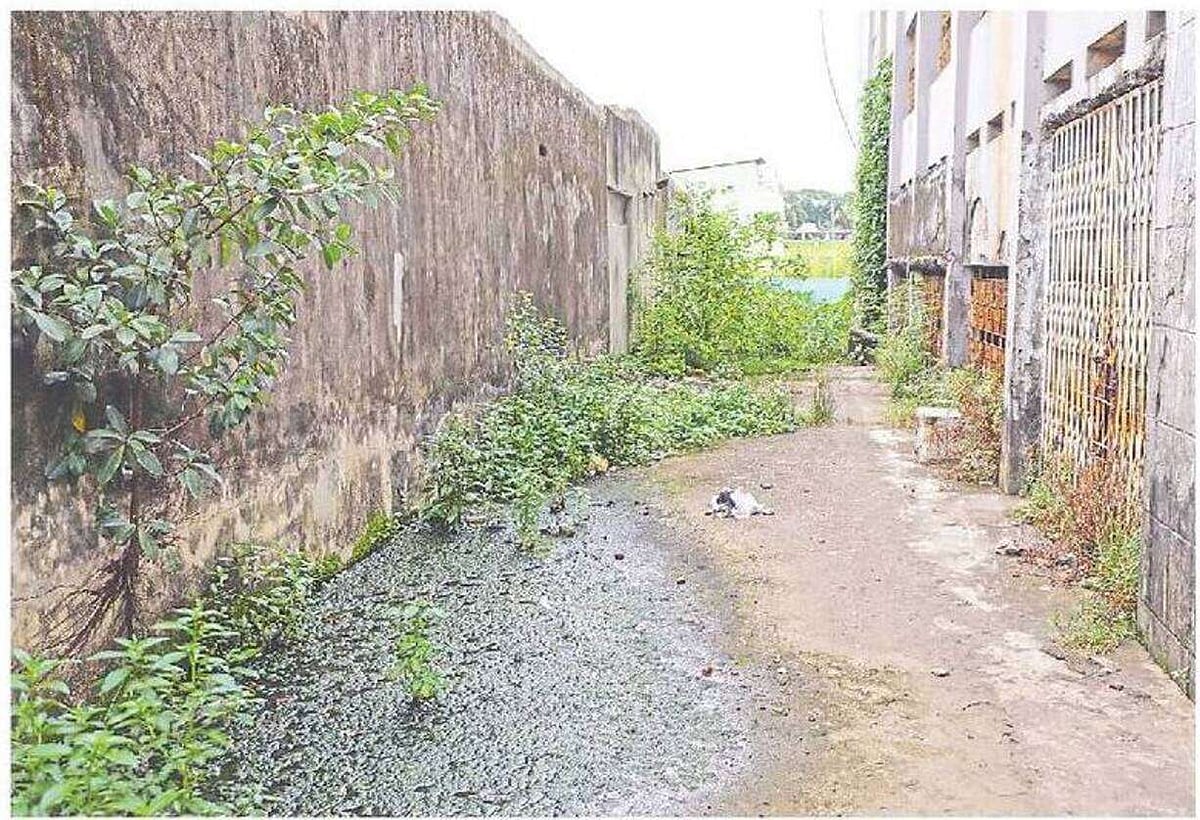
Fewer students enrolling in government primary schools in Chattogram district
Not long ago, the sound of the tiffin bell would fill North-West Gatia Chenga Government Primary School in Satkania upazila with the chatter of children. Today, that bustle is gone. The school has only 20 students. Although it has six approved teaching posts, only three teachers are currently serving. It now has the lowest student enrolment among all government primary schools in Chattogram district.
Head teacher Mohammad Shahidullah said the recent expansion of private schools and madrasahs in the area has led many parents to enrol their children there instead of government schools. “Just a few years ago, we had more than 50 students. The number has been declining every year,” he said.
The trend extends far beyond this school. Student enrolment in government primary schools across Chattogram has been falling for several years. According to the annual school census and district education office data, government primary schools in the district had 487,670 students from grades one to five in 2022. That number fell to 431,951 in 2023 and 413,951 in 2024. Although enrolment rose to about 450,000 in 2025, it dropped again this year to 443,447.
Teachers, parents and education experts say the decline is driven by a combination of factors, including shortages of teachers and administrative staff, inadequate infrastructure, the rapid expansion of private schools and madrasas, and a lack of educational resources. As a result, schools are struggling to retain students, maintain teaching standards and manage day-to-day operations.
500 schools have fewer than 100 students
According to the Integrated Primary Education Management Information System (IPEMIS), 500 of Chattogram’s 2,269 government primary schools have fewer than 100 students. Among them, 228 schools have 70 or fewer students, while 21 have 50 or fewer.
Laldiar Char Government Primary School in the port area of Chattogram city currently has no students and has been declared defunct.
Analysis of the data shows that 68 of Fatikchhari’s 229 government primary schools have between 51 and 98 students. In Mirsarai, 64 of the 191 schools have enrolments ranging from 39 to 99 students.
In Satkania, 39 of the 149 government primary schools have fewer than 100 students, including four with fewer than 30.
Primary education officials in Sandwip, Mirsarai and Chattogram city said the spread of private educational institutions and madrasah-based education is one of the main reasons behind the declining enrolment in government primary schools.
Parents, however, also point to weak infrastructure in government schools.
They noted that many madrasahs now offer general education alongside religious studies. Some also provide free tuition, accommodation and meals, making them an attractive option for low-income families.
Nasima Begum, a parent from the Bahaddarhat area of Chattogram city, said, “My daughter attended a government school for pre-primary education, but the teaching quality was poor and even the school lacked a proper water supply. Later, I enrolled her in a nearby madrasah, where the costs are minimal. For low-income families like ours, that is a big advantage.”
No electricity, playgrounds or school buildings
According to IPEMIS data, 500 government primary schools in Chattogram do not have playgrounds, with the problem particularly acute in urban areas. In addition, 18 schools still lack electricity, 1,166 have no internet connection and 94 do not have libraries. Only 839 schools have all four facilities: a playground, electricity, internet access and a library.
Eleven government primary schools in Fatikchhari still do not have electricity, including Gharkata Government Primary School. Located in a remote hilly area, the school has 81 students but only two teachers. It also lacks electricity, mobile phone coverage and adequate transport links. Two fans in the teachers’ room are powered by a solar system.
Acting head teacher Md Shahidul Islam said electricity has not yet reached the area because of its remote location. “The road to the school is also in very poor condition, especially during the rainy season. We have repeatedly informed the authorities, but nothing has been done,” he said.
Nineteen of the 30 government primary schools in Chattogram city’s Kotwali police station area have no playgrounds, and 10 of them do not even have their own buildings. Several schools operate morning shifts inside Chattogram City Corporation high schools, limiting students’ access to playgrounds. Eighteen schools in Double Mooring police station area also lack playgrounds.
A shortage of school buildings is another major challenge. Since 2018, Boluar Dighi and Lamabazar Government Primary Schools have been holding classes in the building of Chattogram City Corporation’s Kaiser-Nilufar College after their old buildings were demolished for reconstruction.
Students at Sanowara and Ayesha Monju Government Primary Schools in Chandgaon police station area have been attending classes at neighbouring schools for the past two to three years because their own buildings have become unsafe. At Ismail Sukani and Haji Zakaria Government Primary Schools in the port area, classes are being conducted in tin-shed structures after their buildings were declared unsafe.
A shortage of school buildings is another major challenge. Since 2018, Boluar Dighi and Lamabazar Government Primary Schools have been holding classes in the building of Chattogram City Corporation’s Kaiser-Nilufar College after their old buildings were demolished for reconstruction.
Students at Sanowara and Ayesha Monju Government Primary Schools in Chandgaon police station area have been attending classes at neighbouring schools for the past two to three years because their own buildings have become unsafe. At Ismail Sukani and Haji Zakaria Government Primary Schools in the port area, classes are being conducted in tin-shed structures after their buildings were declared unsafe.
The building of Fatema Begum Government Primary School in North Middle Halishahar has also been deemed hazardous. Chandgaon Government Primary School, nationalised in 2013, still does not have its own building and has operated from a tin-shed structure since its establishment. At least 10 other schools in the city have also been declared unsafe and dilapidated by the Local Government Engineering Department (LGED).
824 schools without permanent head teachers
Teacher shortages remain one of the biggest challenges facing government primary education. According to the district primary education office, Chattogram’s 2,269 government primary schools have approved posts for head teachers, but only 1,455 are currently filled. As a result, 824 schools have no permanent head teacher and are being run by senior assistant teachers serving in acting or additional-charge roles.
Of the 14,287 approved assistant teacher posts, 1,108 remain vacant, forcing many schools to operate with fewer teachers than required.
The shortage is most severe in Fatikchhari, where 139 of the upazila’s 229 government primary schools have vacant head teacher posts. In 52 of those schools, assistant teachers are serving as acting heads.
Fatikchhari Upazila Primary Education Officer Mohammad Abdur Rob said the vacancies have persisted because no new teachers have been recruited for a long time and because of ongoing litigation related to recruitment. “Several schools in the upazila also face building shortages, making it difficult to run academic activities,” he said.
A coordinated approach needed
District Primary Education Officer Firoz Ahmad described the teacher shortage as one of the sector’s biggest challenges. He said 526 assistant teachers are currently awaiting appointment and expressed hope that the problem would be resolved soon. Efforts are also under way to fill vacant education officer posts and address the shortage of school buildings.
Muhammed Amir Uddin, an associate professor at the Institute of Education and Research at the University of Chittagong, said the situation would not improve unless primary education was given the highest priority. He noted that although schools have received information technology equipment, there is inadequate monitoring and limited effective use of those resources. “Without sufficient investment, qualified teachers and improved infrastructure, it will not be possible to provide quality education. A coordinated effort is essential,” he said.