No possibility of lower voter turnout in absence of Awami League: EC
Several foreign journalists visiting Dhaka raised questions about whether the Awami League’s non-participation in the 13th parliamentary election would affect the acceptability of the election results. The Election Commission (EC) could not provide a direct answer to that question.
However, Election Commissioner Brigadier General (retd) Abul Fazal Md Sanaullah does not see any possibility of reduced voter turnout due to the Awami League’s absence. He explained that although the Awami League is not participating in this election, its allied parties are taking part.
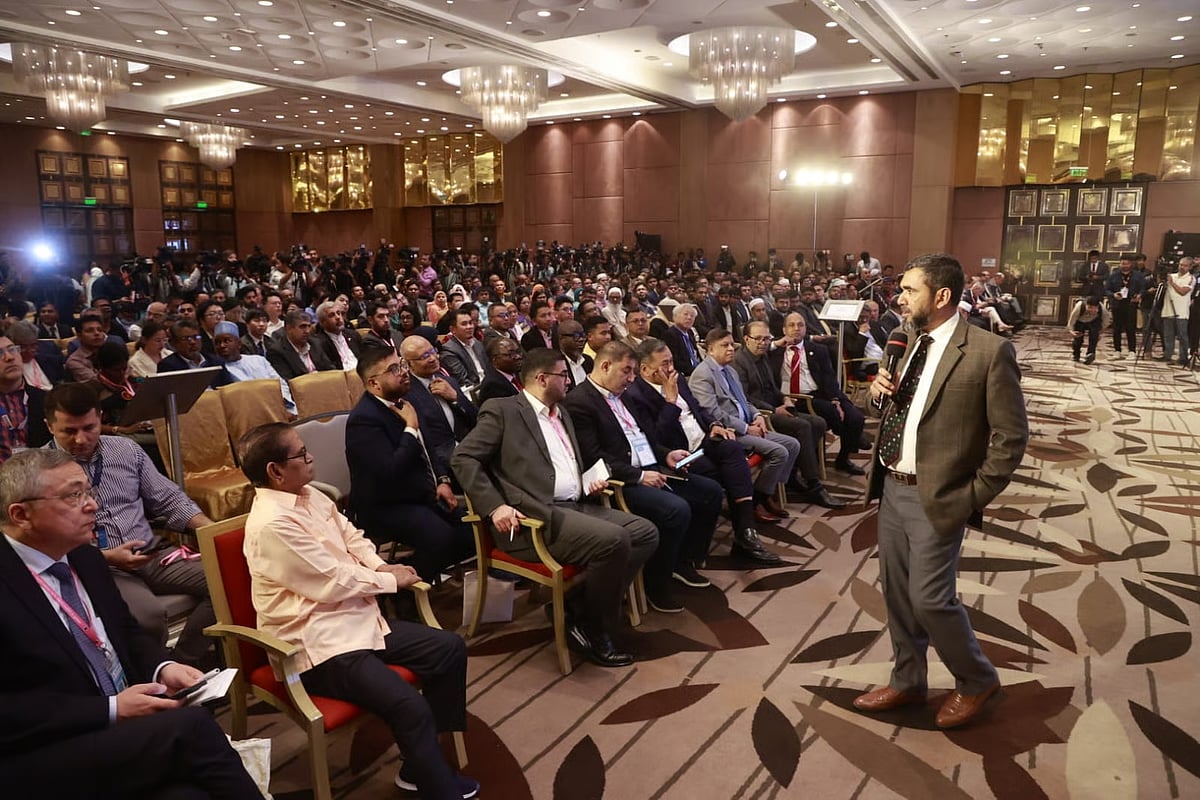
On the day before the election, today Wednesday, the EC Secretariat organised a briefing for foreign election observers and journalists at a hotel in the capital. There, Election Commissioner Abul Fazal Md Sanaullah said that the official announcement of the 13th parliamentary election results would be made on Friday morning after counting the results received from across the country.
A BBC journalist asked the Election Commissioner whether initiatives have been taken to ensure a free, fair, and credible election, but a major party is effectively unable to participate—does this cast a shadow on the election’s credibility? There may be people in Bangladesh who wish to support that party, but tomorrow their choice will not be on the ballot. Is the government not concerned about the legitimacy of the election?
In response, Abul Fazal Md. Sanaullah said that the context of this election must not be forgotten. For one and a half decades, this country suffered from a democratic deficit. Those who are now in their thirties never had the opportunity to vote. We are going through a transformation process. Those who were involved in electoral processes that deprived people of their democratic rights are now facing legal proceedings. That is why certain entities are barred from participating in the election. However, this will not reduce voter turnout—you will see that tomorrow.
In a follow-up question, another BBC journalist asked whether he was therefore supporting the ban. In reply, the Election Commissioner said, he is saying this is a matter of a specific context and they must not forget the events of July–August 2024.
When asked about the EC’s position, Brigadier General (retd) Abul Fazal Md Sanaullah said that they do not see any possibility of reduced voter turnout. There is equal enthusiasm among people regardless of political ideology. A small number may not show up—that always happens. But overall, the majority will vote. And the party you are referring to was not alone—their other partners are participating in the election.
Allegations of violence have also been raised during the interim government. Is the Election Commission’s role weak? In response, the election commissioner posed a counter-question: Is work always visible? They are working effectively. Elections under a neutral government are always better—Bangladesh successfully held elections under caretaker governments in 1991, 1996, 2001, and 2008. Currently, due to the interim government, there is no influence from the government. Compared to recent times, this is one of the best environments. Isolated incidents have occurred, but they are vigilant. Historically, the highest level of deployment has been made—more than 950,000 personnel in the field, and for the first time UAVs, drones, body cameras, and CCTV are being used.
This Election Commissioner added that Operation Devil Hunt has been underway since 13 December; around 900 weapons have been recovered. There are three layers of security. There is no general threat. Isolated incidents may occur, and we will respond.
Brigadier General (retd) Abul Fazal Md Sanaullah said that they are not ruling out the possibility of such incidents. Tonight, all returning officers and law enforcement personnel have been instructed to remain alert. Isolated incidents may occur—they are prepared. In extreme cases, if any polling centre is so severely affected that voting cannot take place, alternative arrangements will be made on the same day.
Regarding postal voting, the election commissioner said that registration for postal votes was digital, while the rest of the process was manual. Each postal vote will be counted according to the respective parliamentary constituency. Only postal votes received by 4:00 pm on voting day will be counted.
When asked when the election results would be announced, Brigadier General (retd.) Abul Fazal Md Sanaullah said voting will end at 4:30 pm, and counting will begin immediately afterward. On average, each centre has two to three thousand votes and two types of ballots—counting may take four to six hours. Preliminary results will begin coming in from night through early morning.
At the event, referring to the fact that the previous two CECs are now in prison for failing to properly discharge their duties, a journalist asked whether the CEC feared a similar fate, even though voters are expected to cast their ballots in a festive atmosphere this time.
In response, CEC AMM Nasir Uddin said, “For a free, fair, and credible election, we have acted so far in line with the pledge we made to the nation, working strictly within the framework of the law. We are fulfilling our constitutional obligations. We are working with the commitment in focus that we made. Therefore, we have no reason to fear.”
Senior Secretary of the EC Akhtar Ahmed also spoke at the briefing.