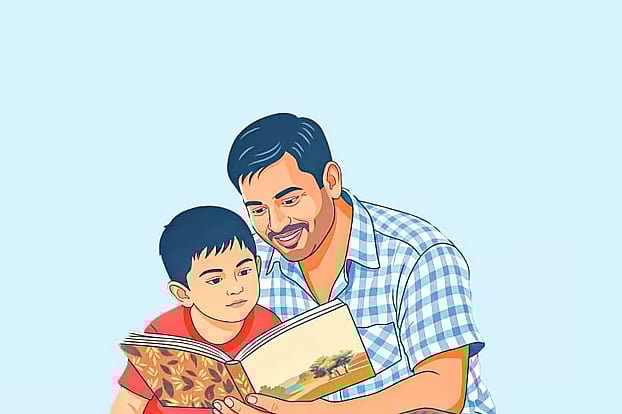
When elders in the family read books, children also develop a habit of reading. In families where parents or elders read regularly, 47.1 per cent of children and adolescents read books regularly. On the other hand, in families where elders do not read, this rate drops to 31.8 per cent. The role of the family is extremely important in developing children’s reading habits.
Printed books are still the primary choice for readers. About 87 per cent of the survey participants read printed books. Although the use of e-books or PDFs is comparatively higher among younger people, the overall demand for physical books still remains.
This picture has emerged from a recent survey. The survey, titled “The future of community Libraries in Bangladesh,” was conducted by Shaheed Baki Smriti Pathagar, an organisation under Pollima Sangsad in Khilgaon, Dhaka. The survey was led by the library’s secretary, Anisul Hossain.
The survey was conducted from August to December last year (2025), collecting opinions from 1,005 respondents. Among them, 935 participated directly and 70 took part online. The aim of the survey was to assess the reading habits of people in the Khilgaon area, the reasons for declining reading interest, perceptions about libraries, and expectations for a modern community library.
The chairman of Shaheed Baki Smriti Pathagar, Md. Shafikur Rahman, told Prothom Alo, “The survey results have been an eye-opener. It has presented a clear picture of our strengths, weaknesses and potential. We have learned that people’s interest in reading books has actually not faded, but has emerged in new forms.”
There's interest in reading, but not very regular
More than 84 per cent of the survey respondents said they read books regularly beyond their academic textbooks. However, about two-thirds of these regular readers read only one or two books per month. Anisul Hossain noted that 85 per cent of the respondents were between the ages of 18 and 40. Students and young professionals responded the most to the survey, so the findings largely reflect the experiences of the younger generation.
Differences were observed by age when analysing the reasons for not reading. Among working individuals of the 26 to 40 age bracket, 71.4 per cent said they are unable to read due to a lack of time. Office work, traffic congestion, and family responsibilities have cut onto their reading time.
Among people aged 18 to 25, the main deterrent to reading books is the use of smartphones and the internet. About 54.3 per cent of respondents in this age group said that digital media is disrupting their concentration on reading. A similar trend was observed among those under 18, with 53 per cent blaming smartphones and the internet for not reading books.
Family influence on children’s reading habits
The survey also included separate questions about the reading habits of children and adolescents. According to respondents from families with schoolchildren, most children and teenagers read books to some extent beyond their textbooks.
According to the researchers, people have not turned away from books, but the connection with libraries has weakened. If this connection can be rebuilt, community libraries can regain their vitality
However, parents’ opinions about the reasons behind children’s lack of interest in reading are quite clear. In the survey, 92.2 cent of parents said that addiction to smartphones and digital devices is the main reason children are turning away from books. Meanwhile, 57.5 cent blamed excessive academic pressure.
Additionally, 31.6 cent believes that the lack of children’s books is a major factor. About 30.6 cent said that the decline in playgrounds or opportunities for creative activities is also pushing children away from reading. Another 26.8 per cent mentioned a lack of family encouragement, while 12.5 per cent think the high price of books is also a barrier to children’s reading.
62 per cent are unaware of the library
The most significant finding of the survey came from questions related to the library. More than 62 per cent of participants said they were unaware of the existence of Shaheed Baki Smriti Pathagar. This means a large portion of the local population is unfamiliar with the library, despite it being 54 years old. The library was established on 22 January 1972, in the name of martyred freedom fighter Abdullah Hel Baki (Bir Protik), who was killed in the Liberation War. The library spans 3,000 square feet and has more than 18,000 books.
According to the researchers, people have not turned away from books, but the connection with libraries has weakened. If this connection can be rebuilt, community libraries can regain their vitality.
Anu Muhammad, a retired professor of economics at Jahangirnagar University and associated with Pollima Sangsad and Shaheed Baki Smriti Pathagar, told Prothom Alo that this research is important not only for one library but also provides valuable guidance for struggling community libraries across the country. The findings and recommendations of this study could inspire policymakers, educators, and civil society to rethink how to build a knowledge-based, democratic, and humane society.