Wildlife protection
7 of 9 slow lorises released into forest die
News of rescued wildlife being released into a protected forest is usually reassuring. However, if factors such as whether the forest has suitable habitat for the animal or whether other animals of the same species have already occupied the area are not considered, the ‘new home’ can turn into a death trap.
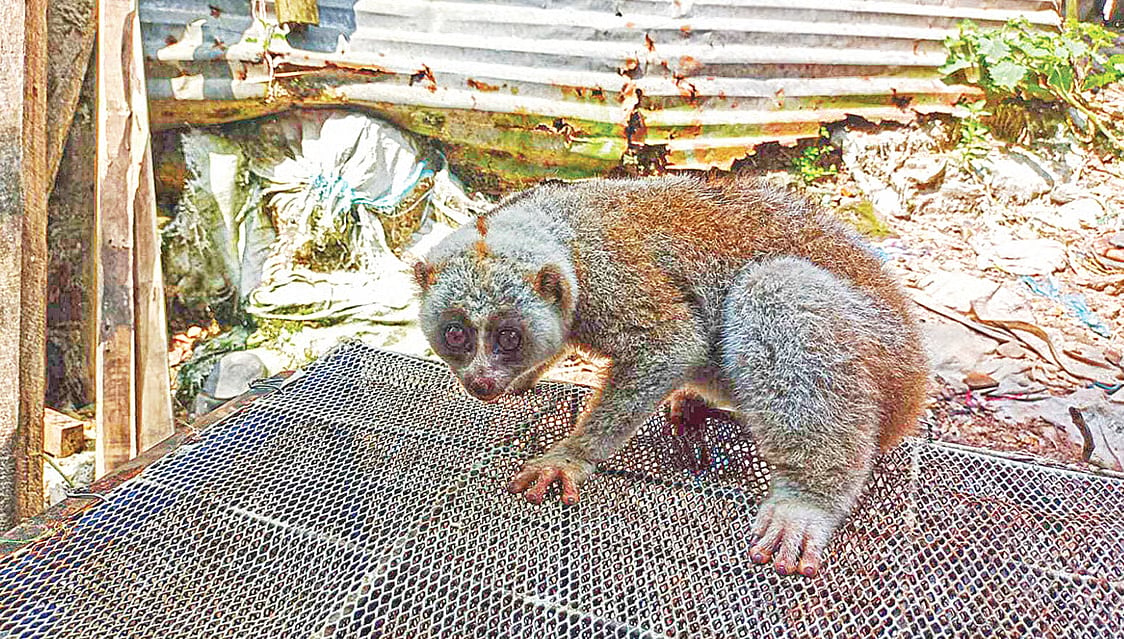
An alarming picture has emerged from a new study on Bengal slow lorises released into Lawachara National Park.
Of the nine lorises released into the forest, only two survived for more than six months. Signs of attacks by other animals of the same species were found on the bodies of four of the seven rescued animals that died.
The study was published this year in the international research journal Global Ecology and Conservation.
The research was led by Bangladeshi researcher Hasan Al-Razi. Ten other researchers from Bangladesh and abroad were involved in the study.
Several institutions from Bangladesh, Germany, Australia and the United Kingdom, including the Forest Department, were involved in the research.
Mohammad Firoj Jaman, professor of the Department of Zoology at Dhaka University, told Prothom Alo, “Animals should not be released indiscriminately. There are specific protocols for this, but we have shortcomings in following them. This study highlights that issue.”
How the research was conducted
The animals involved in the study had been rescued by the Forest Department or seized from poachers, traders and pet owners. Some were also rescued from gardens around human settlements.
Before their release, the slow lorises were examined for weight, injuries and signs of illness. Underweight animals were kept at the Janakichhara Wildlife Rescue and Rehabilitation Centre until they recovered. Their nocturnal behaviour, food intake and movements were monitored using cameras.
Nine lorises were released at different times in Lawachara between July 2022 and September 2023. Five were released near the Janakichhara area and the remaining four at other locations. Researchers fitted each animal with a radio collar and monitored their locations and behaviour for a total of 138 nights over eight months.
Seven of the nine lorises died
Three of the nine released lorises died within 10 days. Four others survived for more than a month but eventually died. A male loris named ‘Anu’ died in a confrontation after 179 days. Only two animals, named ‘Darwin’ and ‘Nishat’, survived for more than six months.
Of the seven dead animals, four were found in a condition suitable for examination. All four had signs of fatal attacks by other slow lorises on their heads, faces or fingers. The bodies of the remaining three had decomposed, making it impossible to determine the cause of death. Therefore, the researchers did not claim that all seven had died from attacks by members of the same species.
None of the five animals released near the Janakichhara centre survived. According to Forest Department records, a total of 19 slow lorises had been released in the area between July 2020 and March 2023. Researchers believe that repeated releases of animals in the same location may have increased animal density and competition over territory.
Professor Firoj Jaman said that although slow lorises appear calm, they are highly territorial. If a newly released animal encounters an animal that already occupies an area, there is a risk of confrontation.
The study found that the animals that died were comparatively more vigilant and aggressive. According to the researchers, such behaviour may indicate prolonged stress and an inability to adapt to the new environment.
Hasan Al-Razi said, “Wildlife rescue has become a matter of show off in many cases. Everyone releases animals as they see fit. We wanted to bring about a change in this situation.”
Forests don’t necessarily mean suitable habitat
Simply selecting a dense or green forest is not enough to release an animal. It is also necessary to know how many animals of the same species are already there, whether vacant territories are available, and whether there are sufficient food and safe movement opportunities.
Mohammad Zahidul Kabir, deputy chief conservator of forests of the Forest Department and involved in the study, said the findings of the research would be considered an important lesson for future wildlife releases.
The researchers have recommended surveying the number of animals and their patterns of territory use at potential release sites before release, conducting comprehensive health examinations, identifying the animals’ source locations, species-specific rehabilitation and long-term monitoring.
Habibon Naher, professor of the Department of Zoology at Jagannath University, said animals should be kept in a semi-natural enclosure and their behaviour observed before release. Although this requires time and money, such a practice is almost non-existent in the country.
Mohammad Sanaullah Patwari, forest conservator (Wildlife and Nature Conservation Region) of the Forest Department, acknowledged shortcomings in the necessary arrangements. However, he said there is also a shortage of manpower and resources needed for this purpose.
Wildlife researchers say a rescue operation may end with a photograph of an animal being released into the forest, but the success of conservation will be determined by whether the animal survives there and is able to adapt to its new environment.