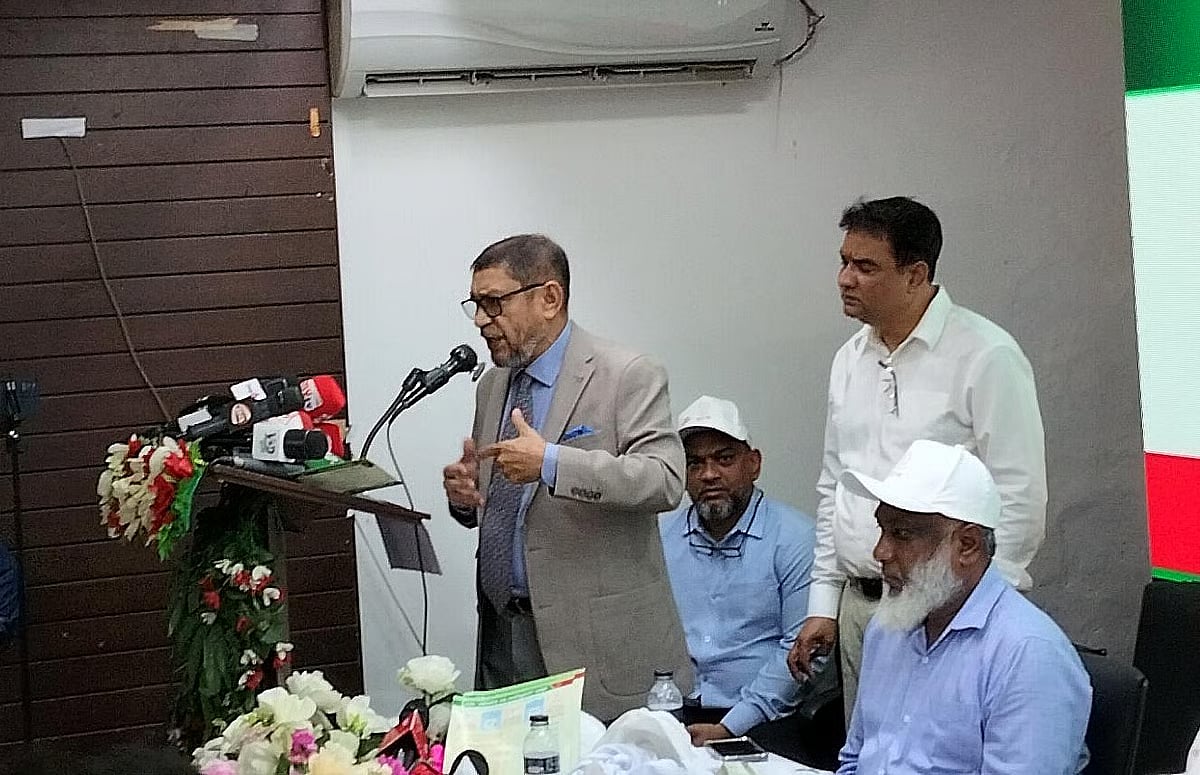
We didn’t have a single dose of measles vaccine: Health Minister
Health Minister Sardar Md Sakhawat Hossain has said that the government inherited an acute shortage of measles vaccines, claiming there was not even a single dose in stock when the Bangladesh Nationalist Party (BNP) government assumed office.
The minister blamed the current measles outbreak on the absence of regular nationwide immunisation programmes after December 2020 and the severe shortage of vaccines in subsequent years.
“The last measles vaccination campaign was conducted in December 2020,” he said. “After that, until we began the programme in 2026, no measles vaccines were administered. In fact, we did not even have a single measles vaccine in our hands.”
He made the remarks today, Sunday, while addressing the inauguration of public awareness week titled ‘Public Awareness and Prevention are the Best Ways to Control Measles and Dengue’ and a scientific seminar at the Jahur Hossain Chowdhury Hall of the Jatiya Press Club.
The health minister stressed the importance of proper isolation and nutritional support in controlling the spread of measles. He also urged the Doctors Association of Bangladesh (DAB) to expand leaflet distribution and public awareness campaigns to remote villages across the country.
Sakhawat Hossain said the measles situation has improved somewhat following extensive vaccination campaigns carried out in affected districts, upazilas and city corporation areas with support from UNICEF.
According to him, authorities are now using public announcements to identify and vaccinate children who were previously missed.
The minister also attributed the unusually severe outbreak this season to maternal malnutrition. Referring to visits to several hospitals, he said many mothers were unable to breastfeed their children adequately because of poor nutritional conditions.
“If we can ensure proper nutrition for mothers and strengthen their sense of responsibility towards their children in the current context, many diseases can be prevented,” he said.
A panel discussion was also held during the seminar, attended by Professor Atiar Rahman, dean of the paediatrics faculty at Bangladesh Medical University; Professor Md Shafiqul Islam, head of the paediatrics department at Mitford Hospital; and Associate Professor Zakaria Al Aziz of the medicine department at Dhaka Medical College Hospital.
Assistant Professor Farhana Haque of the Community Medicine and Public Health Department at Holy Family Red Crescent Medical College presented the keynote paper on measles prevention.
She emphasised timely vaccination, proper isolation of infected patients and separate use of personal items to prevent transmission of the viral disease.
She also highlighted the importance of breastfeeding, proper nutrition and public awareness in achieving long-term measles prevention.
A separate keynote presentation on dengue was delivered by Mohammad Sayem, research secretary of DAB, who stressed the need to eliminate Aedes mosquito breeding grounds and raise awareness about protection from mosquito bites.
Former DAB secretary general and BNP lawmaker Abdus Salam urged the health minister to restore the rights of physicians who, he alleged, had faced harassment and discrimination for political reasons in previous years.
Meanwhile, DAB secretary general Md Zahirul Islam said specialised treatment services for measles and dengue have already been introduced in private healthcare facilities alongside government hospitals.
He added that specialised units and PICUs have been established at Holy Family Hospital and Bangladesh Neonatal Hospital.
He also said DAB would soon submit a national guideline on diagnosis and treatment to the government.
Speakers at the programme emphasised reducing excessive bureaucratic dependence and increasing active political and organisational participation in expanding healthcare services to the grassroots level.
They also stressed the importance of appointing qualified and principled physicians to leadership roles in order to ensure the success of public health initiatives and avoid potential “sabotage” or disruptions in the sector.
The programme, chaired by acting president of the DAB, Professor Abul Kenan, began with a welcome address by Shamim Ahmed, convener of the Public Awareness Week Committee on Measles and Dengue Control.
Central DAB leader Professor AKM Khalekuzzaman and others also addressed the event.