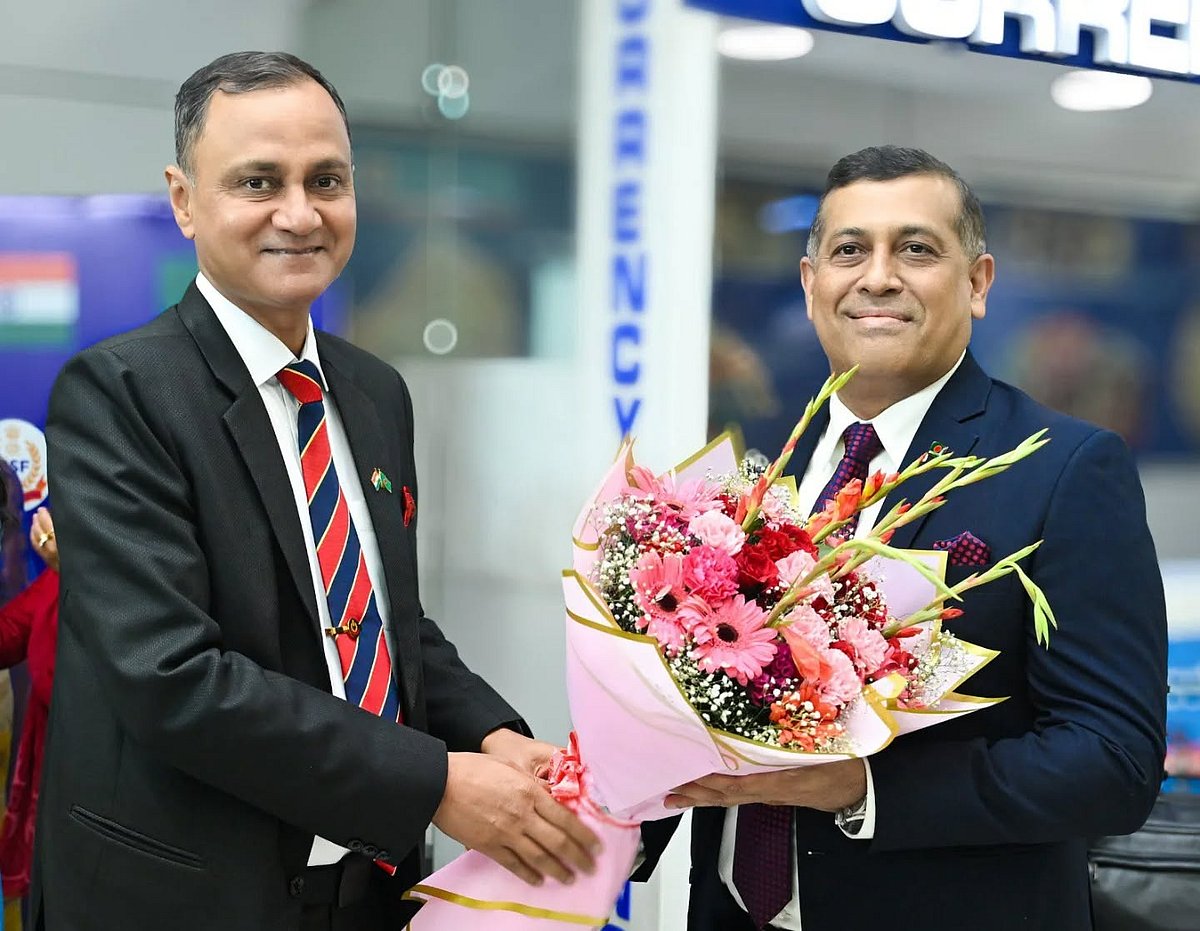
DG-level meeting
Border situation: Push-in attempts continue; BGB-BSF commences talks
The 57th DG-level Border Conference between BGB and India’s BSF has commenced in New Delhi, India.
The 4-day conference is scheduled to conclude next Thursday.
The 57th Director General-level border conference between Border Guard Bangladesh (BGB) and India’s Border Security Force (BSF) has commenced. The four-day summit, which began at the BSF Headquarters in the Indian capital, New Delhi, on Monday is scheduled to conclude this coming Thursday.
The conference is taking place against the backdrop of persistent attempts by the BSF to push individuals into Bangladeshi territory across various sectors of the border since May last year. Consequently, relevant Bangladeshi officials believe that these “illegal push-ins” will receive primary focus during this round of talks.
Officials stated that, alongside this issue, Bangladesh will demand effective measures to halt the killing, injuring, and assault of unarmed Bangladeshi citizens by the BSF, Indian nationals, or miscreants along the border. Other key items on the agenda include preventing the smuggling of various narcotics, firearms, and other contraband goods from India into Bangladesh; curbing human trafficking; addressing border violations; and halting the construction of unauthorised infrastructure, including barbed-wire fencing, within 150 yards of the international boundary.
This marks the first high-level meeting between the heads of the two border forces since the Bharatiya Janata Party (BJP) assumed power in West Bengal for the first time.
Following the political transition in the Indian state of West Bengal last May, the BJP formed the state government. Under the leadership of Chief Minister Suvendu Adhikari, the state government has launched a declared “Detect, Delete, and Deport” campaign.
This “3D” operation is primarily directed at undocumented, “so-called Bangladeshis.” Suvendu Adhikari has already claimed to the media that at least 4,880 infiltrators have been deported to Bangladesh.
The BGB-BSF meeting was originally scheduled for the beginning of this year but was postponed due to the West Bengal Legislative Assembly elections.
Disclosing that 12 to 13 formal letters have been sent to India to halt the practice, Shama Obaed Islam, state minister for foreign affairs remarked, “There are established procedures for repatriating individuals residing illegally. India must adhere to those protocols.”
A 15-member Bangladeshi delegation, led by BGB Director General Major General Mohammad Ashrafuzzaman Siddiqui, is participating in the conference. The 12-member Indian delegation is being led by BSF Director General Praveen Kumar.
‘Resolution must be sought through dialogue’
Bangladesh Home Minister Salahuddin Ahmed informed journalists, “During the DG-level talks between the BGB and BSF, the border situation, bilateral cooperation, and particularly the issue of illegal push-ins will be raised with utmost gravity.”
Speaking to the newspersons at the Secretariat on Sunday, the home minister added, “All pertinent matters will be discussed there. We are addressing these issues through diplomatic channels, and our border guards remain vigilant. The government stands ready to thwart any attempts at illegal push-ins. However, these issues should primarily be resolved through diplomatic dialogue.”
Shama Obaed Islam, the state minister for foreign affairs, thinks that the ongoing “illegal push-ins” would not foster the relationship that India is currently attempting to improve with Bangladesh.
She noted that the BGB is strongly resisting India’s “push-in” attempts, emphasising that unilateral “push-ins” bypassing standard protocols are unacceptable.
Disclosing that 12 to 13 formal letters have been sent to India to halt the practice, the state minister remarked, “There are established procedures for repatriating individuals residing illegally. India must adhere to those protocols.”
BJP focuses on “detect and deport” method
A news report by the Indian media outlet, The Hindu, highlighted a new “deportation policy” formulated by the country’s Ministry of Home Affairs in March this year.
According to the report published on 14 April, all Indian states have been instructed under this policy to establish special task forces in every district. The mandate of these task forces is to “detect and deport illegal migrants from Bangladesh and Myanmar.”
Additionally, states are required to submit monthly progress reports regarding missing foreign nationals or individuals overstaying their visas.
We are addressing these issues through diplomatic channels, and our border guards remain vigilant. The government stands ready to thwart any attempts at illegal push-ins. However, these issues should primarily be resolved through diplomatic dialogue.Home Minister Salahuddin Ahmed
Earlier, on 3 March 2020, Union Minister of State for Home Affairs, Nityanand Rai, stated in a written reply to the Lok Sabha, “Some infiltrators manage to enter India through clandestine and surreptitious means. This is primarily due to the complex, riverine terrain along certain parts of the Bangladesh border, where the construction of border fencing is not feasible.”
Following the political transition in Bangladesh in August 2024, relations with India experienced strains. In May last year, India suddenly presented Bangladesh with a list of 2,369 people, signaling its intent to initiate “push-ins”. When the Bangladesh High Commission in Delhi sought clarification, the Indian Ministry of External Affairs cited the 2020 context.
With the list provided in May 2025, India, concurrently, commenced “push-in” operations. Bangladesh proceeded with identity verification and other necessary protocols based on that list. However, in April this year, India updated the previous list, now citing 2,862 individuals.
In response to the continuous “push-in” efforts by the BSF, Bangladesh sent a letter to India in late May outlining the measures taken regarding the “push-in” list. The correspondence noted that Travel Permits (TPs) had been issued for 634 individuals on the list.
Furthermore, TPs would be issued for another 361 individuals whose Bangladeshi identities had been confirmed, pending the conclusion of legal processes in India. The list also contained 879 individuals with only names provided, 358 names duplicated, and 252 individuals whose nationality verification remains ongoing.
‘Push-ins violate 3 major agreements’
In various letters dispatched to India over time, Bangladesh has characterised the “push-in” measures as violations of three past agreements. These are: the 1975 Joint India-Bangladesh Guidelines for Border Authorities; the Coordinated Border Management Plan (CBMP) of 2011; and the mutually agreed decisions reached during previous BGB-BSF Director General-level talks.
Several former officials, who served at the Ministry of Foreign Affairs and the Bangladesh High Commission in Delhi, observed that such successive “push-ins” from India are unprecedented in recent history. Furthermore, past “push-in” attempts were invariably met with a “push-back” (return).
According to them, in January 2003, India attempted to push more than 200 people into Bangladesh across the Lalmonirhat border. However, due to Dhaka’s unyielding stance, those individuals were marooned at the border’s zero line for nearly two months.
The then-Foreign Minister M Morshed Khan traveled to Delhi to hold talks with Indian Foreign Minister Yashwant Sinha. Just prior to the discussions in Delhi, it was discovered that the individuals stranded at the zero line for nearly two months were no longer there.
Ansar deploying to the border
To counter the BSF’s “push-in” attempts, 60,000 BGB personnel have been deployed across the borders of 26 districts in Bangladesh. Previously, such a massive concentration of BGB personnel had never been deployed simultaneously along these borders.
Alongside the BGB, members of the Bangladesh Ansar and Village Defence Party (VDP) are now performing duties in border areas. Concurrently, local residents remain on high alert.
To prevent “push-ins” and other cross-border crimes, public awareness meetings and announcements via megaphones are being conducted in several border localities.
Yesterday, Monday, the Bangladesh Ansar and VDP issued a press release stating that this initiative would enhance surveillance in border areas, facilitate the suppression of cross-border crimes, and establish a coordinated and sustainable framework to ensure the security of local populations.
The press release noted that Ansar-VDP personnel have been integrated into border operations under a Memorandum of Understanding (MoU) signed with the BGB in 2025.
The release further mentioned that Ansar and VDP/TDP personnel have currently been deployed at the upazila and thana levels across 11 border districts. These districts are Chapainawabganj, Naogaon, Joypurhat, Jashore, Jhenaidah, Satkhira, Thakurgaon, Dinajpur, Sylhet, Jamalpur, and Khagrachhari.
The BGB has intensified patrols across almost all border sectors where attempts are being made to push individuals from India into Bangladesh.
“Push-in” attempts persist, BGB remains vigilant
The BSF attempted to push several individuals into Bangladesh through the Porsha border in Naogaon, the Roumari border in Kurigram, and the Dewanganj border in Jamalpur. However, these attempts were foiled due to the vigilant stance maintained by the BGB and local residents.
According to BGB and local sources, reports of BSF activity emerged near the Nitpur Border Outpost (BOP) in Porsha Upazila, Naogaon, after 7:30 pm on Sunday. BSF personnel attempted to push 15 to 20 individuals into Bangladesh from 7:30 pm until late into the night.
To thwart the potential “push-in”, the BGB immediately increased patrols and surveillance in the border area. Ansar members also took up positions in the locality. Simultaneously, local residents, coordinating with the BGB and Ansar personnel, assumed defensive positions along the border.
Armed with sticks and torches, the locals made their presence felt. Faced with the resolute stance of the BGB, Ansar, and the local community, the BSF was compelled to retreat.
Related sources indicated that on Saturday night around 10:00 pm, information was received regarding BSF movements in the Jhaubari and Kheyarchar areas of the Roumari border in Kurigram.
BSF personnel brought several Bengali-speaking Indian citizens near the border area. The BGB immediately enhanced patrols and monitoring to prevent a potential “push-in”. Local residents also coordinated with the BGB to maintain a vigilant watch along the border.
Late Sunday night, the presence of several Indian vehicles and BSF personnel was observed across the border at Rahimpur in Dewanganj, Jamalpur. This triggered suspicion and anxiety among the villagers. Throughout the night, villagers armed with sticks stood alongside BGB personnel.
According to data from BGB headquarters, during the eight months spanning from 7 May 2025 to 26 January this year, the BSF had pushed a total of 2,479 individuals into Bangladesh. Among them, 120 were Indian nationals. The BGB claims that no further “push-in” incidents have occurred since then.
BSF withdraws individuals from zero line
The BSF has withdrawn 11 individuals into Indian territory after attempting to push them across the Mashalgaon border in Haripur Upazila of Thakurgaon.
According to BGB sources, at around 3:30 am on Sunday, the BSF attempted to push three men, four women, and four children into Bangladesh near the Mashalgaon border. BGB personnel intercepted and blocked the move. Following this, the 11 individuals remained stranded on the Indian side of the zero line.
Although two rounds of flag meetings were held between the BGB and BSF regarding the matter, no resolution was reached. The BGB reported that the BSF finally withdrew the 11 individuals from the zero line after 3:30 am on Monday.
Similarly, the BSF withdrew 10 individuals, including women and children, from the zero line of the Barobari-Pradhanpara border in Panchagarh Sadar Upazila.
The BGB stated that at 2:40 am on Sunday night, the BSF switched off the border security lights and moved the 10 individuals back into their own territory. Previously, on Friday morning, the BSF had attempted to push those 10 individuals into Bangladesh. However, due to the BGB’s stringent stance, they were unable to enter. Since then, they had been stranded at the zero line.
From 5:00 am on Friday until 2:40 am on Monday, they endured severe hardship for over 69 hours. The group comprised five men, two women, and three children.