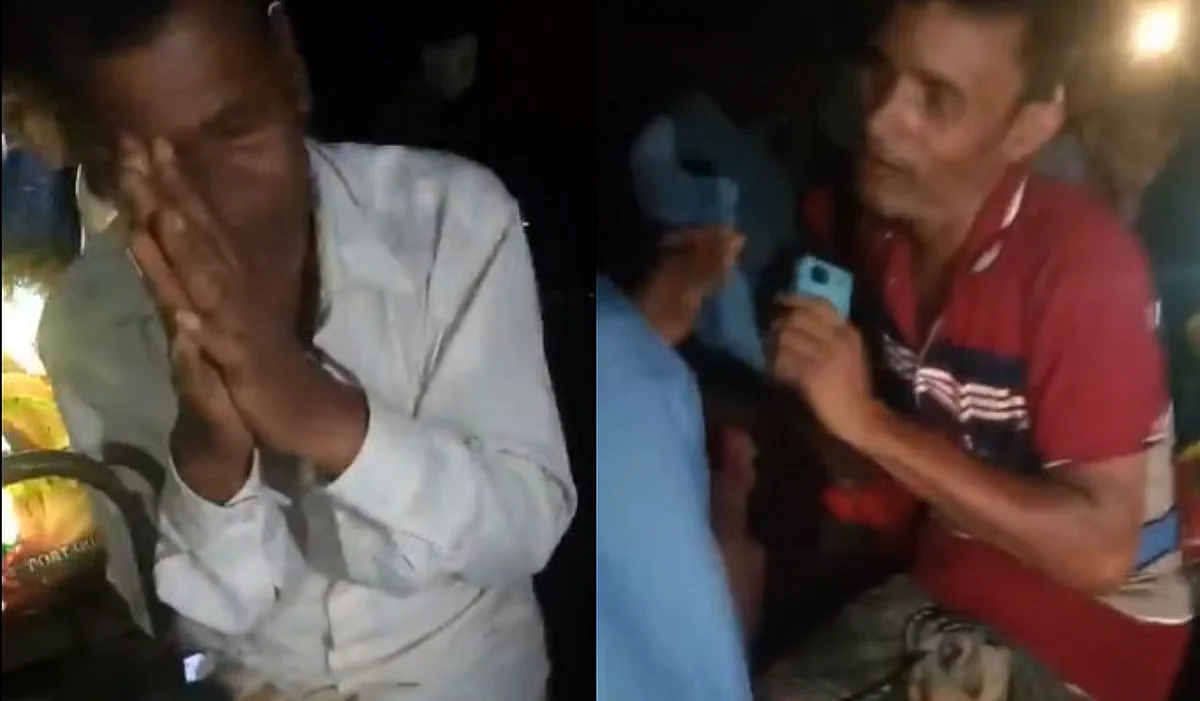
Mob violence unabated: 9 lynched in 10 days
Lynching has been continuing unabated across the country. At least 13 lynching incidents occurred in the first 10 days of August alone, leaving nine people dead and another 13 injured, different media reports.
Data from rights body Manabadhikar Shongskriti Foundation (MSF) shows 78 people were lynched in the country between January and July this year. Adding the incidents from the first 10 days of August, the death toll rises to 87. As many as 266 people were injured during this period.
According to statistics from Ain o Salish Kendra (ASK), at least 111 people died after becoming victims to mobbing (unruly people) between January and 10 August.
In the latest incident, two people were beaten to death in Rangpur on suspicion of theft on 9 August. On the same day in Madaripur, three people suspected of theft were beaten in a mob attack, and one of them had his eye gouged out in an attempt to blind him.
The two people killed in Rangpur’s Taraganj upazila were identified as Ruplal Das and Pradeep Das, who were father-in-law and son-in-law.
Relatives said Ruplal had gone to assist Pradeep and that they were returning home. Pradeep was driving his van. They were beaten to death on suspicion of being van thieves.
Ruplal Das’s elderly mother, Lalicha Das, told Prothom Alo that her son was not a thief — he earned a living by repairing shoes. He had gone to bring his niece’s husband home to fix the date for his daughter’s wedding.
“They killed my boy in front of our house. I want justice for that,” she said.
After the July mass uprising, a perceived weakness in policing has led to a rise in theft, robbery, and mugging incidents, causing growing concern among the public.
The situation is yet to return to normal. There has also long been a trend of such crimes going unpunished.
Speaking about this, Sazzad Siddiqui, acting chairman of Dhaka University’s Department of Peace and Conflict Studies, told Prothom Alo that when a culture of impunity grows, people themselves become violent toward others.
He further said that in the aftermath of the mass uprising, both spontaneous and organised mob incidents are occurring. Organised mobs often have political motives.
An analysis of the 13 lynching incidents in the first 10 days of August shows that in eight cases, victims were beaten on suspicion of theft. The other five incidents stemmed from extortion, personal enmity, or other disputes.
People are concerned about mob violence in the country. A survey titled “Pulse Survey 3” by BRAC Institute of Governance and Development (BIGD) found that 80 per cent of respondents are worried about mob violence. In addition, 56 per cent are concerned about women’s safety, 61 per cent about safety when traveling at night, and 67 per cent about street harassment due to clothing.
The survey was published Monday.
The government is also uneasy about mobs. In an interview with Prothom Alo on 1 August, law Adviser Asif Nazrul said, the problem with controlling mob violence is that the police lacked morale. The same police force that opposed the July uprising later saw certain groups involved in mobs claiming to represent that very uprising, so they failed to suppress it.
However, human rights activists believe that repeated incidents are occurring even a year after the uprising because the government has not taken effective measures to curb mob beatings and violence.
Speaking about this situation, Nur Khan Liton, a human rights activist and member of the Commission of Inquiry on Enforced Disappearances, told Prothom Alo that the government’s visible steps have been weak. In some cases, even when actions are taken, they appear to be confused. As a result, people are losing trust in the government to handle such incidents.
He also believes that political criminalisation is contributing to the rise of mobs. From law enforcement to the courts, there is a fear of mobs. In some cases, police do not have the courage to play their proper role.
To overcome such a situation, he stressed, the government must take strong and visible action.