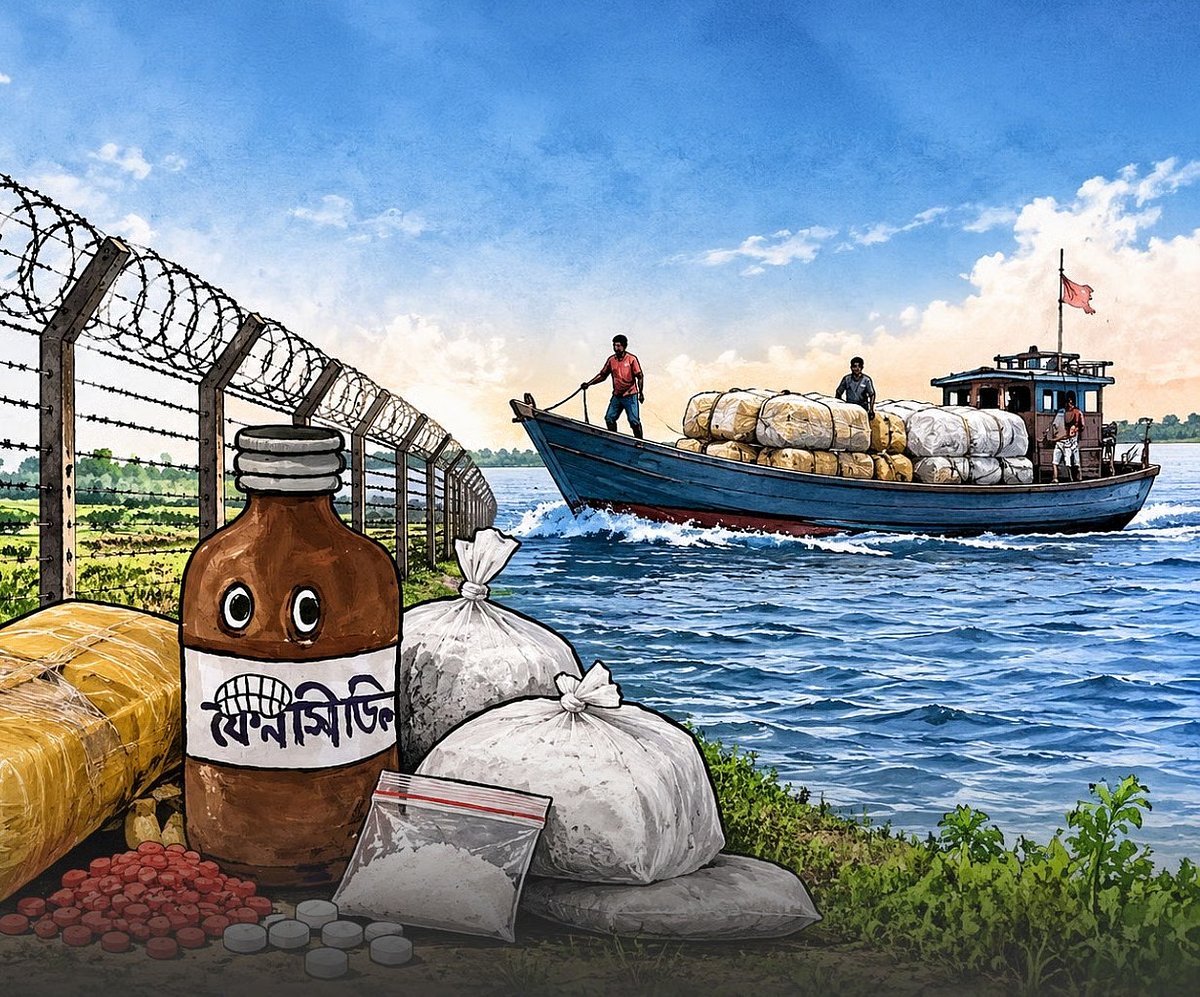
Drug smuggling: 106 border routes marked vulnerable, entering via waterways too
Border Guard Bangladesh (BGB) has identified 106 land border routes across 21 districts as vulnerable to drug smuggling into the country. Yaba, crystal meth (ice), phensedyl, heroin, cannabis and other drugs enter through these routes along the Indian and Myanmar borders. However, traffickers' routes are not limited to land borders alone. They are also using the rivers of the Sundarbans and the Bay of Bengal.
The information on these drug entry routes was outlined in separate reports by BGB and the Coast Guard. The reports were presented at a recent meeting of the parliamentary standing committee on the Ministry of Home Affairs. The Department of Narcotics Control also submitted a report at the meeting, detailing drug smuggling through various border areas and waterways across the country.
The reports showed that drugs are entering Bangladesh through the southeastern, eastern, southwestern, northwestern, northern and northeastern borders.
At the meeting held on 15 November, the parliamentary committee recommended taking effective measures to curb drug trafficking. Home Minister Salahuddin Ahmed said initiatives have been taken to construct and modernise 108km of border fencing along the Bangladesh-Myanmar border as part of drug prevention activities.
106 routes in 21 districts at risk
According to the BGB report, Bangladesh's geographical position makes its land and maritime borders highly vulnerable to drug smuggling. Various drugs are entering the country through its borders with neighbouring India and Myanmar. The agency has identified 106 points or routes across 21 districts as vulnerable to drug entry.
Of these, 25 routes in Cox's Bazar and Bandarban districts are considered vulnerable. Yaba, crystal meth (ice) and opium are mainly smuggled through these routes.
BGB has identified 39 locations in Cumilla, Brahmanbaria, Feni, Sylhet, Sunamganj, Moulvibazar and Habiganj districts as vulnerable. Phensedyl, cannabis, liquor, beer and intoxicating syrups are primarily smuggled through these areas.
Another 22 border routes in Jashore, Satkhira, Jhenaidah, Meherpur, Chuadanga and Kushtia districts have also been identified as vulnerable. Phensedyl, heroin, cannabis and liquor are mainly brought in through these routes.
In addition, BGB has identified 20 areas in Rajshahi, Chapainawabganj, Joypurhat, Dinajpur, Kurigram and Lalmonirhat districts as vulnerable. Heroin, cannabis, phensedyl and intoxicating tablets enter through these areas.
The BGB report further said the agency seized more than 24.1 million yaba pills between February and October. During the same period, it seized 32kg of crystal meth, 25,330 bottles of phensedyl and 64,551 bottles of foreign liquor. A total of 1,377 people were arrested.
Drugs smuggled through rivers and sea
The Coast Guard's report also highlighted the use of waterways and maritime routes for drug smuggling, identifying Cox's Bazar, bordering Myanmar, as one of the major vulnerable areas for drug entry.
According to the Coast Guard, yaba and crystal meth enter through waters near Teknaf, the Naf River, Shahporir Dwip and St Martin's Island. Some local fishermen along the southeastern border transport cement, fertiliser and food supplies to Myanmar using fishing boats and bring yaba and crystal meth back to Bangladesh on their return.
The Coast Guard has also found evidence of phensedyl and cannabis entering through Kaikhali in Satkhira and waterways within the Sundarbans. Its report said organised smuggling networks transport and distribute these drugs using fishing trawlers, cargo vessels and local accomplices.
Which drugs come from which countries
The Department of Narcotics Control's report also identified border districts as vulnerable to drug entry and outlined the sources of various drugs.
According to the report, amphetamine-containing yaba enters Bangladesh from areas in Myanmar including Maungdaw, Naikhongdia, Sitargola, Sittwe and Ale Than Kyaw. The agency has also recorded the entry of crystal meth from the country since 2020.
Border areas near Assam, Karimganj, Cooch Behar and Agartala in India have been identified as sources of cannabis. Most heroin, meanwhile, enters through the border in Murshidabad district of West Bengal, India.
The report further said that information indicates poppy cultivation has increased in the mountainous regions of Myanmar following a decline in cultivation in Afghanistan. This has led to an increase in heroin smuggling through the Teknaf border.
Recommendations for surveillance and coordinated operations
All three agencies have emphasised the need to strengthen border surveillance to prevent drug smuggling. BGB has proposed patrols, intelligence surveillance and the use of drones and technology-based monitoring systems along the borders.
The Coast Guard's report recommended intensifying patrols in coastal and maritime waters, using modern technology and conducting more operations based on intelligence.
The Department of Narcotics Control meanwhile emphasised coordinated efforts alongside raids, filing cases and arresting suspects to reduce the supply of drugs.
The parliamentary committee also recommended strengthening coordinated surveillance and operations to prevent drug smuggling. It further suggested investigating the economic networks involved in the drug trade and tracing the flow of illicit proceeds. BGB, the Coast Guard, police and the Department of Narcotics Control were asked to work together in this regard.
Committee Chairman Zainul Abedin told Prothom Alo that the parliamentary committee has asked to specifically identify the places through which drugs enter the country and take effective measures. In this regard, it has been recommended to take measures to control drugs within the next three months.