MPs receive Tk 70,000 monthly transport allowance so car demand raises questions
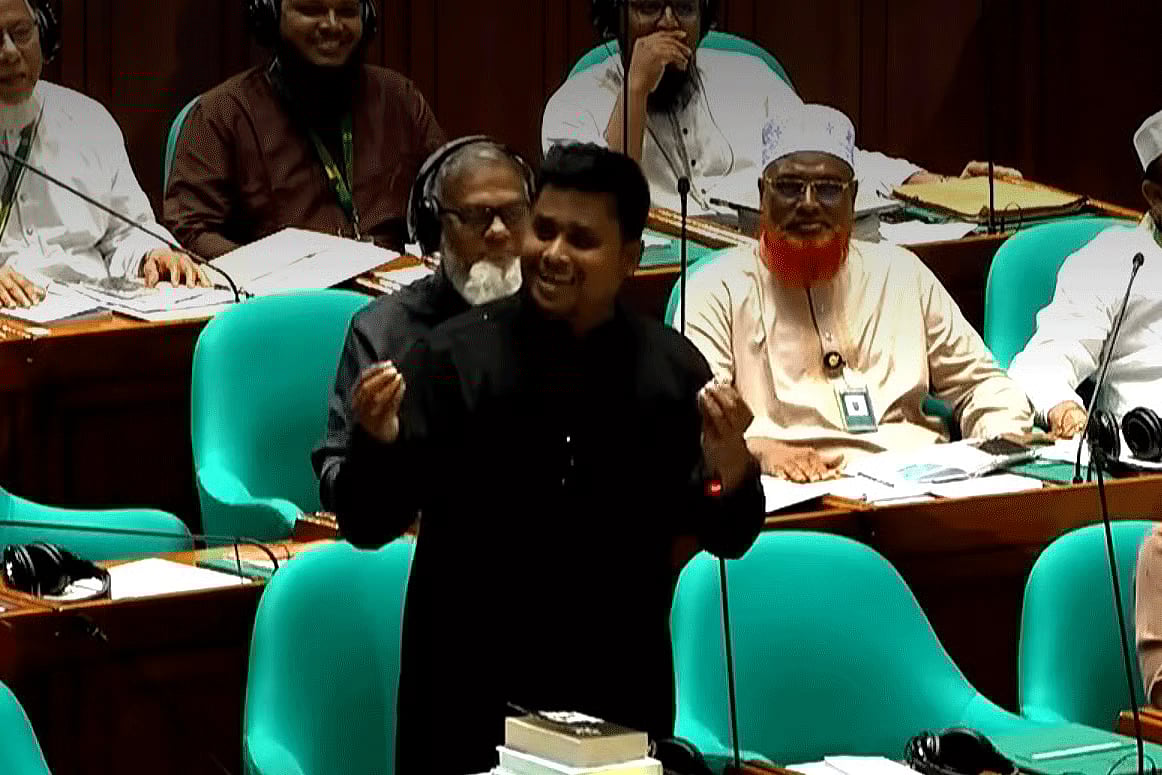
Members of the National Parliament receive a monthly transport allowance of Tk 70,000. Despite this, young member of parliament Abul Hasnat (Hasnat Abdullah) has called for the provision of vehicles for MPs.
Offering a degree of support, Leader of the Opposition Shafiqur Rahman stated in parliament that one should often say “yes” to the requests of the younger members.
Following Hasnat Abdullah’s demand for vehicles during Tuesday’s parliamentary session, and the support expressed by Jamaat-e-Islami Ameer Shafiqul Rahman, the issue has sparked widespread discussion and criticism.
Many have questioned why MPs would seek such benefits despite already receiving a substantial transport allowance.
In the months leading up to the national election, Jamaat-e-Islami had publicly stated that its MPs would not accept duty-free vehicles or government plots.
On 7 November 2025, at a party event in Sylhet, Jamaat Ameer Shafiqul Rahman said, “If even one of our candidates is elected as an MP in the future, none of them will take government plots or use duty-free vehicles.”
Critics are now highlighting this stance, questioning why Hasnat—an MP from the Jamaat-led 11-party electoral alliance—raised the demand for vehicles.
After Hasnat raised the issue in parliament, Home Minister Salahuddin Ahmed referred to the decision of the BNP parliamentary party.
He noted that, at its first meeting following the formation of the government on 17 February, Prime Minister Tarique Rahman had issued a “directive” stating that BNP MPs would neither accept duty-free vehicles nor government plots.
However, he also requested the prime minister to consider making arrangements for vehicles for MPs based on further discussion.
In response to the criticism surrounding the demand, Hasnat Abdullah provided an explanation in parliament on Wednesday.
Alleging that the media had created confusion over his remarks, he clarified that he supports the decision that MPs will not accept duty-free vehicles or plots.
Instead, he stated that MPs should be provided with vehicles through the same process used for district council chairmen, upazila chairmen, municipal mayors, Deputy Commissioners (DCs), Upazila Nirbahi Officers (UNOs), assistant commissioners (land), and other government officials. He emphasised that he did not request duty-free vehicles.
However, Iftekharuzzaman, executive director of Transparency International Bangladesh (TIB), believes that MPs should not seek vehicles in this manner. Speaking to Prothom Alo on Wednesday, he said, “Members of Parliament receive a monthly transport allowance of Tk 70,000. There is no scope to demand vehicles beyond this. Since the issue of duty-free vehicles has already been rejected, requesting vehicles is not ethically justifiable. If MPs seek vehicles in the same way as government officials, it suggests that they are unwilling to recognise the distinction between MPs and public officials in terms of benefits.”
‘Seating arrangements’ also under discussion
On 31 March, NCP member of parliament Atiqur Rahman Mujahid raised a demand in parliament for designated seating arrangements for MPs within their constituencies.
During Tuesday’s parliamentary session, State Minister for Local Government Mir Shahe Alam informed the House that, in response to this demand, authorities have ordered the preparation of a room on the first floor of every upazila parishad building for MPs and ministers to sit.
This directive was issued under the instruction of Prime Minister Tarique Rahman and with the advice of Local Government Minister Mirza Fakhrul Islam Alamgir. These rooms will be designated as “inspection rooms”.
On that same day, while thanking the government in parliament for arranging seating facilities, Hasnat Abdullah also called for the provision of government vehicles for all MPs. Many members expressed their support by thumping their desks.
Similar to the debate over vehicles, the issue of designated seating arrangements for MPs has also attracted discussion. Political observers warn that such arrangements within upazila parishads could further weaken the local government system.
They argue that increased control by MPs over local government bodies may create additional complexities.
Commenting on the matter, Iftekharuzzaman stated that such measures effectively undermine the role of local government. He added that, beyond curtailing authority, they would hinder the development of local governance.
He further remarked that MPs have no jurisdiction to assume such roles, and that such demands stem either from a lack of understanding or an inclination towards misuse of power.
Debate over facilities and benefits
Following the parliamentary demand for vehicles, discussions have also resurfaced regarding the benefits and privileges enjoyed by MPs. These entitlements are outlined in the Members of Parliament (Remuneration and Allowances) Order, 1973.
Under the law, a Member of Parliament in Bangladesh receives a monthly salary of Tk 55,000.
In addition, MPs receive a monthly transport allowance of Tk 70,000, a constituency allowance of Tk 12,500, an entertainment allowance of Tk 5,000, a telephone allowance of Tk 7,800, a laundry allowance of Tk 1,500, and a medical allowance of Tk 700.
These allowances are exempt from income tax. MPs also receive Tk 15,000 per month for maintaining a constituency office, along with Tk 6,000 for purchasing utensils, toiletries, and other items.
For attending parliamentary sessions and committee meetings, MPs receive travel allowance (TA), calculated at Tk 10 per kilometre for road travel.
While staying in Dhaka for official duties, they receive Tk 750 per day, along with Tk 75 as travel allowance. Additionally, they are entitled to Tk 800 per day as a duty allowance and Tk 200 as travel allowance for official responsibilities.
Furthermore, under the law, MPs may import one tax- and duty-free car, jeep, or microbus within a five-year term.
They are also entitled to a discretionary fund of up to Tk 500,000 annually, a travel allowance of Tk 120,000 per year, and insurance coverage worth Tk 1,000,000.