Ershad’s fall only achievement of the three alliances
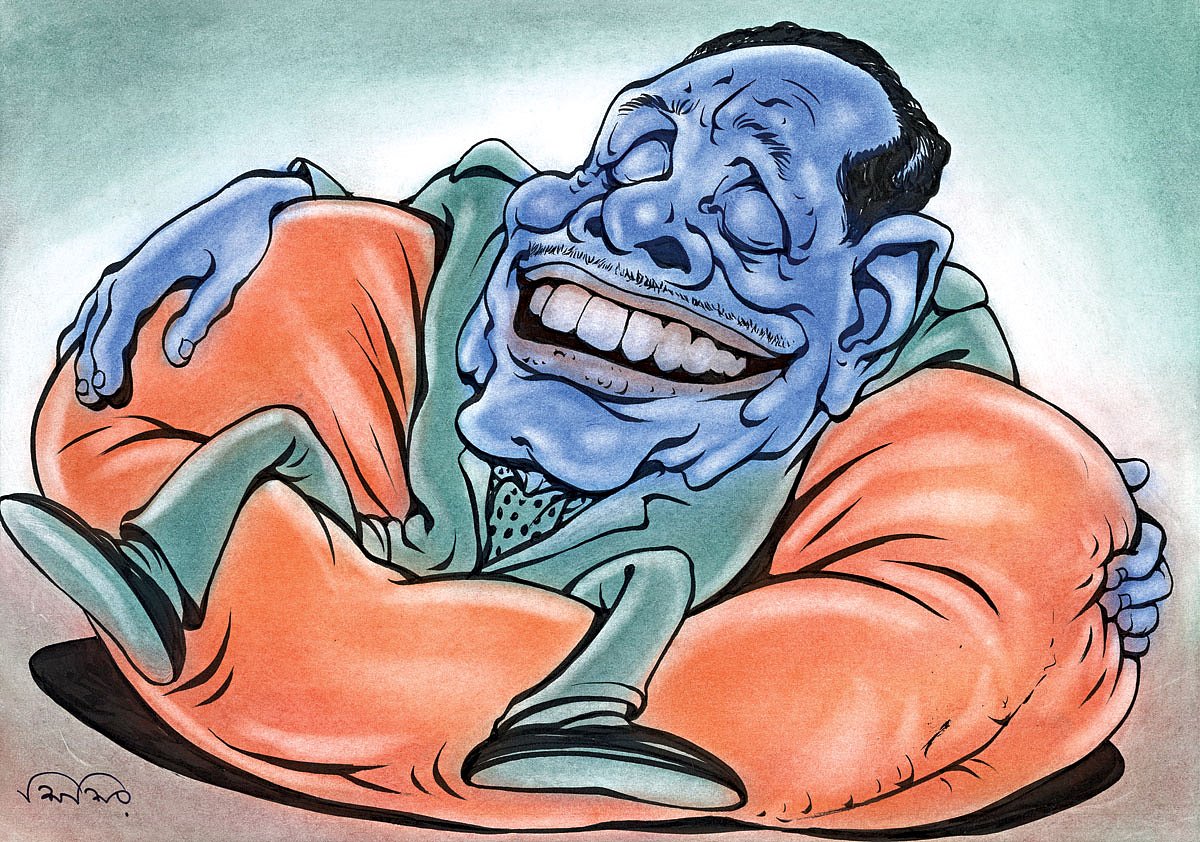
The joint movement of the three alliances led to a regime change, but failed establish democratic culture, good governance, the rule of law and basic human rights in the country. Bangladesh is yet to enjoy democratic practice and change in political culture over the last two and-a-half decades.
Politicians and analysts observed that the three alliances’ joint declaration to oust Ershad was milestone in post-liberation politics in Bangladesh. The main two political parties, BNP and Awami League, who had ruled in Bangladesh for the last 25 years, barely took any initiative to implement the historical three alliance outline. Left leaning political parties also seemed to have forgotten that declaration.
The declaration was made on 21 November, 1990. Jamaat-e-Islami participated in anti-Ershad movement without being part of any political alliance.
Political analysts said that though there is a constitutional continuity in the country, these are critical social and political times. There was tangible development and progress in the financial sector, but extrajudicial killings, forced disappearances, sabotages and other crimes have marred development. The country is derailed from democratic development.
Political scientist Rounaq Jahan told Prothom Alo that the declaration had had a specific agenda for changes in political culture, but nothing was addressed in these years. She said that the outline said that the parliament would be ‘sovereign’, but hardly anything was done to ensure accountability there.
Ruling party leaders said BNP not just boycotted elections but announced they would thwart them. However, the party failed to halt the polls through their violent movement.
On the other hand, BNP leaders claimed that their party boycotted the elections sensing government’s evil designs to ensure the ruling party would win again.
Prof Nizamuddin Ahmed, who teaches Public Administration at the Chittagong University, told Prothom Alo, “Awami League and BNP enjoy almost equal votes in Bangladesh. If the distance between these two parties is not addressed, national parliament will be one-party dominated.”
Prof Emajuddin Ahmed, former vice-chancellor of Dhaka University, told Prothom Alo that the Awami League-led government is running the country in an undemocratic way, bypassing the declaration which was the best political achievement after the birth of Bangladesh.
“Democracy in Bangladesh has been sacrificed for our political leaders’ lust for power,” he said.
Emajuddin said that the 5 January national election, where over 50 percent of the people did not get the opportunity to vote, was severely questionable on ethical grounds.
There was a consensus between the political parties from December 1990 to August 1991 as per the outline and parliamentary democracy in the country began instead of the presidential form of government.
The caretaker government (CTG) system that was earned through political consensus was abolished by the 15th amendment of the constitution.
After the CTG abolition, former autocrat and Jatiya Party chairman HM Ershad has been made special emissary to prime minister Sheikh Hasina, a rank equivalent to a ministerial position and opposition leader in the parliament is his wife Raushan Ershad.
Jatiya Samajtantrik Dal (JSD) president and information minister Hasanul Huq Inu said no one spared Ershad as he is still facing several charges.
Workers Party president Rashed Khan Menon told Prothom Alo that BNP first moved away from the three alliance outline by building a nexus with Jamaat-e-Islami over two reserved seats for women in the parliament after forming the government.
After that, the 12th amendment of the constitution severely damaged the spirit of parliamentary democracy.
Politics centring Jamaat, JP: It has been observed that both the large political camps of BNP and AL respectively, tried to draw Jamaat, allegedly accused for war crimes, before the elections. BNP could manage to form the government in 1991 with the support of Jamaat.
In the same way, Awami League, Jamaat and Jatiya Party declared the outline of caretaker government on 27 June, 1994.
Again, this Jamaat entered BNP-led alliance government in 2001 and two Jamaat leaders, who became ministers then, were accused with war crimes charges.
Both the big political parties fought to take the autocratic regime to their side after its fall and uprising of democracy in the 1990s. BNP organised a meeting of Ershad with the Jatiya Party leaders inside the jail on 5 August 1991, to get the support of Jatiya Party during the 12th amendment of the constitution.
Present in the meeting, former prime minister of the Ershad regime Mizanur Rahman Chowdhury in his book ‘Rajnitir Tin Kaal’ said, “Anything can happen if government wants!” He also said they were assured that Rowshan Ershad would be released on the next day after signing of the amendment and Ershad to get bail in a short time after reviewing the cases against him. Later the support of JP was not needed as Awami League and BNP had a negotiation and the 12th amendment was passed on 6 August.
Jatiya Party later supported Awami League after BNP lost in 1996 polls. In return the Jatiya Party got three of the 30 reserved seats for women. Mizanur Rahman Chowdhury regarding the issue said, “BNP had a long negotiation that we supported them instead of Awami League.”
BNP, Jatiya Party and Jamaat announced a joint movement against Awami League in 1999, which was later joined by Islamic Oikya Jote.
BNP and Jamaat floated an alliance, and Jatiya Party did not formed any alliance officially but is part of the grand alliance government and also in the opposition, staying out from the Awami League-led 14 party.
Emajuddin Ahmed said, the two big parties kept contact with Jamaat and Jatiya Party regarding politics of vote and power. Terming the present opposition in the parliament as a ‘new invention,’ he said, there is no precedence of such opposition in the political theory, any democratic county or in any books or studies. Even the ‘opposition’ during the Ershad regime was also not in power like this present opposition.
Establishing a sovereign parliament: The outline was to establish a 'sovereign parliament' in the spirit of democratic values and make it an inclusive democracy. However, the seventh to ninth parliament was virtually without any opposition.
Awami League presidium member and commerce minister Tofail Ahmed said the parliamentary democracy was formed according to the outline of the three alliance and thus the trend continued.
Information minister and president of Jatiya Samajtantrik Dal Hasanul Huq Inu however thinks the parliamentary democracy is in a kind of balance in the last few years.
He mentioned issues like forming the standing committees of the parliament, inclusion of the opposition MPs to the parliamentary committee, the increase of women seats from 30 to 50.
Meanwhile, according to the political analysts, parliamentary democracy is ineffective without an opposition. According to parliamentary records BNP as the opposition party in the seventh parliament had a total of 383 working days, in which it boycotted 163 days. On the other hand, AL as the opposition party in the eighth parliament had a total of 373 working days, in which it boycotted 223 days.
BNP standing committee member Mahbubur Rahman said the goal of democracy was to uphold the spirit of the liberation war and to remove autocracy. He thinks that the present situation of the country is contrary to the declaration of the three alliances.
The rule of law and protection of fundamental rights: The outline talked about ensuring independence of the judiciary and the rule of law, rejecting all laws contrary to fundamental rights.
Jurists said instead of ruling out the laws against fundamental right, such laws were introduced through which one can be kept in the jail without any trial and can be arrested on suspicion only. The rule of law is being ruined by the continuous extra-judicial killings.
Professor Rounaq Jahan said there is a declining trend in the country to ensure the rule of law. The reason is whoever comes to the power uses the government agencies and properties for their own interests and punishes the opponents unfairly. And while doing so, the government breaks the law instead of respecting it.
The judiciary was separated from the executive after a long procedure in keeping with the Masdar Hossain case. But this has not been implemented fully. Even after the separation, the differences between the law ministry and the Supreme Court remain obvious.