Rohingya villages burned also after 'military operations': HRW
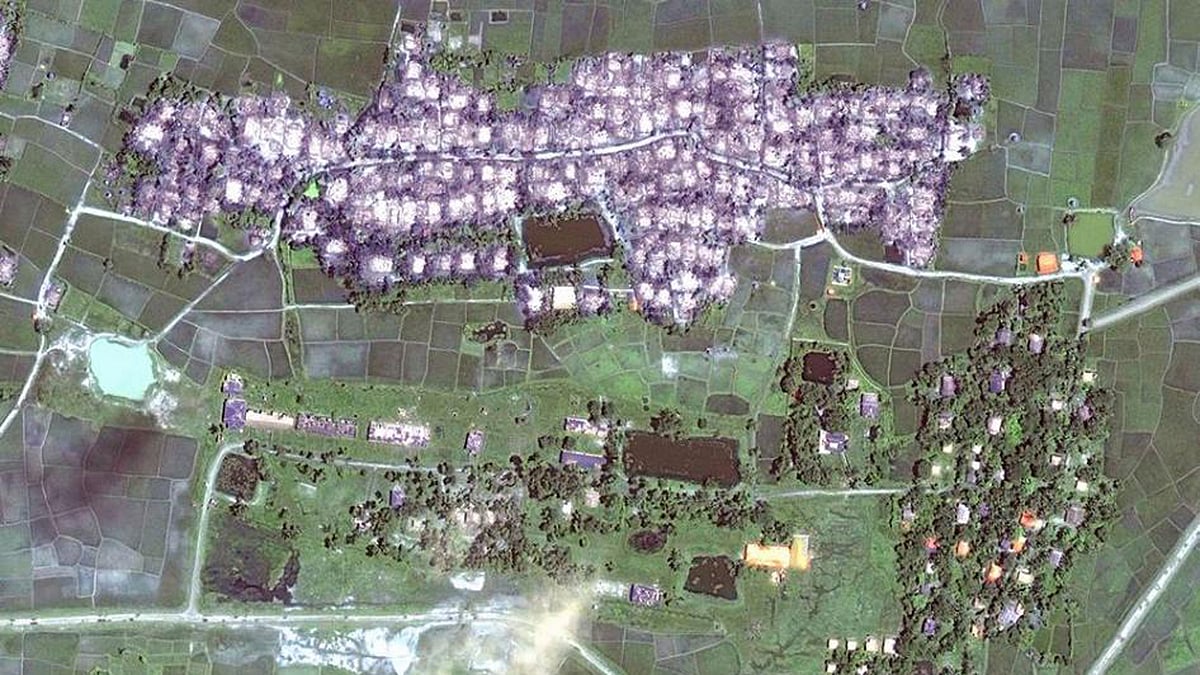
Human Rights Watch (HRW) on Tuesday reported destruction of tens of thousands of structures in Myanmar, which are primarily homes inhabited by ethnic Rohingya Muslims.
Referring to some newly released satellite images, the rights group said at least 288 villages were partially or totally destroyed by fire in northern Rakhine state since 25 August 2017.
HRW analysis says the burnings took place after the Myanmar officials claimed security force “clearance operations” had ceased.
The images show at least 66 villages were burned after 5 September, when security force operations supposedly ended, according to a 18 September speech by state counselor Aung San Suu Kyi.
The Myanmar military responded to reported attacks on 25 August by the Arakan Rohingya Salvation Army (ARSA) with a campaign of ethnic cleansing, prompting more than 530,000 Rohingya to flee across the border to Bangladesh, according to the United Nations refugee agency.
“These latest satellite images show why over half a million Rohingya fled to Bangladesh in just four weeks,” said Phil Robertson, deputy Asia director. “The Burmese military destroyed hundreds of Rohingya villages while committing killings, rapes, and other crimes against humanity that forced Rohingya to flee for their lives.”
A total of 866 villages in Maungdaw, Rathedaung, and Buthidaung townships in Rakhine state were monitored and analysed by Human Rights Watch.
The most damage occurred in Maungdaw township, accounting for approximately 90 per cent of the areas where destruction happened between 25 August and 25 September.
Approximately 62 per cent of all villages in the township were either partially or completely destroyed, and southern areas of the township were particularly hard hit, with approximately 90 percent of the villages devastated.
In many places, satellite imagery showed multiple areas on fire, burning simultaneously over wide areas for extended periods.
Images showed that most of the damaged villages were 90 to 100 per cent destroyed.
Many villages which had both Rohingya and Rakhine residing in segregated communities, such as Inn Din and Ywet Hnyo Taung, suffered heavy arson damage from arson attacks, with known Rohingya areas burned to the ground while known Rakhine areas were left intact.
The Myanmar government has repeatedly said that ARSA insurgents and local Rohingya communities were responsible for setting the fires that wiped out their villages, but has offered no evidence to support such claims.
Human Rights Watch interviews in Bangladesh with more than 100 refugees who had fled the three townships gave no indication that any Rohingya villagers or militants were responsible for burning down their own villages.
HRW insisted that UN member countries and international bodies should press the Myanmar government to grant access to the UN-mandated fact-finding mission to investigate these abuses.
The UN Security Council should also urgently impose a global arms embargo on Myanmar , and place travel bans and asset freezes on those Myanmar commanders responsible for grave abuses, the rights group said.
"Governments should impose a comprehensive arms embargo against Burma (Myanmar), including prohibiting military cooperation and financial transactions with military-owned enterprises."
“The shocking images of destruction in Burma (Myanmar) and burgeoning refugee camps in Bangladesh are two sides of the same coin of human misery being inflicted on the Rohingya,” Robertson said. “Concerned governments need to urgently press for an end to abuses against the Rohingya and ensure that humanitarian aid reaches everyone in need.”