Property transfer act: New legal provision to protect parents in old age, experts say
Before his death, Shahjahan Mridha transferred 64 per cent of his land to his wife, Halima Begum. Halima lived with her eldest son, Mahabub Alam Mridha.
At the age of 82, Halima was driven out of her home by her son Mahabub.
A few days earlier, Halima had transferred the 64 per cent of land her husband had given her to her son. After being driven out, she could no longer claim any right to the property she had received from her husband.
The incident took place in 2022 in Gournadi upazila of Barishal. It drew considerable attention at the time and was reported in the media.
Many lawyers and civil rights activists say the amended property transfer law creates an opportunity to protect people like Halima in their old age. Under the amended law, a person can donate property to a blood relative or to a spouse while retaining the right to use and enjoy the property for the rest of their life.
Shirin Parvin Haque, a founding member of Naripokkho and head of the Women’s Reform Commission formed during the tenure of the former interim government, told Prothom Alo that many incidents occur in which children take their parents’ pension money or persuade them to transfer their property and then send them to old-age homes. The amendment is therefore a positive step, she said. The amended law will protect parents in their old age.
She also said the law should contain various such safeguards while preserving an individual’s freedom to decide whom to give their property to.
He said the proposed arrangement, under which the donor retains lifetime use and enjoyment of the property, would constitute a distinct method of property transfer. The provision would apply equally to people of all religions.
Shirin Haque further said those who wish to follow religion-based laws can continue to do so, as the amended law does not prevent them from doing so.
“Not everyone in the country follows the same religion. Laws in a state are meant for everyone. There must also be provisions for those who want a uniform family law based on equality,” she said.
What the amended law says
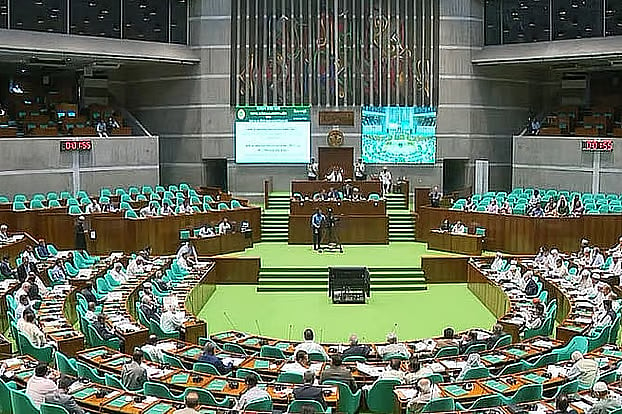
The Transfer of Property (Amendment) Bill, 1882, was passed by parliament last Sunday. Law Minister Md Asaduzzaman moved the bill for passage. Two new provisions have been added to the amended law.
In the statement of objects and reasons, the law minister said that although the existing law contains provisions governing the transfer of property, it has no specific provision allowing a person to donate property while retaining the right to use and enjoy it throughout their lifetime.
He said the proposed arrangement, under which the donor retains lifetime use and enjoyment of the property, would constitute a distinct method of property transfer. The provision would apply equally to people of all religions.
It would therefore have no effect on, or create any conflict with, ordinary gifts under existing practice, hiba under Muslim law, or any other form of property transfer recognised by law.
Section 122 of the Transfer of Property Act defines a “gift” as the voluntary transfer of movable or immovable property by one person to another without any consideration.
A new Section 122A has been added through the amendment, allowing a donor to give property to another person while retaining the right to use and enjoy it during their lifetime. In other words, even after transferring the property, the donor will retain the right to use and enjoy it for as long as they remain alive.
The law should contain various such safeguards while preserving an individual’s freedom to decide whom to give their property to.Shirin Parvin Haque, a founding member of Naripokkho and head of the Women’s Reform Commission
The provision contains four sub-sections. Under these provisions, parents can donate property to their children; grandparents can donate property to their grandchildren; children or grandchildren can donate property to their parents or grandparents; and spouses can donate property to each other.
The sub-sections further state that if the recipient dies while the donor is still alive, the donated property will pass to the recipient’s heirs in accordance with the law. However, the donor’s retained right to use and enjoy the property will remain in effect for the rest of the donor’s lifetime.
The amendment will not invalidate or otherwise affect gifts, hiba or any other method of property transfer recognised under other laws.
Section 122B states that, in general, a gift cannot be revoked after the donated property has been registered. However, a gift may be revoked or modified if specified conditions are met to address a genuine need, such as a financial, medical, educational or family need.
During the passage of the bill in parliament on Sunday, opposition lawmakers said the provision was not compliant with Shariah. They also walked out of the chamber but returned shortly afterward to take part in the debate.
On Monday, Jamaat-e-Islami held a protest rally demanding withdrawal of the amended Transfer of Property Act, describing it as “contrary to the Quran and Sunnah.”
At the rally organised by the party’s Dhaka metropolitan unit at the north gate of the Baitul Mukarram National Mosque, Jamaat Secretary General Mia Golam Porwar said the movement would be intensified if the law was not withdrawn.
Meanwhile, in a statement sent to the media on Monday, Hefazat-e-Islam Bangladesh Ameer Allama Shah Muhibbullah Babunagari and Secretary General Allama Shayekh Sajidur Rahman called for further review of the law. They said any positive measure to protect senior citizens was commendable.
However, they said it was essential to ensure that any new method or provision governing property transfers did not conflict with the fundamental Islamic rules on mirath (inheritance) and hiba.
What legal experts say
According to legal experts, the amendment will provide three main benefits. First, it will protect donors in their old age. Second, while the concept of retaining a right of use exists in Islamic law, it is not available under the laws of other religions. The new gift mechanism will apply to people of all faiths. As a result, all elderly people in the country will be covered by this protection.
Legal experts also said many cases are filed in civil courts in which plaintiffs claim that, in their old age, they were deceived into consenting to a property gift and signing the relevant deed. They then seek to have the gift deed cancelled.
The amendment will prevent such disputes, benefiting both donors and recipients. People will make gifts with a clear understanding of the consequences, while recipients will be less exposed to allegations that they obtained property through deception or by misleading the donor.
Asif Nazrul, former law adviser to the interim government and a professor of law at Dhaka University, said at a Prothom Alo newsroom programme on Monday that the amendment was not a reform of Muslim family law but of the Transfer of Property Act.
The provisions governing gifts under Muslim law remain intact, he said, and anyone is free to follow them.
Describing himself as a deeply religious person, he said that if the intention was to deprive someone, that could already have been done under the previous law.
The new amendment was needed to free parents from helplessness, he said, adding that he viewed its intention positively.
Taslim Yasmine, an associate professor in the Department of Law at Dhaka University, said the addition to the Transfer of Property Act was necessary to address the issue of retaining the right to use and enjoy one’s own property.
“The law is particularly positive for parents and women,” she told Prothom Alo. “The person donating the property also needs protection. After transferring property to their children, parents may find that their children no longer look after them. In such cases, although the children own the property, the parents will retain the right to use and enjoy it.”
She said the amended law does not conflict with Muslim family law. “The purpose of the law has been made clear. It does not violate any provision governing hiba,” she said.
‘A courageous step by the government’
According to the Population and Housing Census 2022, more than 15.3 million people in Bangladesh are aged over 60. They account for 9.28 per cent of the country’s total population.
Fauzia Moslem, president of the Bangladesh Mahila Parishad, told Prothom Alo that passing the bill despite the controversy surrounding it was a courageous step by the government. The law will provide protection in old age, she said. Given the country’s social context, women in particular are expected to benefit from it.
However, she said questions remain about whether the law will be properly implemented in the long term. The government should also focus on introducing a uniform family law to strengthen women’s rights, she said.